

| NB: When considering information concerning groups of people with ME/CFS and those with long COVID, it is important to remember that ME/CFS is a symptom-based clinical diagnosis not a mechanistic one. It is clear there is a high degree of shared pathophysiology between ME/CFS and long COVID, and the two diagnostic labels are not mutually exclusive. Importantly, some individuals with long COVID meet ME/CFS diagnostic criteria or have a dual diagnosis. |
Last week ME Research UK posted Part 1 of a series of articles reflecting on the ISLC-PAIS conference which took part in Amsterdam 26 – 29 August, 2026. In this, part 2 of a series of articles on the ISLC-PAIS conference 2026, notable presentations on research not funded by ME Research UK are discussed.
Here, speakers raised broader questions about how PAIS and ME/CFS research is framed and communicated. The presenters explored whether systems thinking could provide a more complete understanding of post-exertional malaise (PEM), why the term ‘PAIS’ may not encompass all cases of ME/CFS, and why publishing null or negative findings is essential for reducing bias (systematic errors that can occur at any stage of the research process, affecting the reliability and validity of findings) and strengthening the evidence base.
Could ‘systems’ thinking improve understanding of PEM?
Prof. Mark Faghy – a researcher at Loughborough University whose research “explores the mechanisms, pathophysiology, and impact of living with Long COVID, aiming to understand its causes and improve outcomes for those affected” – spoke to conference delegates about the potential for a systems framework – or map – of PEM.
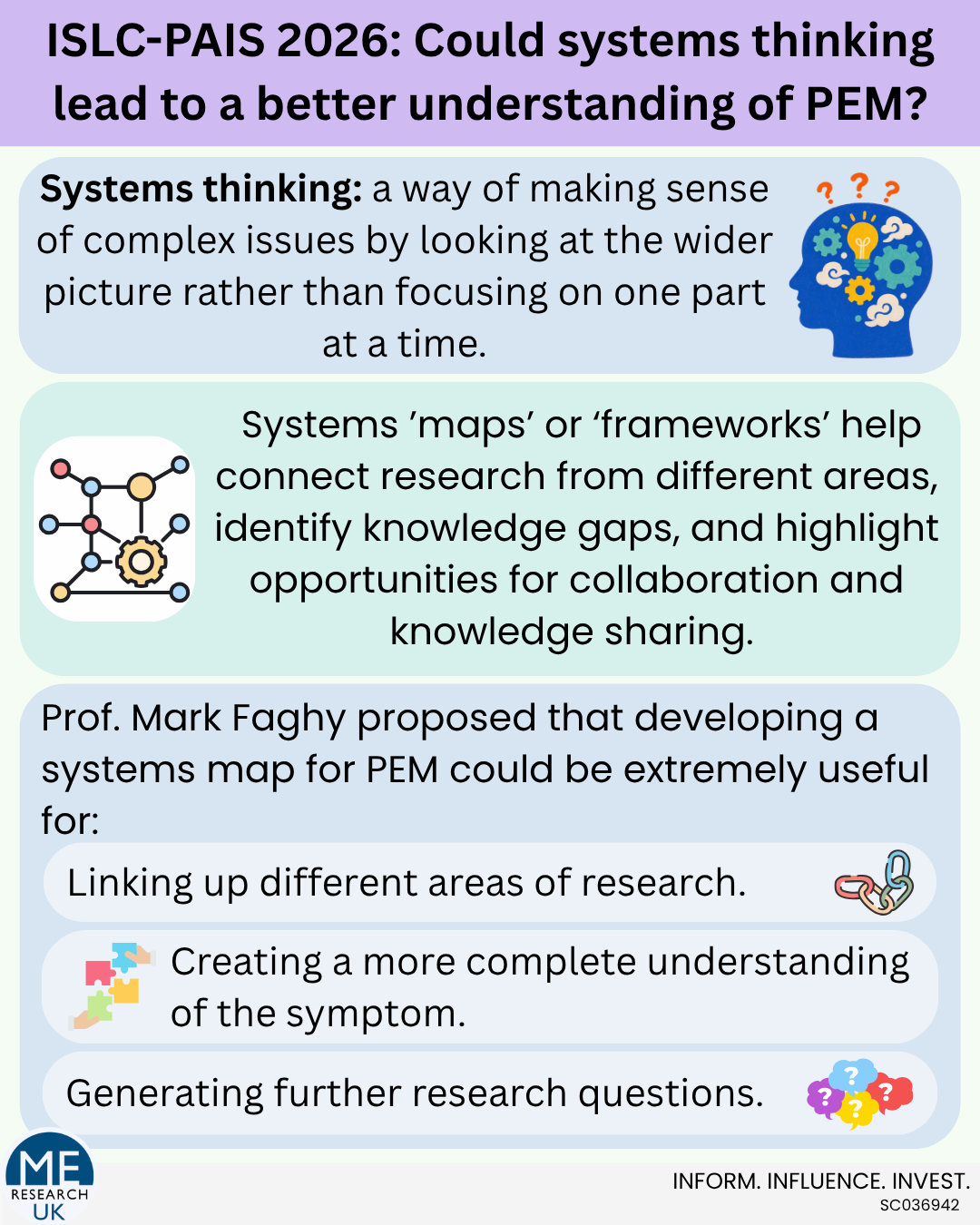
Systems thinking is a way of making sense of complex issues by looking at the wider picture rather than focusing on one part at a time. It can help connect research findings from different areas, identify knowledge gaps, and highlight opportunities for collaboration and knowledge sharing.
As systems thinking methods have been used to study complicated public health issues, such as obesity, Prof. Faghy hypothesised that they may also prove to be a useful tool in understanding the multifaceted nature of PEM.
Prof. Faghy explained that developing a map of all the existing evidence relating to PEM could be extremely useful in linking up different areas of research, creating a more complete understanding of the symptom, and for generating further research questions.
In response to a question from ME Research UK about whether people with lived experience of PEM would be involved in the proposed process, Prof. Faghy assured the audience that, as with his teams other research, their involvement would be central. ME Research UK also commented that it would be useful to have different versions of this map based on the type of evidence used, potentially including methods to capture strength and quality of the evidence, and for versions (or layers) of the map to be developed which enable gaps in knowledge to be highlighted more clearly.
The term ‘PAIS’ does not fully capture all those with ME/CFS
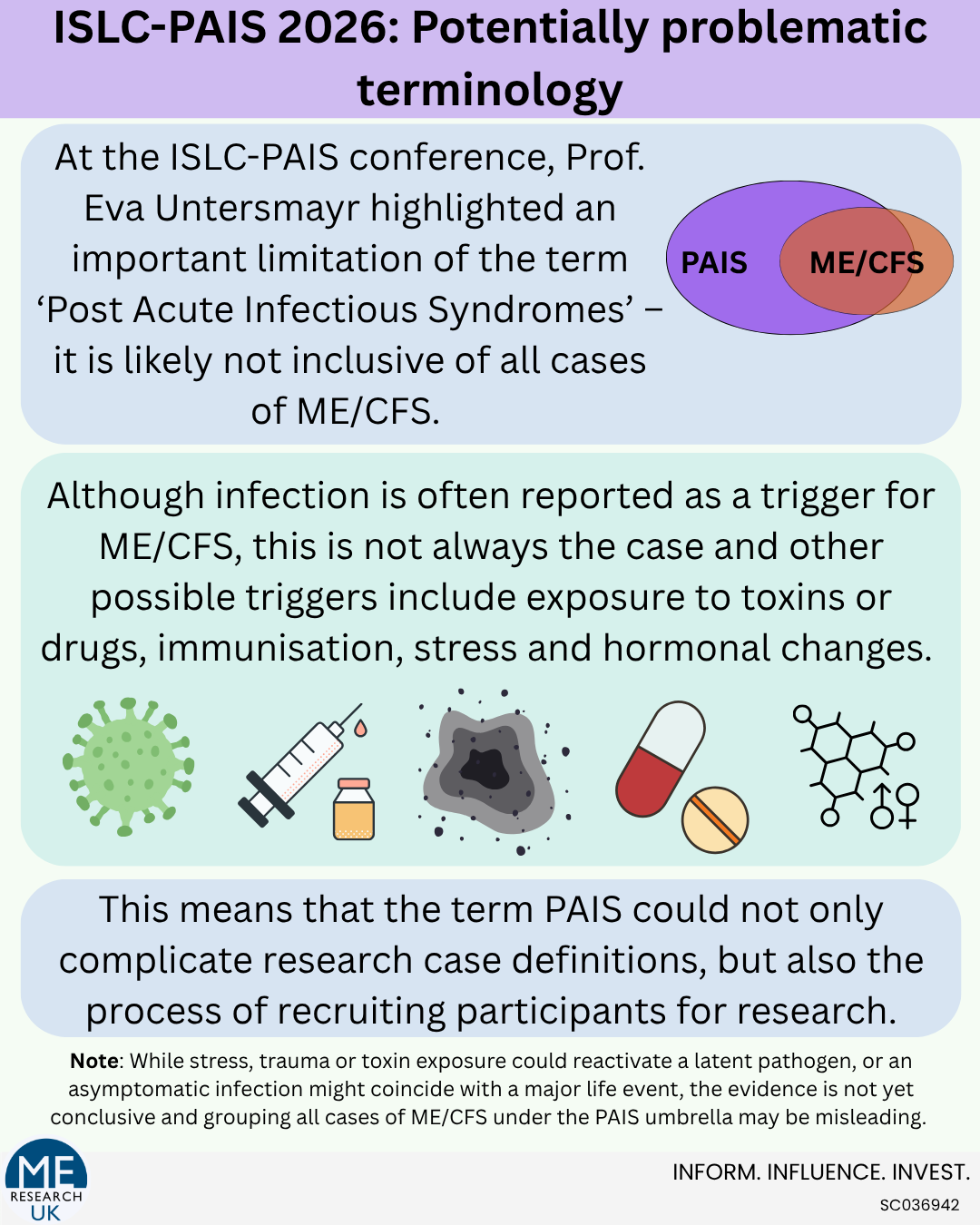
Prof. Eva Untersmayr, who worked with Prof. Simon Carding and colleagues to secure major Horizon Europe funding for the DISCOVER-ME project, gave a talk titled “Post-Acute Infection Syndromes (PAIS) and ME/CFS: Bridging Clinical Phenotypes and Immune Dysregulation”. In the talk, Prof. Untersmayr highlighted an important limitation of the term ‘PAIS’: it may exclude some people with ME/CFS, creating difficulties in defining cases and recruiting participants for research.
Prof. Untersmayr explained that, although infection is often reported as a trigger for ME/CFS, other possible factors that can lead to the disease include exposure to toxins or drugs, immunisation, stress and hormonal changes.
While it is worth nothing that stress, trauma or toxin exposure could reactivate a latent pathogen, or an asymptomatic infection might coincide with a major life event, the evidence is not yet conclusive, and so grouping all cases of ME/CFS under the PAIS umbrella may be misleading.
On the related issue of research terminology, Prof. Untersmayr also stressed that the terms ‘sex’ and ‘gender’ should not be used interchangeably in research. According to NICE, sex refers to biological traits such as chromosomes, hormones, and reproductive anatomy, while gender refers to socially constructed roles, identities, and expressions shaped by culture and personal identity.
Although this point on sex and gender is separate from whether PAIS fully encompasses ME/CFS, both examples underline the same principle: research terminology must be clear, justified and transparent. Using different terms as though they mean the same thing, or without being fully transparent of the definition, can cause confusion, hinder comparisons between studies and slow research progress.
The importance of negative trials
Dr Michael Peluso spoke about his long COVID research, including the LIINC study which aims to understand the long-term consequences of COVID-19 infection. Interestingly, the LIINC study is funded by PolyBio, a “non-profit organisation focused on advancing research into infection-associated chronic diseases such as Long COVID, ME/CFS, and post-treatment Lyme disease”, founded by Dr Amy Proal and Dr Michael Van Elzakker who are working on research funded by ME Research UK.
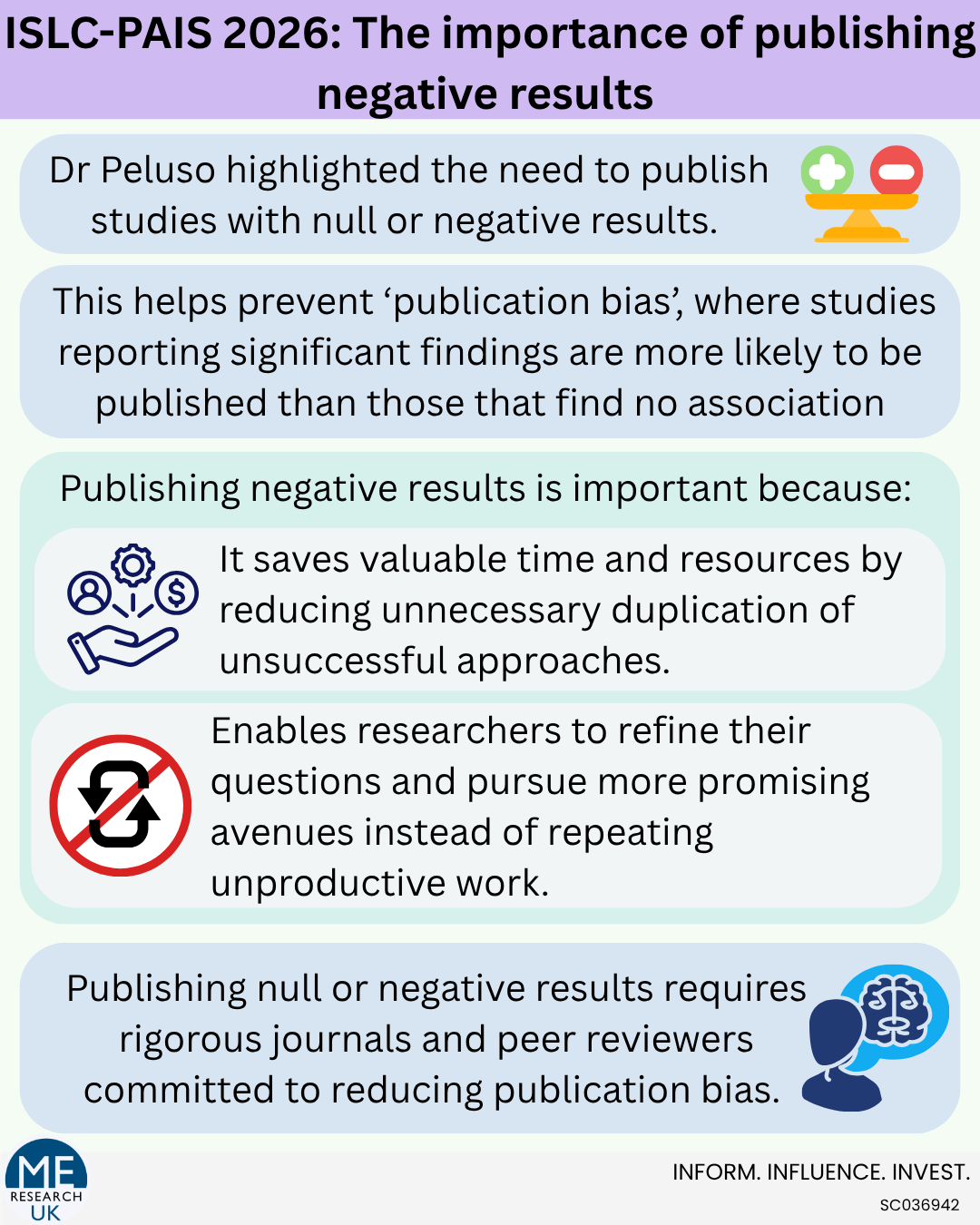
In his talk, Dr Peluso highlighted an issue that is important across all PAIS and ME/CFS research: the need to publish studies with null or negative results. This helps prevent publication bias, where studies reporting significant findings are more likely to be published than those that find no association.
Publishing negative results is important as it saves valuable time and resources by reducing unnecessary duplication of unsuccessful approaches. Knowing that a particular hypothesis has already been tested without success enables researchers to refine their questions and pursue more promising avenues instead of repeating unproductive work.
However, as ME Research UK raised at the ISLC-PAIS conference, simply calling for these studies to be published does not solve the problem. Publishing in a scientific journal can be a long and difficult process. A journal must first agree to send a paper for peer review, then find reviewers who have the right expertise and enough time despite heavy workloads. If reviewers are appointed, the paper may still face several rounds of comments and revisions—or be rejected. Because many journals favour significant findings, studies with null results may also be more likely to appear in ‘predatory journals’, which may use less rigorous publishing processes while still charging researchers very high fees.
In response to ME Research UK’s comments, Michael Peluso acknowledged the challenges faced and reminded the audience that ‘we are the peer reviewers in this field’ and that it is our responsibility to help to make sure papers are getting published.
Takeaway message
The conference presentations highlighted important issues related to how PAIS and ME/CFS research is understood and communicated. These include:
- The complexity of PEM and how approaches that link up existing evidence and knowledge may advance research.
- Limitations of the term “PAIS” and that further thought is needed to ensure all those with ME/CFS are represented.
- The importance of publishing negative or null research findings.
ISLC-PAIS 2026 Part 1: Highlights from ME Research UK–funded projects
ISLC-PAIS 2026 Part 3: What worked well and areas for further consideration

