In 2023, ME Research UK published a series of articles for International Men’s Day (IMD). These articles highlighted that despite the large number of men living with ME/CFS in the UK, they remain underrepresented in research.
As noted previously, capturing the exact number of men with ME/CFS is extremely difficult, and estimates vary greatly: in the literature, ratios of men to women are often stated as 1:3 or 1:4.
In 2023, estimates suggested that somewhere between 52,000 and 67,000 men in the UK had ME/CFS. Updated ME/CFS prevalence estimates from an ME Research UK–funded study, published in 2025, extrapolated using the UK male population of 34.0 million in mid-2025, suggest that around 85,000 men in the UK may now be living with the disease.
However, it is worth considering that delays in obtaining a diagnosis, misdiagnosis, and hesitancy to access medical care due to the stigma associated with the disease mean that any figures likely do not give an accurate representation of the true numbers of people affected – especially men.
Due to the lack of research, the exact reason for the difference in the number of men and women who have ME/CFS, and the way the disease presents, is currently unknown. The limited research that does exist suggests that biological factors such as sex hormones, differences in function of the autonomic nervous system, and the response of the immune system may play a role in explaining the variance, but so may pressures in society around masculinity, which lead men to “battle through symptoms” and may prevent men from seeking medical help, and therefore a diagnosis of ME/CFS.
Importantly, this lack of research means that guidelines based on existing evidence may not be applicable to these men living with the disease, and that health professionals have very little information to go on when providing care to men with ME/CFS.
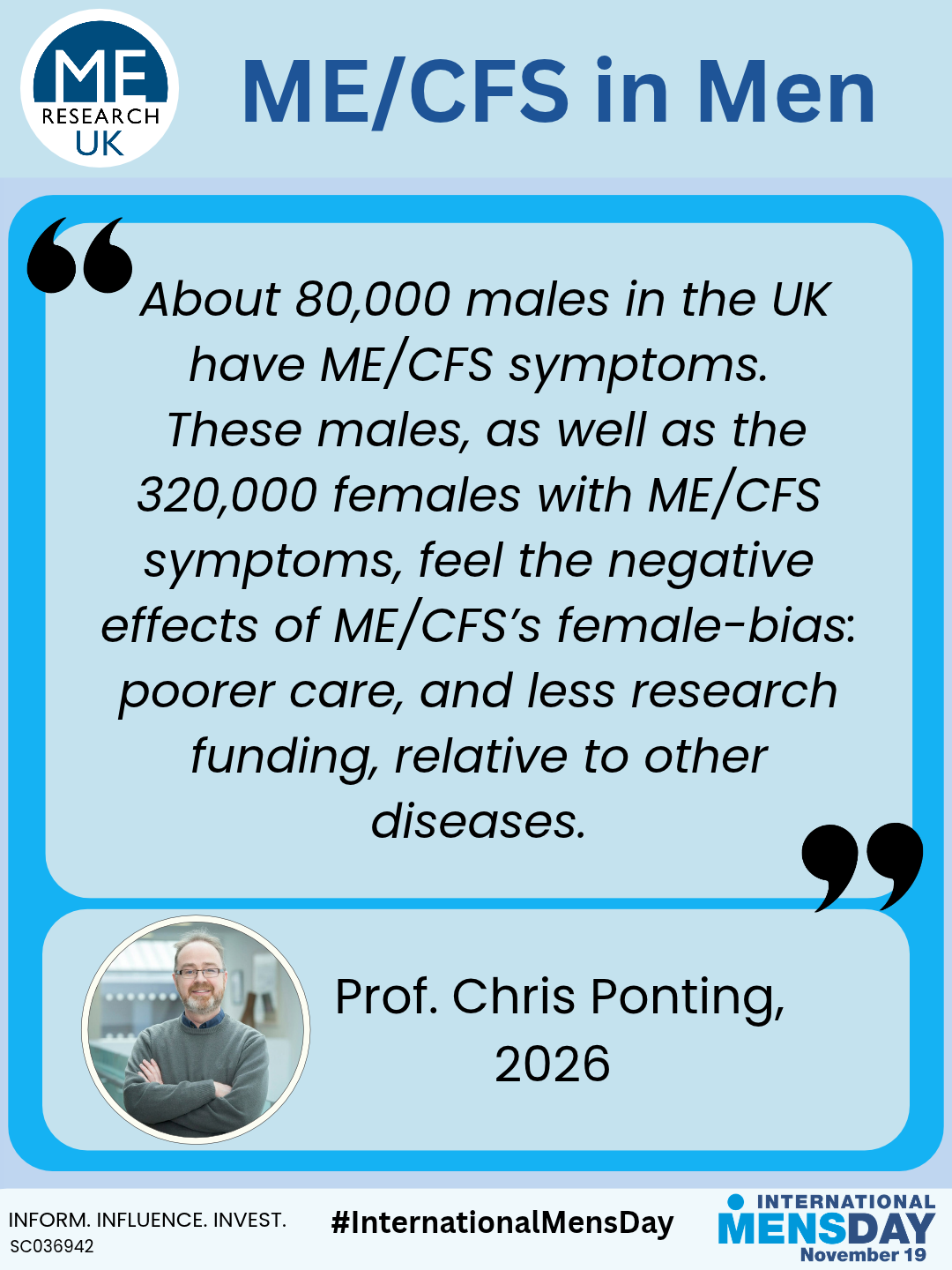
In fact, Professor Chris Ponting told ME Research UK:
“About 80,000 males in the UK have ME/CFS symptoms. These males, as well as the 320,000 females with ME/CFS symptoms, feel the negative effects of ME/CFS’s female-bias: poorer care, and less research funding, relative to other diseases.”
Therefore, this series of articles will build upon those previously published by ME Research UK in 2023, and will discuss the latest evidence relating to:
Notably, due to the lack of research relating to the lived experience of ME/CFS in men, ME Research UK has also developed a survey for men living with the disease. Find out more about the survey and how to take part, here.