In 2023, for International Men’s Day (IMD), ME Research UK wrote about a study investigating the experiences of 5 men with “a medical diagnosis of CFS”. At the time, this was the only study relating directly to the lived experience of men with ME/CFS.
In this study, the men described pressure to appear ‘masculine’, which could lead them to delay seeking medical advice. They also spoke about feeling unable to fulfil roles or take part in activities traditionally associated with masculinity, from being the “breadwinner” to “mowing the lawn” and “going to the pub”. These examples reflect society’s general expectations of what it means to be a man. Masculinity is therefore described as a ‘social construct’: a set of ideas shaped by society rather than determined by biology. These expectations can vary between cultures and social settings, and change over time.
Since 2023, there has been very little research (none to our knowledge) published directly investigating the lived experience of men with ME/CFS.
In the absence of such studies, it is relevant to consider those that have explored experiences of men living with other chronic disease.
What does the research say?
Published in 2023, a review of 16 qualitative articles found that men living with chronic diseases often struggled to meet society’s expectations of them. The researchers called these challenges ‘social role dilemmas’. Similarly to the study of men with ‘CFS’, these illnesses were found to limit what men were able to do as fathers, husbands or family breadwinners, and make it difficult to meet societal expectations of masculinity, for example, that men should be physically strong:
| Theme | Description | Supporting quote(s) |
| “Dilemma of the role as a father” | Here, fathers described not being able to do things they thought they should, or had previously been able to do, such as carrying or playing with their children. | “I used to play fight with him (son) and everything, pick him up and chuck him up in the garden and stuff like that and I just can’t anymore” “The worst part of this disease is that I cannot play with my children. I feel sad talking about it!“ |
| “Dilemma of the role as a husband” | Many of the papers included in the review identified the difficulties men with chronic diseases faced with intimate relationships. | “Me and my wife have tried several times to have sex, but it’s so difficult. My wife doesn’t want to pressure me because there’s no way really. I keep feeling devastated, like I’m a wrecked man!” |
| “Dilemma of the role of men as the breadwinner” | Men described the impact of being unable to work, or of having to continue working despite their disability. | “…I feel bad about getting paid for just staying home. I don’t contribute to anything and it’s because I was raised to believe a man gets up in the morning to be the breadwinner for his family” |
| “Dilemma of public perceptions: men are physically stronger” | Within this theme, men described how their reality differs from public expectations. | “If I had been born a woman it would be entirely different. Because you don’t have to prove your strength…… as a man and the society that we live in, it’s a huge thing we have to handle” |
Note: In this review, ten chronic illnesses represented, these were: Low Back Pain, Rheumatoid Arthritis, Ankylosing Spondylitis, Urological Cancer, Prostate Cancer, T2DM, Cardiovascular Disorders with Implantable Cardioverter Defibrillators, Vertebral Osteoporosis Fractures, Cluster Headache and End-Stage Chronic Kidney Disease.
Another qualitative study, published in 2025, explored the experiences of 11 men living with either Multiple Sclerosis or Fibromyalgia.
In this study, participants spoke about:
- The impact of their symptoms: Both on their bodies and on their everyday life.
- Negotiating the workplace
- One man described that the physical impacts of his illness meant “[he] was the problem at work, but [he] loved it and didn’t want to give it up”.Others spoke about difficulties in asking for support at work, with one man explaining “first you need to voice what you need, which I’m really bad for because I’m not that type of vulnerable person”.
- Loss of employment and difficulties accessing benefits.
- Change in relationship dynamics:
- Romantic relationships and intimacy: Some participants described strengthening of relationships while others, regrettably, recalled the breakdown – five of the participants had long-term relationships end while they were living with chronic illness.
- Caregiving and need for care: The men in the study were increasingly dependent on others, but eight of the participants had become more involved in care-giving responsibilities.
- Roles at home: Several of the participants talked about small changes in domestic division of labour – particularly outdoor work like mowing the grass – that impacted everyday enactments of masculinity.
Overall, the study identified two key themes:
- The first related to the idea that chronic illness can affect men’s bodies, thinking and memory in different ways, making it harder to meet expectations of what it means to be masculine. These challenges can vary depending on the situation or setting.
- The second discussed that living with chronic illness can change how men give and receive care and support, including expectations about these roles based on gender.
In the conclusion section, the authors explain:
“There is a profound sense that the diverse and dynamic physical and cognitive impacts of MS and Fibromyalgia undercut the ability to approximate a normative masculine embodiment”
Notably, this echoes the findings from the 2023 study of men with ‘CFS’.
Another study worth considering, although only published in the form of an abstract, is that looking at the association between chronic illness, masculinity, and well-being in older black men. Here, researchers “examined the lived experiences of black men, aged 55 years and older, and diagnosed with chronic illness”. Common themes that emerged were:
- “Performance of masculinity”
- “Fulfilling family duty and obligation”
- “Limited sexual encounters”
- “Feelings of exclusion in one’s community
The researchers explain that “responses highlight the conflict between traditional masculine expectations and the presence of chronic illness, and illustrate the extent to which ‘manhood’ is a determent of health, even in older men.”
Takeaway message
Although limited, the research that has been carried out highlights the challenges faced by men with chronic illnesses, especially those faced in relation to societal expectations of masculinity.
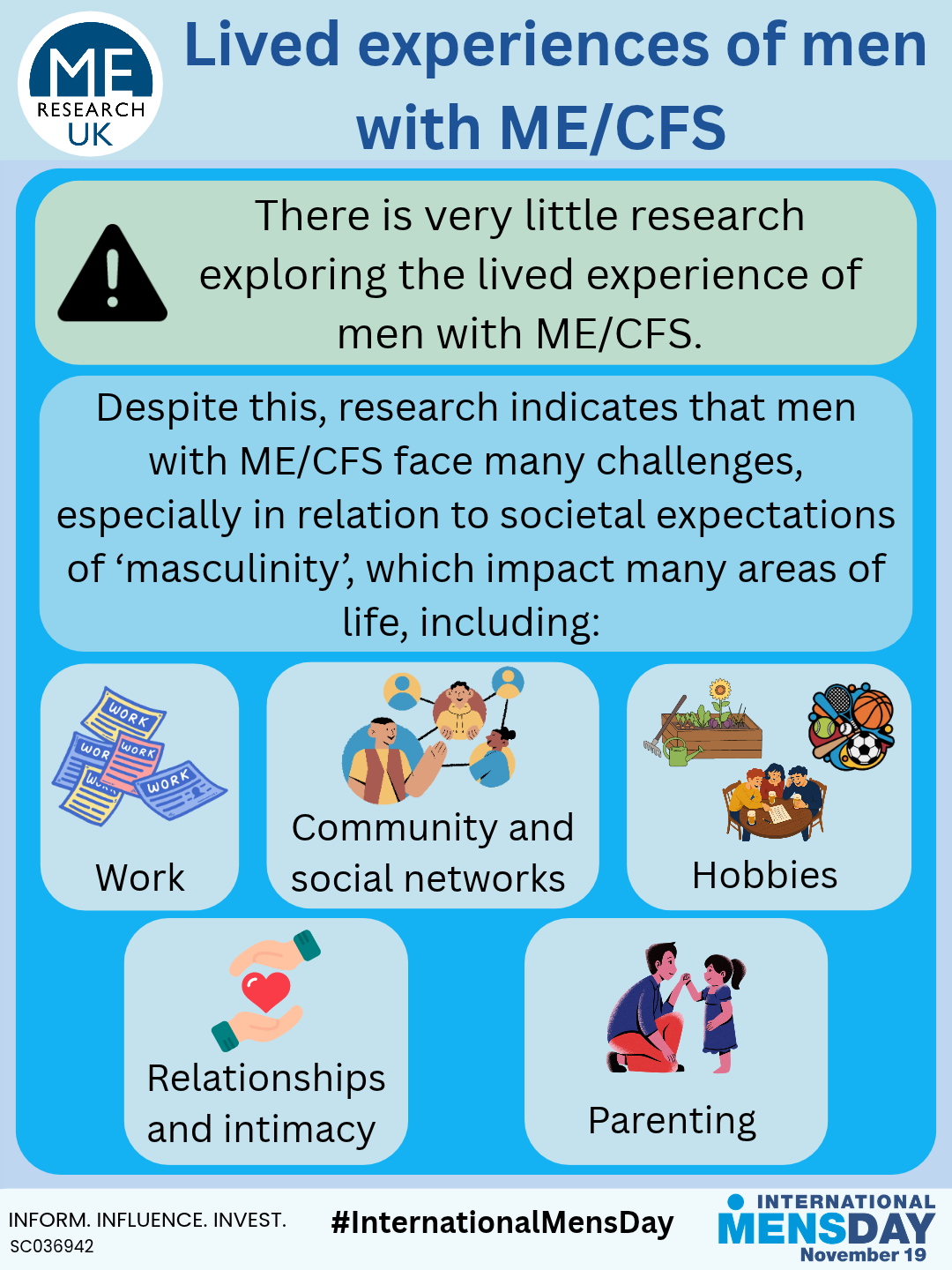
Across the studies discussed here, there are key areas of life that appear to be impacted for men with chronic illnesses, including (but not limited to):
- Work: Being unable to work, or having to keep working despite disability, could conflict with expectations of being the family breadwinner.
- Relationships and intimacy: Men described difficulties with different types of relationships, including intimate relationships and sexual activity, which could affect how they felt about themselves as partners. Notably, this aligns with a study of medical records, published in 2015, that found an increased risk of ‘organic erectile dysfunction’ in men with ‘CFS’.
- Community and social networks: Some men described feeling excluded from their communities, highlighting how chronic illness could affect their sense of belonging.
- Parenting: Fathers described sadness at being unable to play with or carry their children as they had before, or felt they should.
- Hobbies: Illness could prevent men from taking part in familiar activities, such as playing sport or going to the pub, that they associated with being masculine.
Despite this, it is clear that much more research is needed to better understand men’s experiences of living with ME/CFS, especially in men from underserved groups and considering the role of intersectionality, and in those who are living with symptoms of ME/CFS but do not yet have a diagnosis. There is also little research exploring the care provided to men living with ME/CFS or how it could be improved.
In the absence of such studies, ME Research UK has developed a survey to collect information on lived experiences of men with ME/CFS, which you can find out more about, and take part in, here.