ME/CFS is a complex and debilitating condition characterised by a wide range of symptoms, with post-exertional malaise (PEM) as its cardinal feature – where even minimal physical or mental exertion can trigger a severe worsening of symptoms. Beyond the physical burden, ME/CFS has a profound and crushing impact across every area of life, disrupting careers, family life, social connections, hobbies, and even basic activities of daily living.
This article highlights the lived experience of core symptoms of ME/CFS: PEM, cognitive dysfunction, sleep dysfunction, and fatigue. To help you navigate this overview, you can jump directly to any of the key sections below:
Contents:
- Post-exertional malaise (PEM)
- Cognitive dysfunction (“brain fog”)
- Sleep dysfunction
- Fatigue
- Conclusion
Post-exertional malaise (PEM)
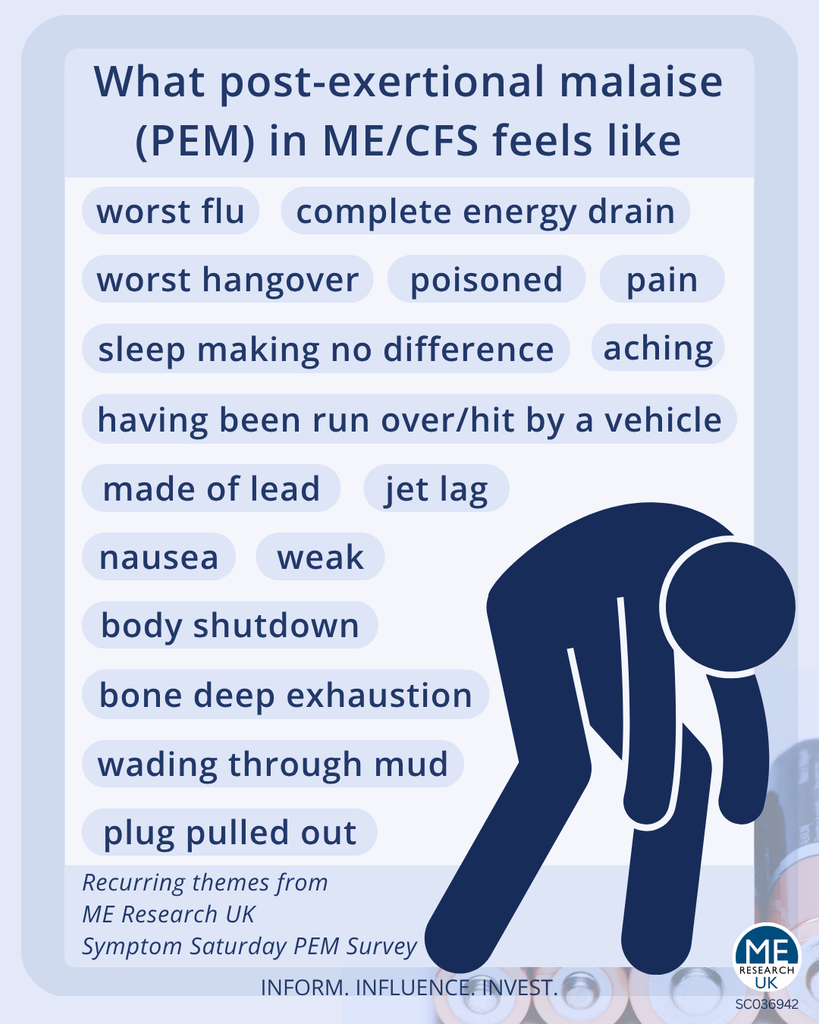
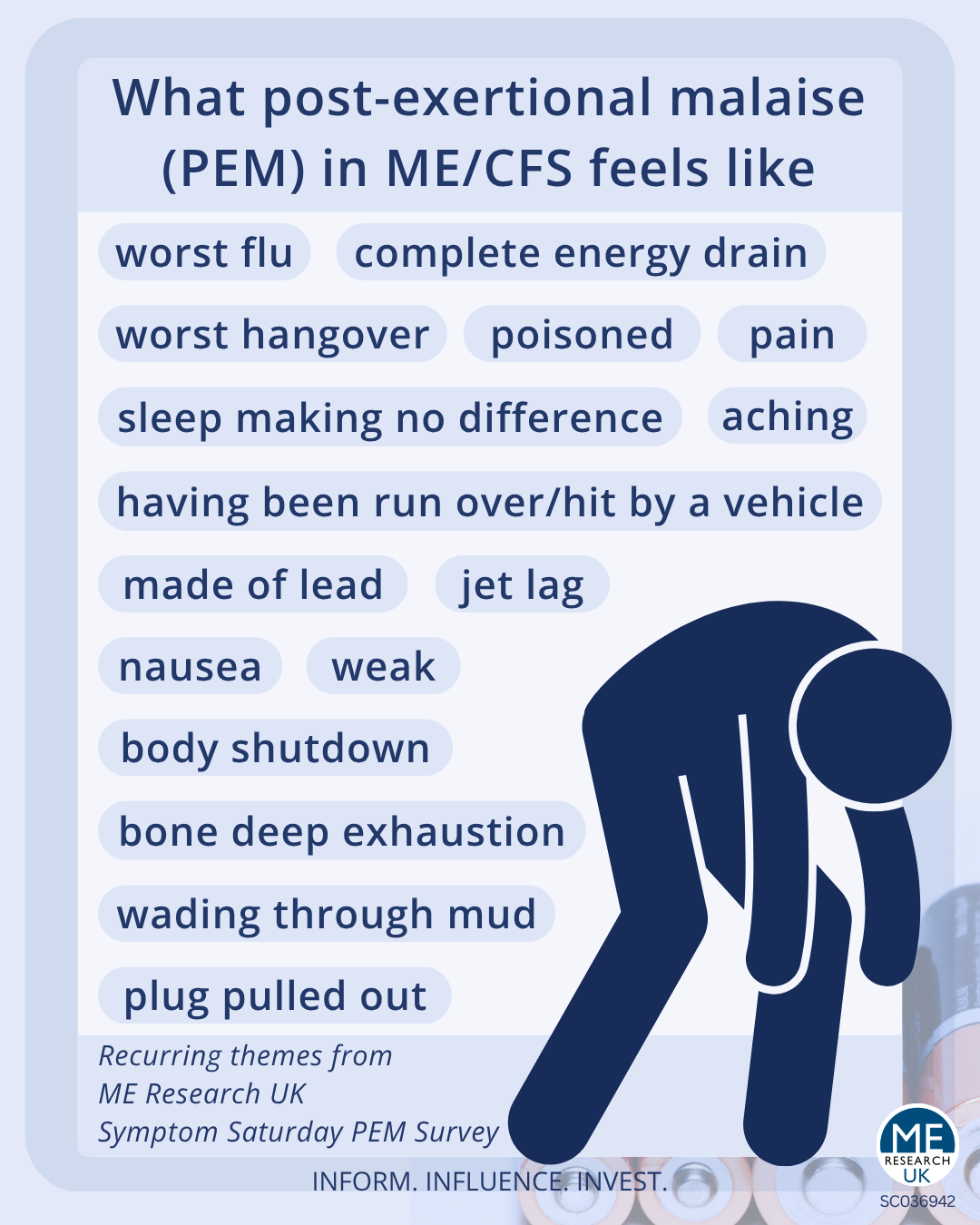
Post-exertional malaise (PEM) is the hallmark feature of ME/CFS. It is a worsening of symptoms following even minor physical or mental exertion. PEM can occur within hours or days after an activity, and may last for days, weeks or longer. PEM is essentially like a volume dial, amplifying the intensity of symptoms.
“In my pre-illness life, if I did something tiring, then rested or got an early night, I’d then be ‘reset’ back to normal. With ME, the reset function doesn’t work properly. After doing something tiring now, I will rest, go to bed earlier, and still wake up feeling worse. The ‘reset’ now takes several days – sometimes weeks of careful management. It can be hard to tell apart from a relapse (more permanent deterioration) so the stakes feel very high & PEM can be very distressing for this reason.” – Symptom Saturday PEM survey response
“Having to plan for using energy. For example, meeting friends for a meal. You have to plan to rest a couple of days before and you suffer for a couple of days after, just to have a couple of hours out sitting down. People don’t see this side of things.” – Symptom Saturday PEM survey response
Read more survey insights on the experience and impact of PEM
Cognitive dysfunction
Cognitive dysfunction, often referred to as “brain fog”, is more than occasional forgetfulness. It is a complex and distressing symptom involving issues with memory, concentration and information processing.
“Consider my brain the British Library, filled with loads of knowledge and information. On a good day I can access the lot, know where everything is, complete tasks, read, and be fully present. On an offish day the catalogue is missing. I know the information is in there, I just can’t find it. On an badish day the library is in another language I don’t understand. I can’t translate the questions let alone find the answers. On a really bad day, I’m locked outside.” – Symptom Saturday cognitive dysfunction survey response
“I’m just about to lose my job. I haven’t been able to attend for months. I used to be a multi tasking, problem solving, target meeting, very hard worker. Now I can barely coordinate my medical appointments or reliably string a sentence together.” – Symptom Saturday cognitive dysfunction survey response
Read more survey insights on the experience and impact of cognitive dysfunction

Sleep dysfunction
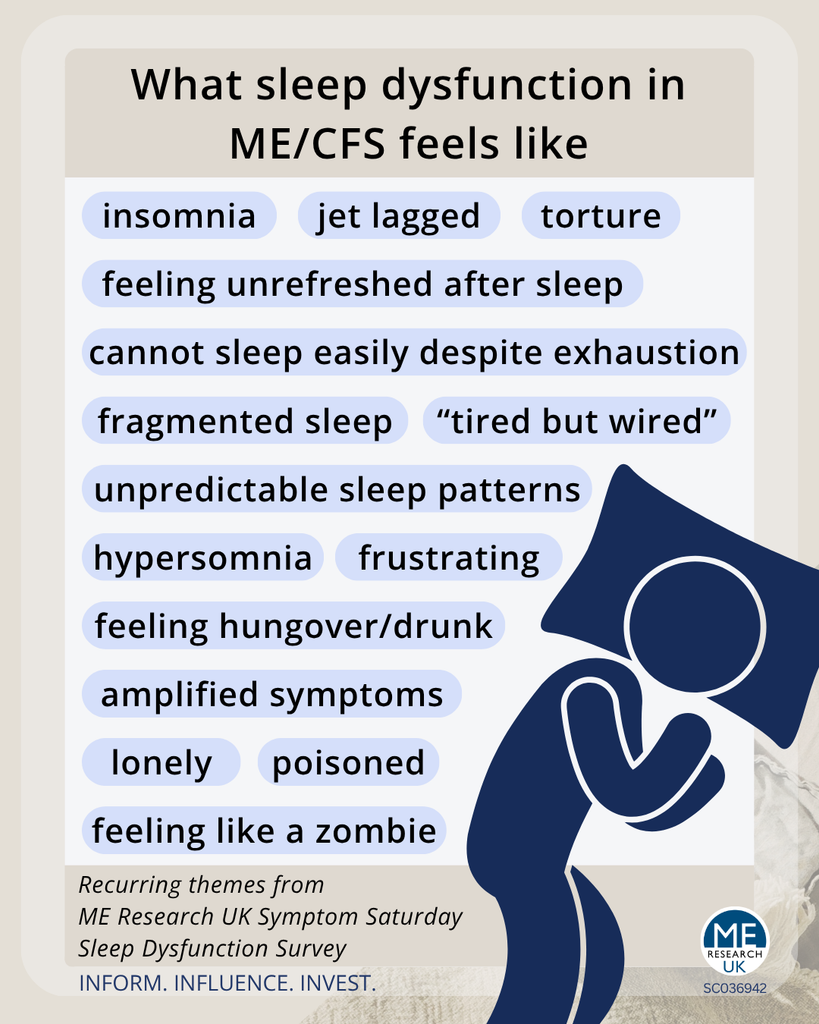
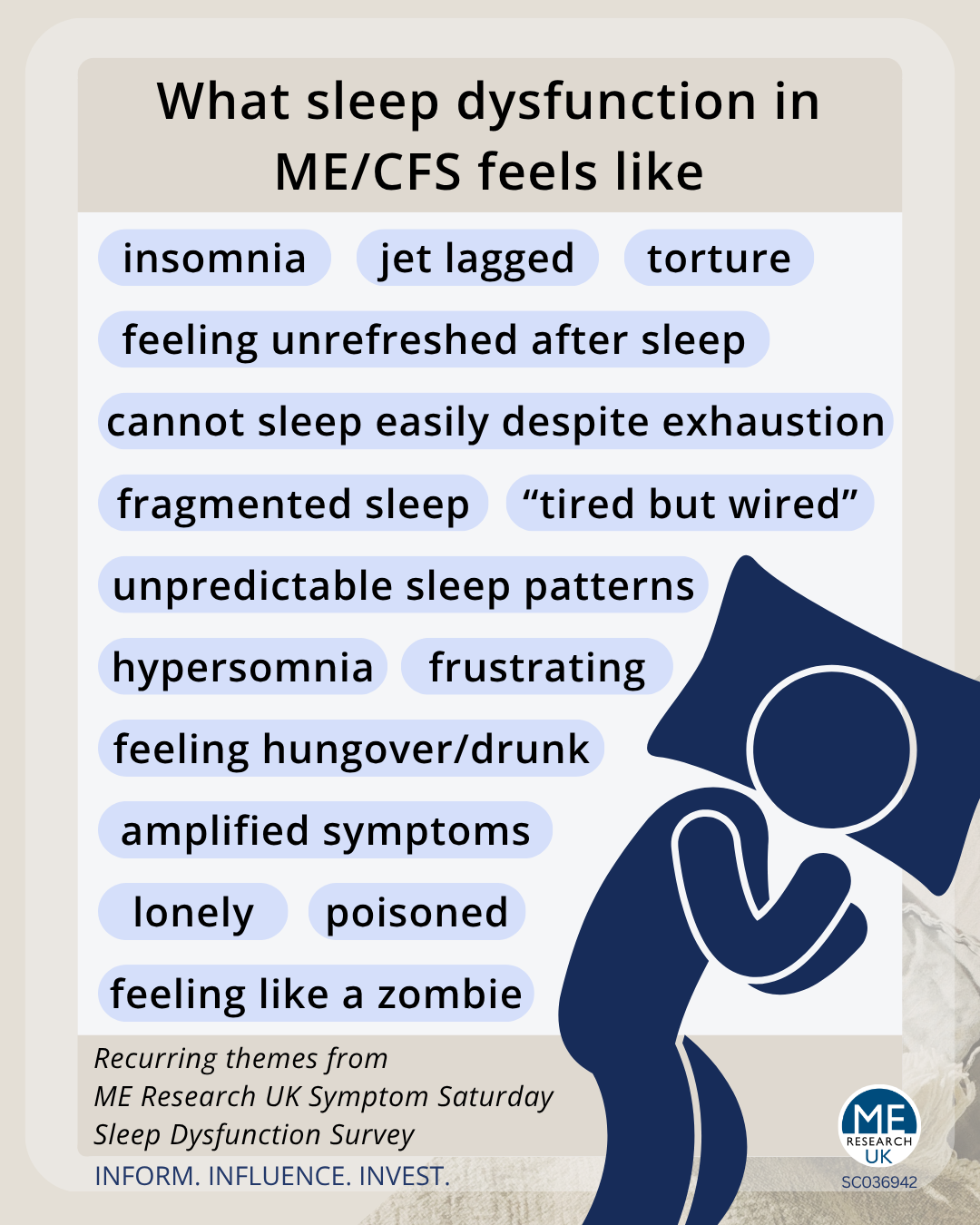
Many people with ME/CFS experience unrefreshing sleep, whereby even after a full night’s sleep, they wake up exhausted. Additionally, individuals may experience sleep disturbances such as insomnia (difficulty falling asleep and/or staying asleep) and hypersomnia (excessive sleeping). Studies show that poor sleep quality correlates with reduced quality of life.
“Never feeling sleepy. Even when my eyes burn with tiredness, and my whole body hurts and is exhausted, it’s like the switch in my brain that initiates sleep is broken….” – Symptom Saturday sleep dysfunction survey response
“Lowered mood. Poor concentration. Irascibility. Difficult to do anything as concentrating is exhausting, interacting with others is overwhelming.” – Symptom Saturday sleep dysfunction survey response
Read more survey insights on the experience and impact of sleep dysfunction
Fatigue
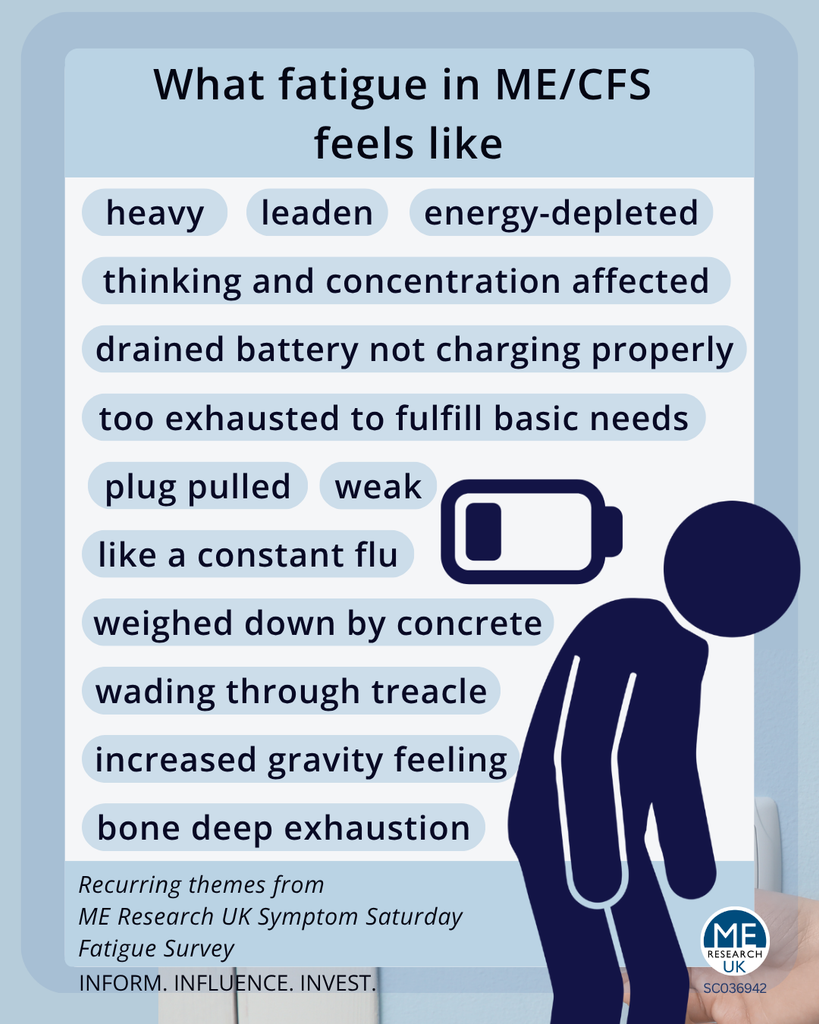
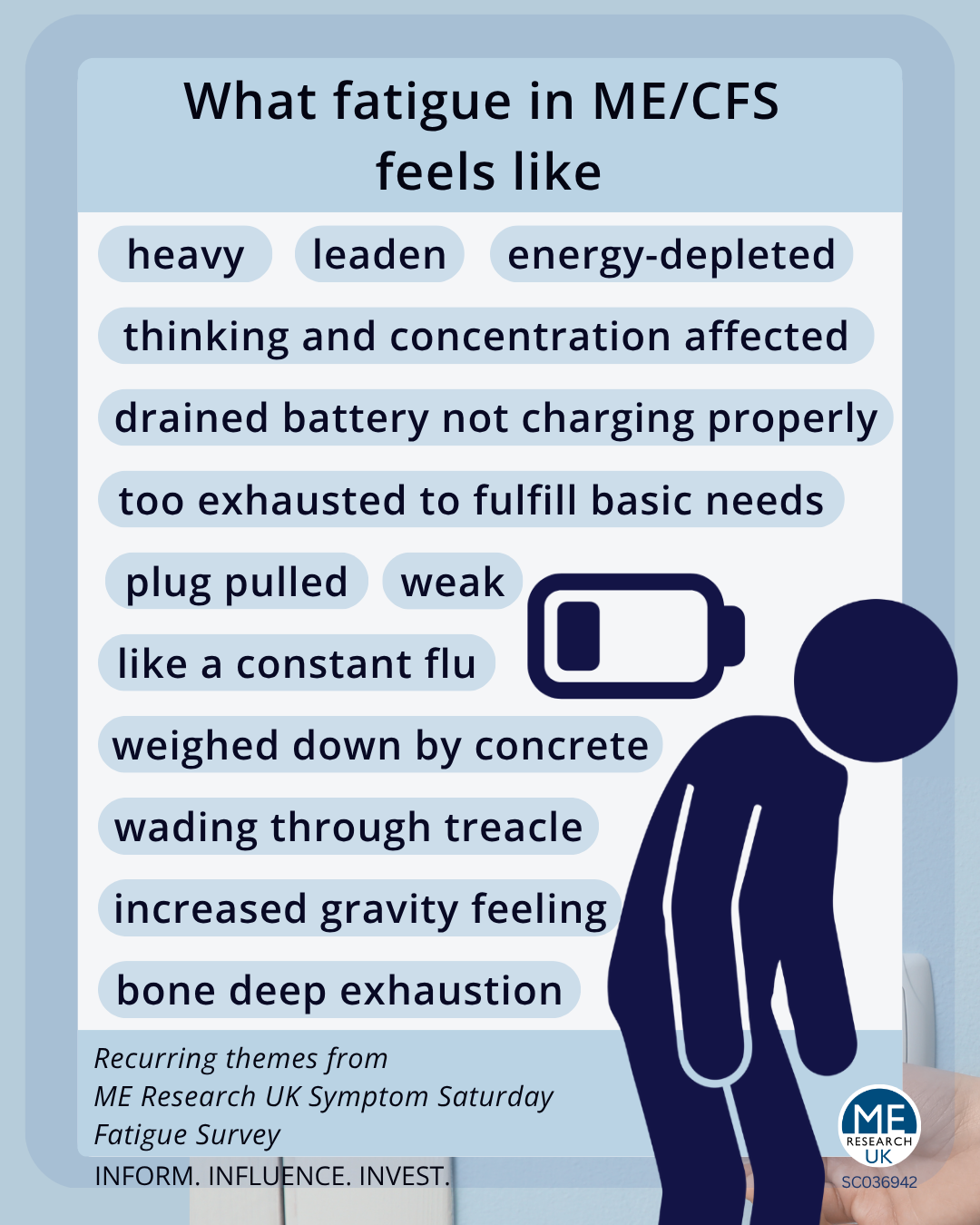
Fatigue in ME/CFS is not just tiredness, it is profound, persistent exhaustion that is not sufficiently relieved by rest and significantly impacts daily activities.
“Remember the time you were so exhausted you couldn’t wait to go to sleep? I feel like that everyday. The difference is that when I wake up, I feel the same. Remember when you came down with the flu and felt like you were hungover, your head throbbed, you had no energy, and everything hurt? I feel like that everyday.” – Symptom Saturday fatigue survey response
“…I had to stop working, that had a huge impact on my mental health, I felt useless. My income and independence were gone and I felt like I wasn’t a person who had anything to give anymore. I had to give up sports, hiking and anything that used my energy. My family life suffered, my partner became my carer. I couldn’t do many things for my child and felt so guilty that she had a sick parent. Our lives changed from being very active to almost nothing….” – Symptom Saturday fatigue survey response
Read more survey insights on the experience and impact of fatigue
Conclusion
ME/CFS is a complex and debilitating disease which extends far beyond fatigue. It encompasses a wide range of symptoms, and with any other chronic condition, the symptom burden of ME/CFS and its ripple effects are clear, profound, and can be overwhelming to people’s mental health.
We urge anyone in distress to consider reaching out to appropriate organisations or helplines, such as Mind or The Samaritans, for support.