A detailed protocol has been published for a study investigating the effectiveness of a treatment called “intermittent hypoxia-hyperoxia treatment” (IHHT) for ME/CFS. While this appears to be the first study looking at IHHT specifically for ME/CFS, this treatment has been tested for other illnesses, with one systematic review of 13 published studies finding that:
“IHHT can bring important benefits in improving the symptoms and functionality of patients with various cardiovascular, respiratory, musculoskeletal, neurological, and metabolic pathologies and also geriatric patients with multiple comorbidities.”
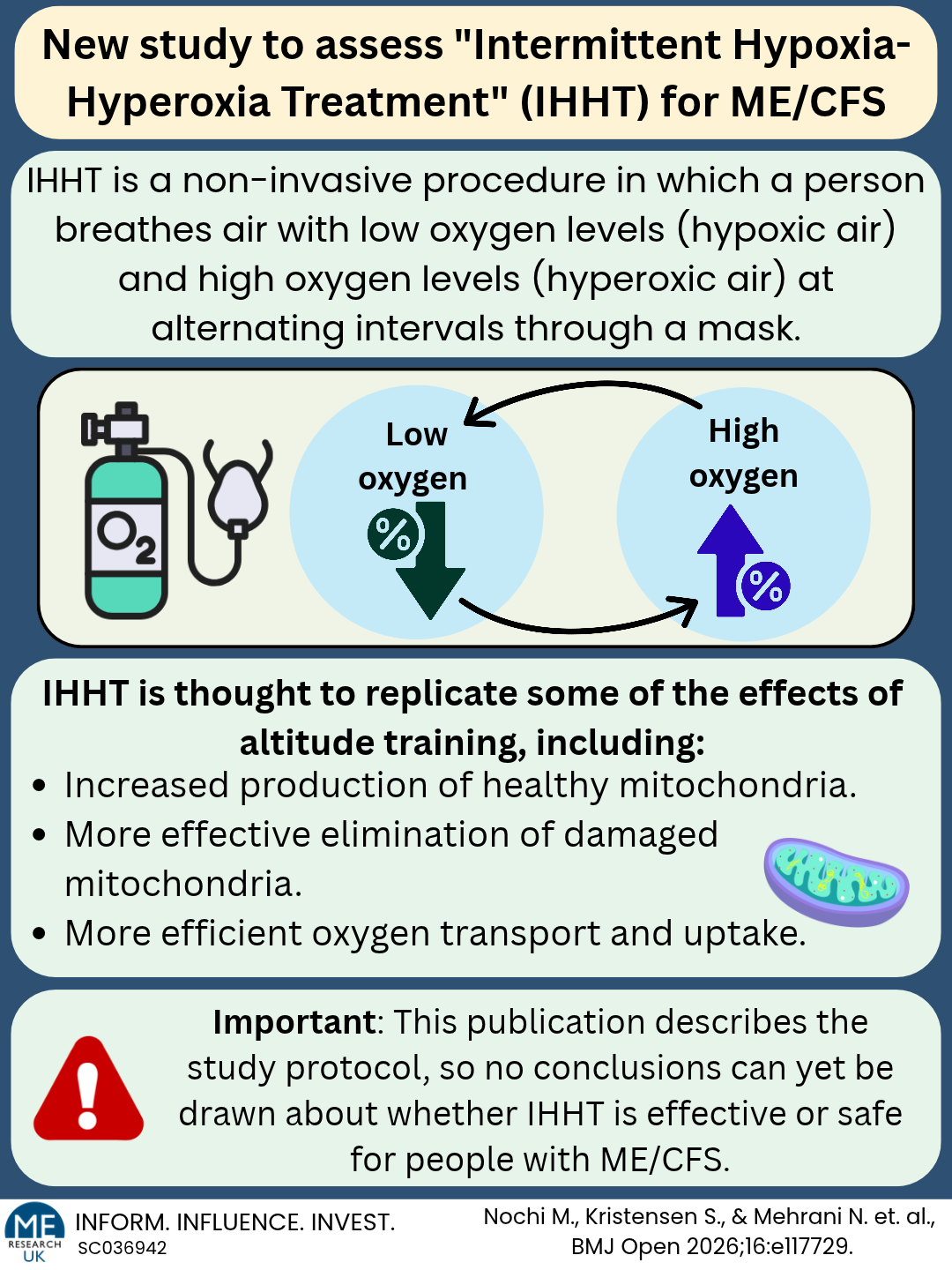
IHHT is a non-invasive procedure in which a person breathes air with low oxygen levels (hypoxic air) and high oxygen levels (hyperoxic air) at alternating intervals through a mask. It is thought to replicate some of the effects of altitude training, including:
- Increased production of healthy mitochondria – often described as the ‘powerhouses’ of cells, mitochondria are responsible for energy production, and mitochondrial dysfunction has been linked with ME/CFS.
- More effective elimination of damaged mitochondria – damaged mitochondria have been identified in ME/CFS.
- More efficient oxygen transport and uptake – through increased production of red blood cells and new blood vessels. Evidence suggests that people with ME/CFS have differences in genetic material related to oxygen transport compared with sedentary controls. Some may also have reduced blood flow to the brain, which is linked with orthostatic intolerance.
The new study plans to enrol 124 female participants aged 20 to 59 years, 104 who meet the ICC criteria for ME/CFS, and 20 healthy controls for “mechanistic comparison”.
Following baseline assessments, the 104 participants with ME/CFS will be randomly assigned in equal numbers to receive either IHHT or a placebo intervention using normal oxygen levels. Both participants and assessors will be blinded to treatment allocation.
The IHHT intervention will be delivered over 8 weeks, and the participants will be followed up at 3, 6, and 12 months post treatment.
The researchers will look for any changes in quality of life, measured using the vitality domain of the short form-36 health survey (SF-36). Using other validated ‘patient reported outcome measures’, such as FUNCAP, and objective tests, the team also aim to capture the impact of the IHHT treatment on:
- Post exertional malaise (PEM) severity
- Fatigue severity
- Severity of cognitive dysfunction (which they term ‘cognitive severity’)
- Functional capacity – a person’s ability to perform everyday activities across key life domains—such as mobility, self‑care, communication, learning, social interaction, and self‑management
- Autonomic symptoms such as orthostatic intolerance
The study will also explore how IHHT might work by assessing pain characteristics, autonomic and nerve function, tissue oxygenation, small nerve fibres, and biomarkers related to immune-metabolic function and oxidative stress. These assessments include techniques called “near-infrared spectroscopy”, “corneal confocal microscopy”, skin biopsy, and analysis of blood samples.
Ethical approval is in place for the study, and a record of the trial’s progress is available through ClinicalTrials.gov.
It is worth noting that this is an early-phase trial and that all participants with ME/CFS will be female, which limits the generalisability of any findings to males and people of other genders with ME/CFS. Additionally, the healthy control group will not undergo the same treatment plan as the participants with ME/CFS; they will only be assessed at baseline and are included for mechanistic comparisons rather than as a treatment-control group. As this publication describes the study protocol, no conclusions can yet be drawn about whether IHHT is effective or safe for people with ME/CFS.