Prolonged exposure to stress—referred to as “chronic stress”—has been associated with both the onset of Myalgic Encephalomyelitis/Chronic Fatigue Syndrome (ME/CFS) and the worsening of its symptoms.
Of particular interest is a review paper that explores potential disease mechanisms linking chronic stress to “brain fog,” a core symptom required for diagnosis under the 2021 NICE guidelines. Brain fog commonly presents as difficulties with attention, memory, and concentration.
What is chronic stress?
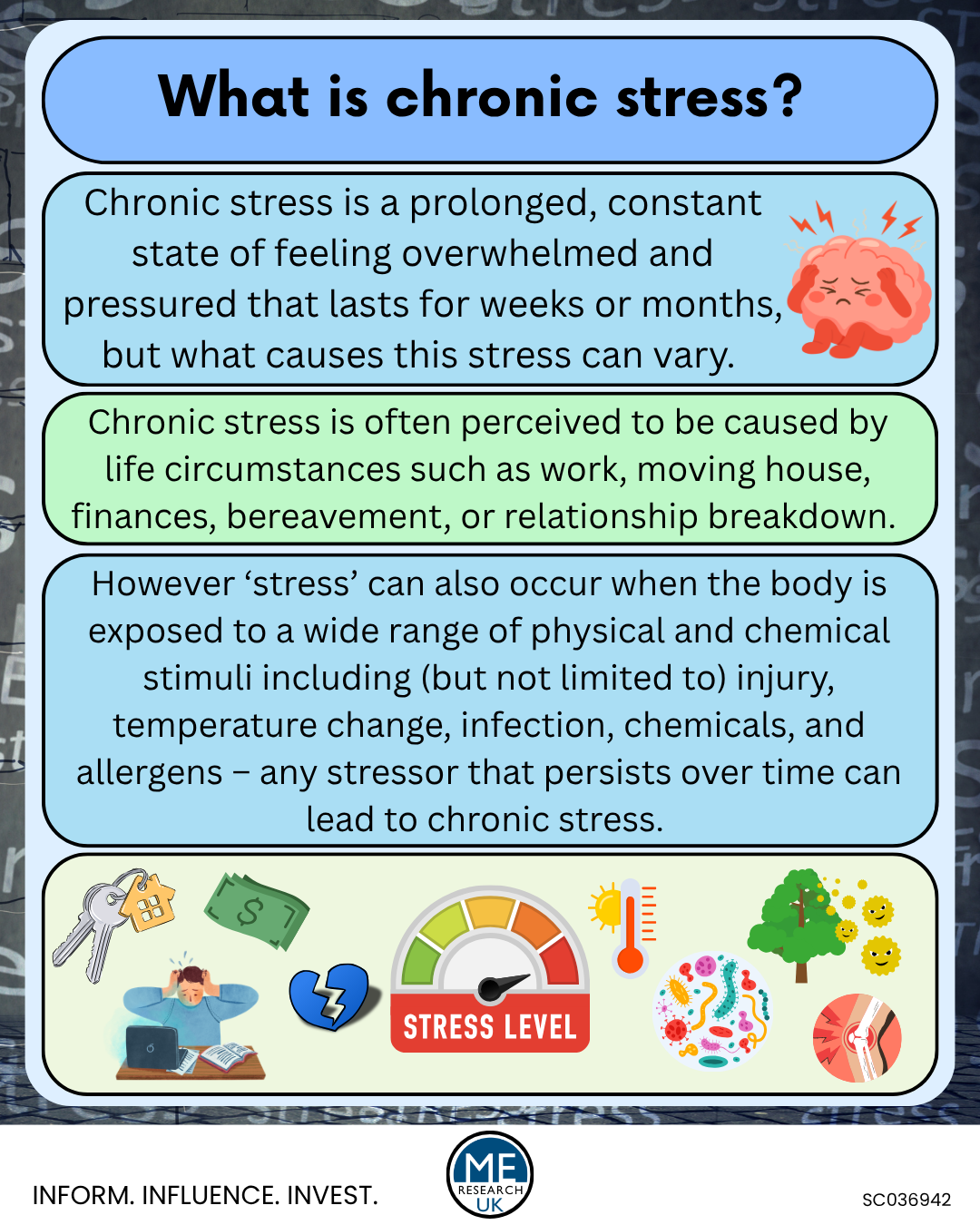
Chronic stress occurs when the body is exposed to prolonged periods of stress. While short bursts of stress—known as acute stress —can be motivating and help you respond quickly, ongoing exposure can overwhelm the body’s ability to cope, leading to physical, mental, and emotional fatigue.
It is worth noting that stress is anything that causes the body and mind to feel threatened, pressured, or overwhelmed, and can come in many forms. For example, at the 2025 IACFS/ME conference, Prof. Marshall-Gradisnik — who works on ME Research UK-funded research— explained that the body is exposed to a wide range of physical and chemical stimuli – what she termed ‘threats/stressors’ – including (but not limited to) injury, temperature change, infection, chemicals, vibration, and allergens.
How does the body respond to stress?
When the body encounters stress, it activates the acute stress response—often referred to as the “fight or flight” response. This automatic reaction is controlled by the body’s stress system, the Hypothalamic-Pituitary-Adrenal (HPA) axis, and is designed to protect against perceived threats.
In response to stress, the HPA axis triggers the release of hormones such as adrenaline and cortisol. These hormones produce a range of physiological changes that prepare the body to deal with danger. These changes include:
- Tense muscles which can lead to trembling.
- Faster heat rate.
- Rapid breathing.
- Widening (dilation) of pupils.
- Sweating.
- More oxygen being sent to the brain to increase alertness.
- Suppression of the immune and digestive system.
- Sharpening of the senses, including sight, sound, and smell.
- Pale or flushed skin.
When stress levels fall, the body shifts into a state often called “rest and digest,” which helps restore calm and balance. During this phase, heart rate slows, digestion improves, and the body gradually returns to its normal resting state.
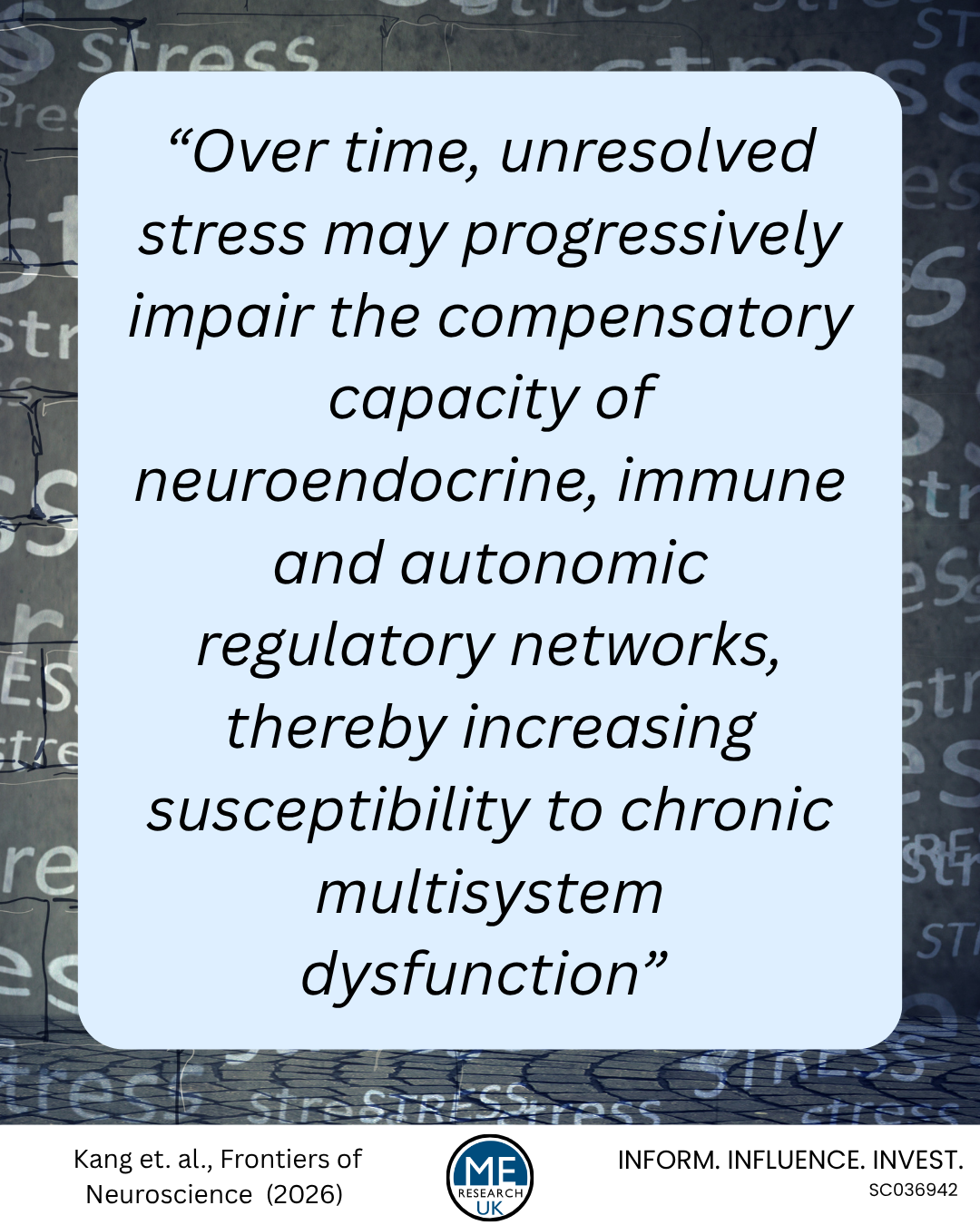
However, when stress persists over time and becomes chronic, stress hormone levels remain elevated, preventing the body from fully entering this restorative phase. This can lead to:
- Fatigue.
- Headaches.
- Difficulty concentrating.
- Digestive problems.
- Changes in appetite.
- Difficulty sleeping.
- Lowered immune system.
- High blood pressure and heart rate.
Notably, many of these symptoms are also seen in people with ME/CFS, leading researchers to suggest that chronic stress—and the body’s response to it—may be linked to the disease in some way.
How could chronic stress lead to brain fog in people with ME/CFS?
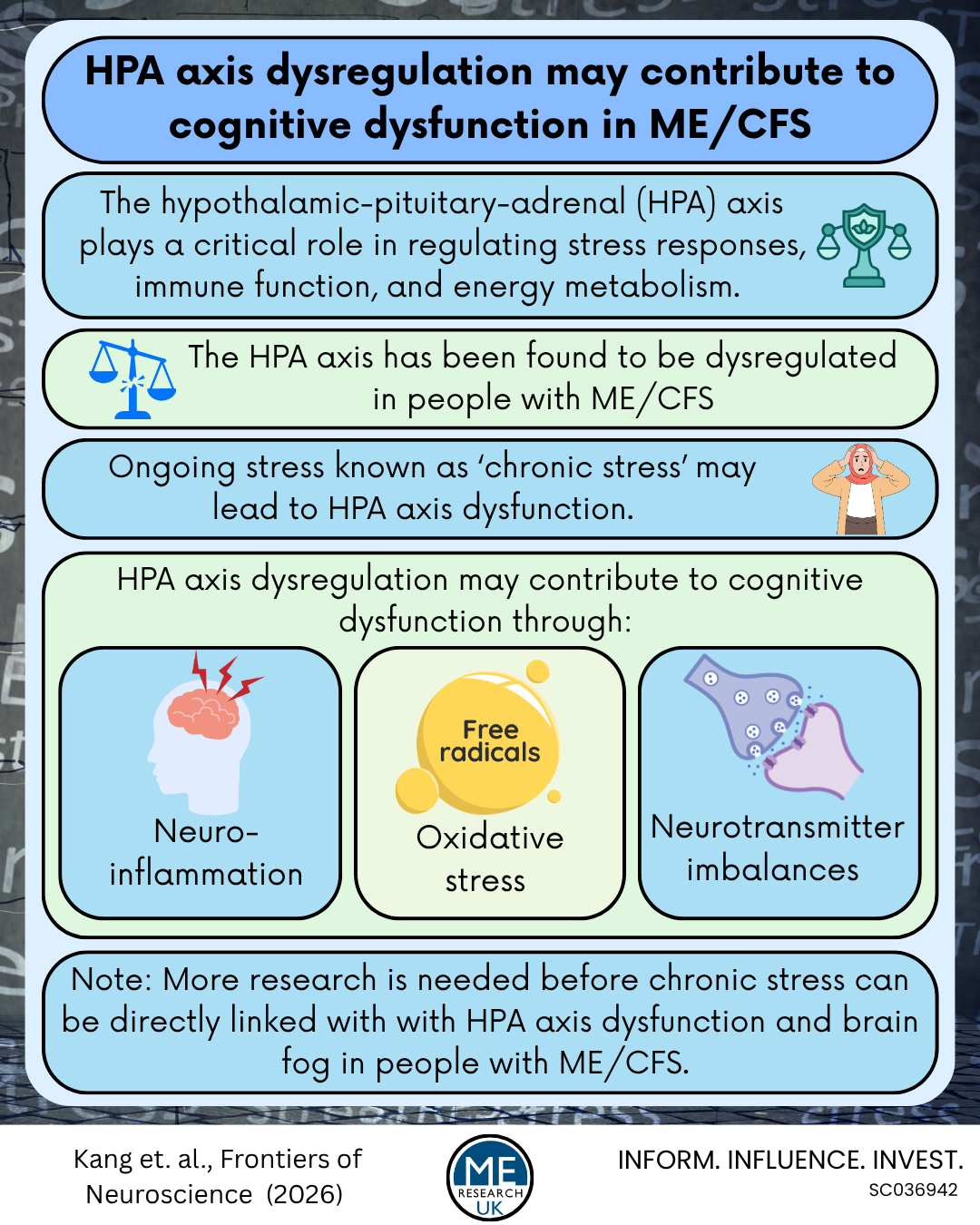
In the review article by Kang and colleagues, the authors explain that HPA axis dysregulation may lead to cognitive dysfunction.
Importantly, this is not the first time the HPA axis has been implicated in ME/CFS and symptoms of the disease. For instance, in 2025, two studies were published: a small study comparing 24 individuals with ME/CFS to 24 healthy controls found evidence of HPA axis dysregulation, and a of 27 studies reported reduced HPA axis activity in people with ME/CFS.
In Kang’s review, the authors suggest that HPA axis dysregulation may contribute to cognitive dysfunction through:
Neuroinflammation — the central nervous system’s immune response to infection, trauma, or toxins.
Oxidative stress — a state in which excess reactive oxygen species (free radicals) overwhelm antioxidant defences.
Imbalances in neurotransmitters — the brain’s chemical signalling molecules.
These processes are thought to affect both the structure and function of the hippocampus, a brain region essential for memory and learning. Notably, research funded by ME Research UK has also identified structural differences in the hippocampus between people with ME/CFS and healthy controls.
Interestingly, the HPA axis is also responsible for the regulation of cortisol, a hormone which is not only involved in the stress response, but is also crucial for everyday bodily functions including: energy management, inflammation and immunity, blood pressure, the sleep cycle — all of which have been found to be dysregulated in people with ME/CFS.
A note on heterogeneity
The review highlights considerable uncertainty, particularly regarding cortisol levels in people with ME/CFS. Some studies report lower cortisol levels, while others suggest increased levels.
The authors propose that these inconsistencies may reflect both the heterogeneity of the disease and methodological differences between studies, including variations in case definitions, illness duration, symptom severity, comorbidities, medication use, and participant recruitment.
Discussion
ME Research UK notes that although the evidence presented in the review seems to link chronic stress with nervous system dysfunction in ME/CFS, many of the studies presented show biological abnormalities in people with ME/CFS, but do not directly link these abnormalities with chronic stress. For example, research has found:
- Dysregulation of the HPA axis in people with ME/CFS.
- Altered communication (functional connectivity) between parts of the brain, such as the prefrontal cortex, and the hippocampal and parahippocampal regions, involved in cognitive control and emotional processing
- Low efficiency and compensatory patterns within cognitive networks and abnormal haemoglobin responses, something Dr Zack Shan – who is currently working on ME Research UK-funded research – said reflects decreased cognitive processing and increased central resource demands.
But these studies are not looking directly at the link between chronic stress and these abnormalities in people with ME/CFS. While it is possible, or even probable, that chronic stress is to blame for some or all of these abnormalities, the published research included in the review does not allow any firm conclusions to be drawn around causality.
Conclusion
The researchers conclude that “chronic stress may contribute to cognitive dysfunction in ME/CFS by disrupting HPA-axis homeostasis and adversely affecting key cognitive regions such as the hippocampus.” However more research is needed to firmly establish whether chronic stress is indeed the culprit, or if there is another cause of the abnormalities leading to brain fog in ME/CFS. The review team explain that “a clearer delineation of these interacting pathways will be important for advancing our understanding of ME/CFS pathophysiology and for informing more mechanism-based therapeutic strategies targeting chronic stress-related cognitive impairment.“