

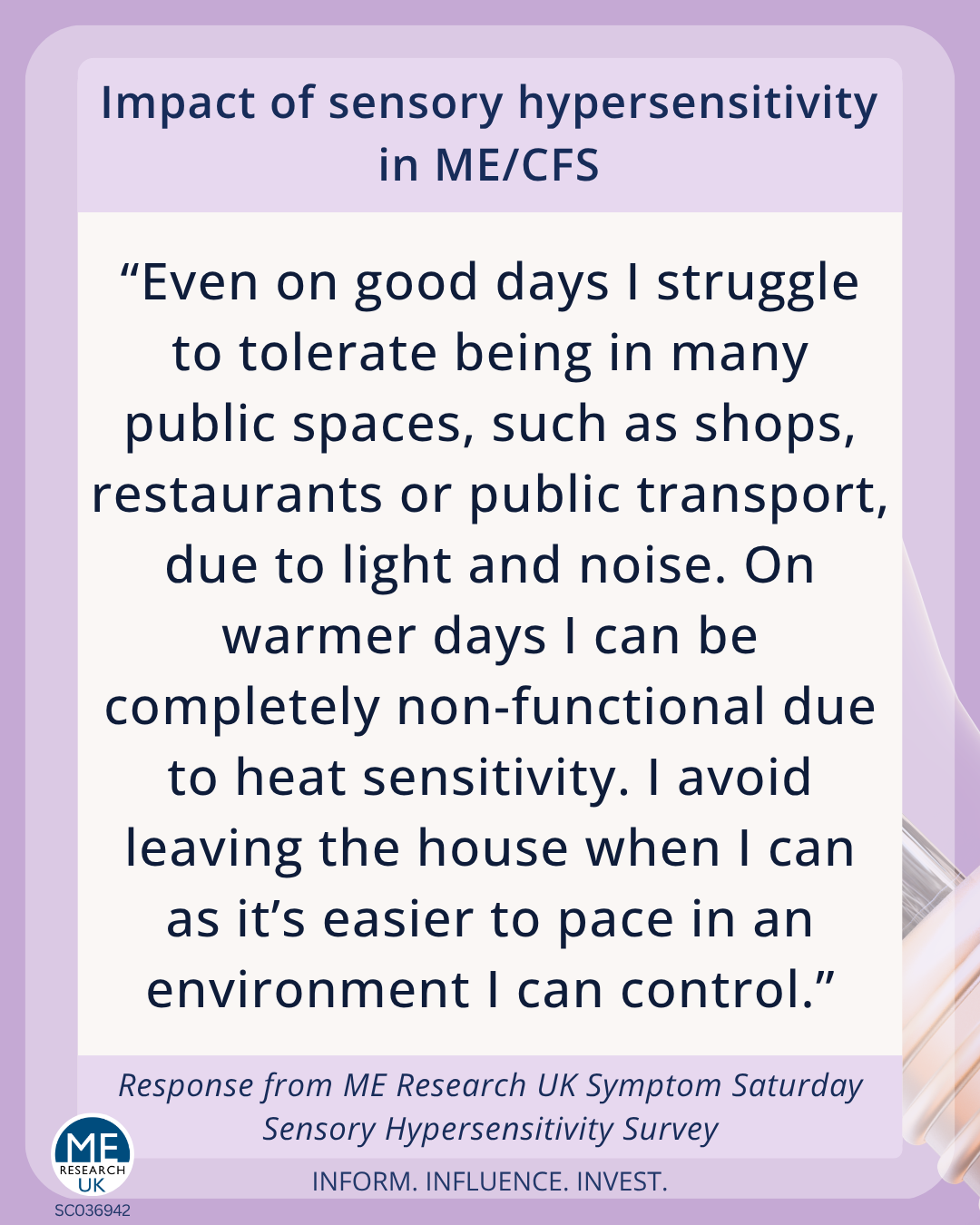
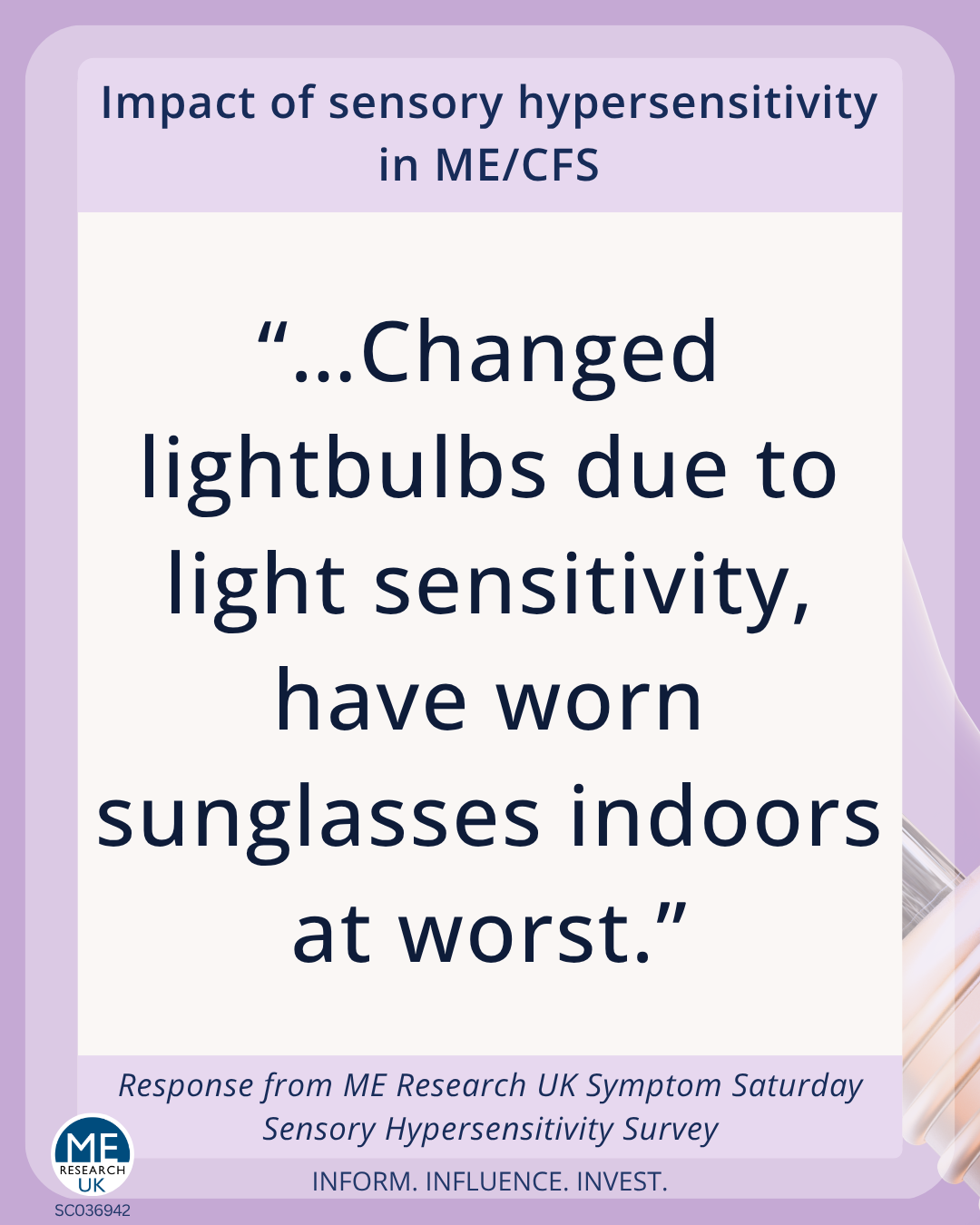
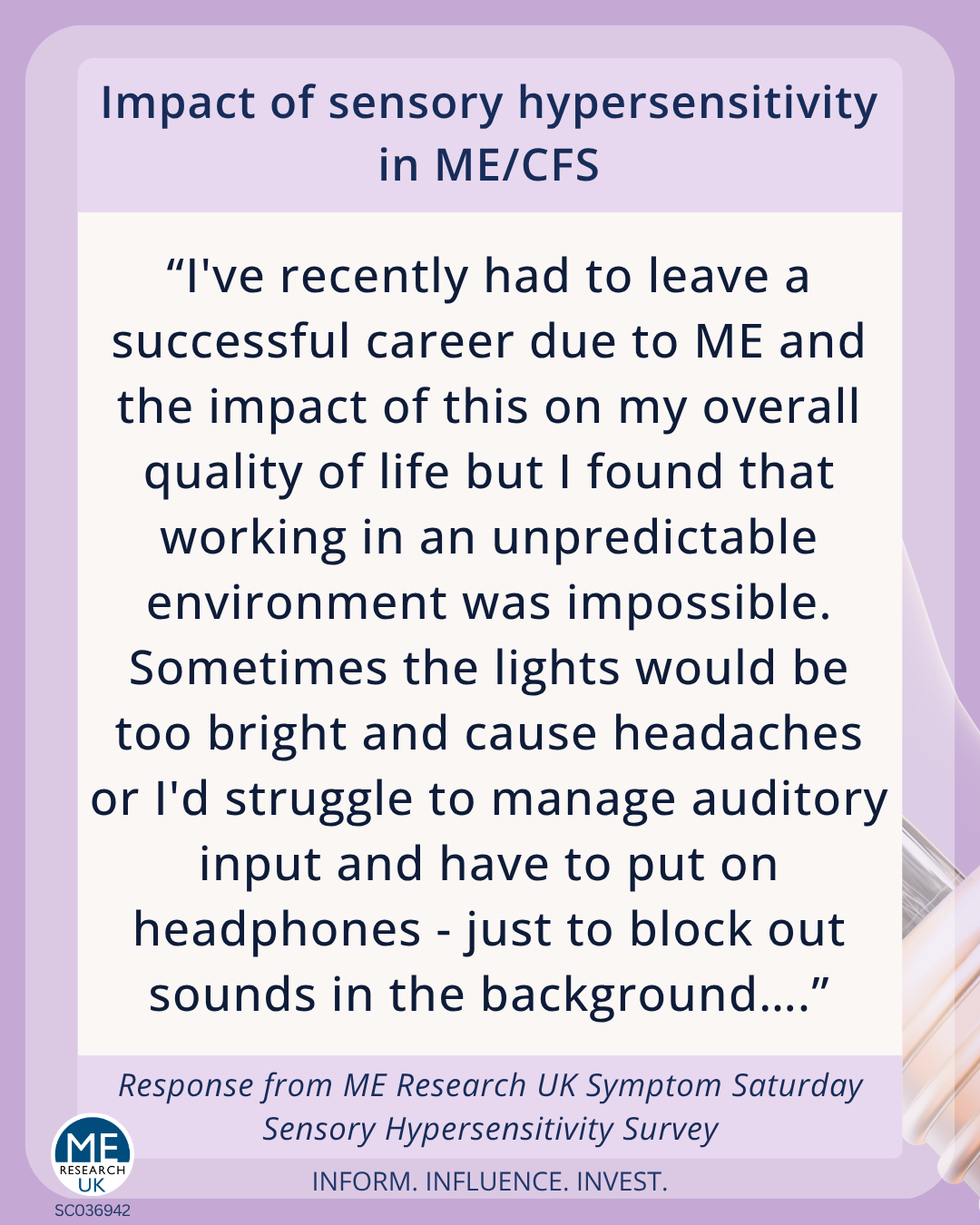
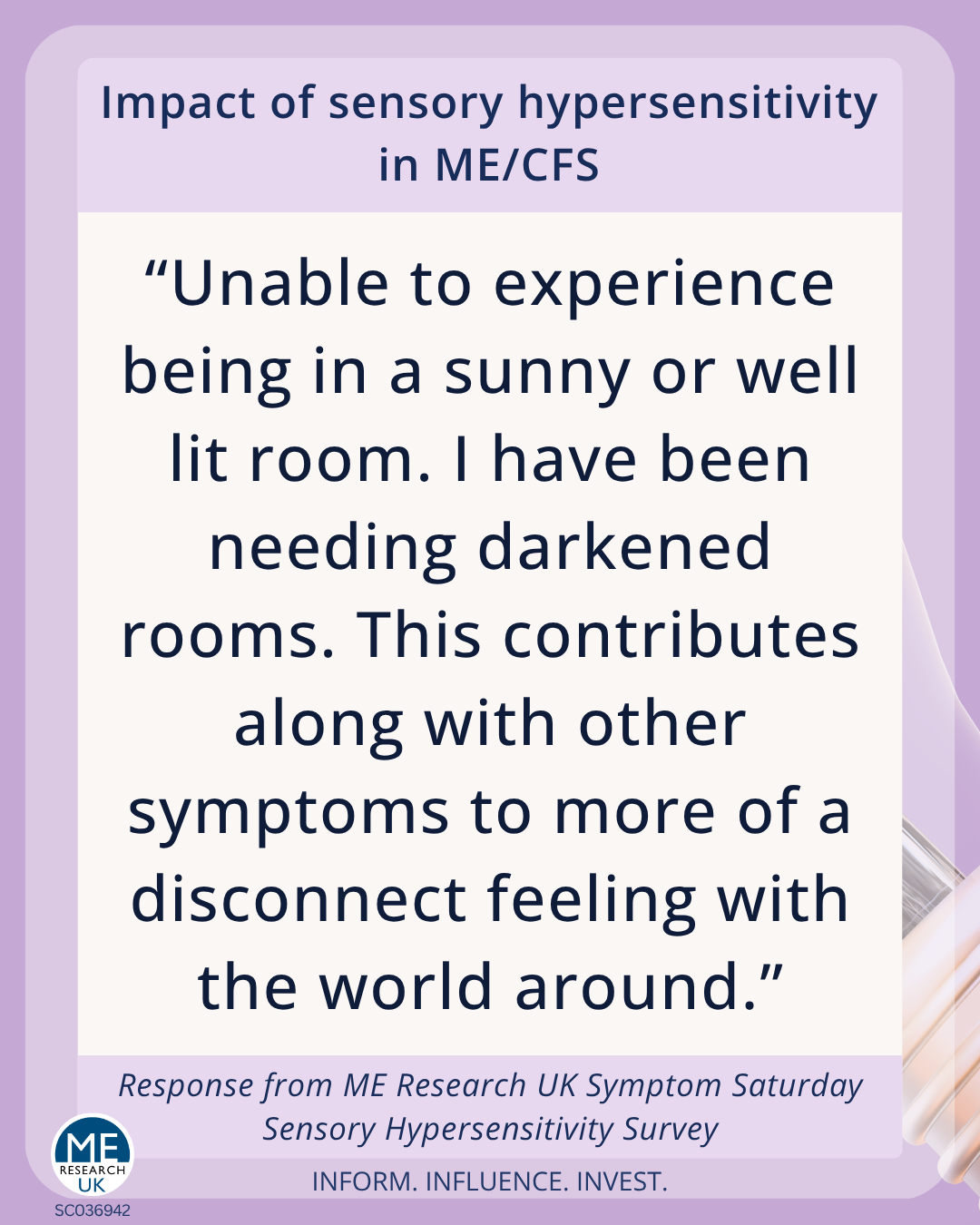
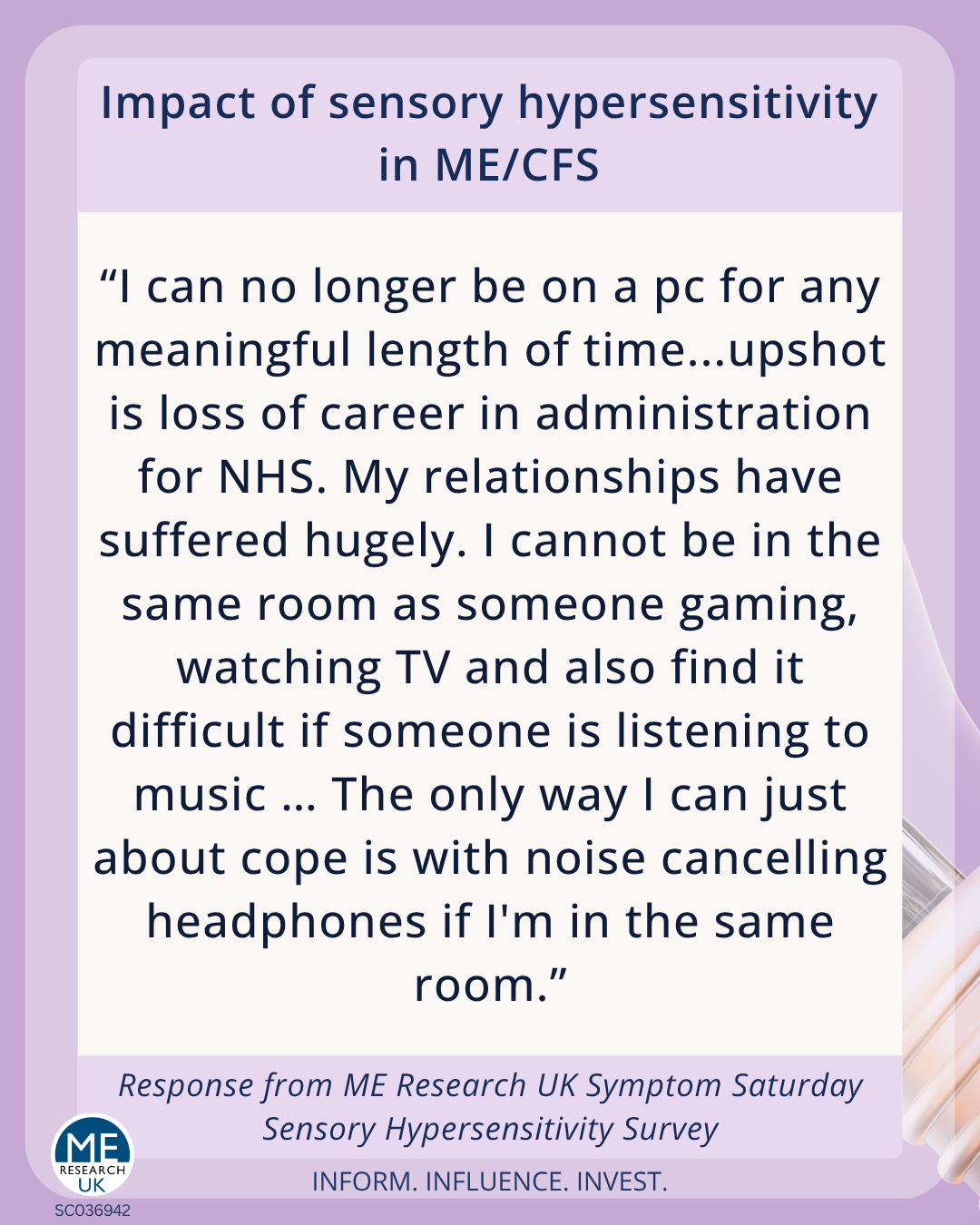
Sensory hypersensitivity – where the brain processes everyday stimuli more intensely – is reported in ME/CFS, particularly for those living with severe or very severe ME/CFS. This often-overlooked symptom manifests in various forms and can be profoundly disabling, fundamentally altering how individuals interact with their surroundings and loved ones. The NICE guideline explicitly highlights hypersensitivity to light, sound, touch, movement, temperature extremes, and smells.
We are deeply grateful to everyone who shared their insights through our recent Symptom Saturday survey. Whilst it is not possible to feature every response in a single article, every single account is vital. They help shape future biomedical publications, convey the realities of ME/CFS to researchers, supporters, and the public, and guide our internal organisational education.
Common ways participants describe the experience of sensory hypersensitivity include:
- Sensitivity across multiple senses – sound, light, touch, smell (such as fragrances), temperature
- Intense experiences of previously normal sensations; Everything too loud or bright; Everything in “high definition”; Background sensations become foreground
- Physical symptoms triggered nausea, headaches/migraines, dizziness, feeling faint and panicky
- Too much information coming in to process; Overstimulation
- Drains energy; much worse during post-exertional malaise (PEM)
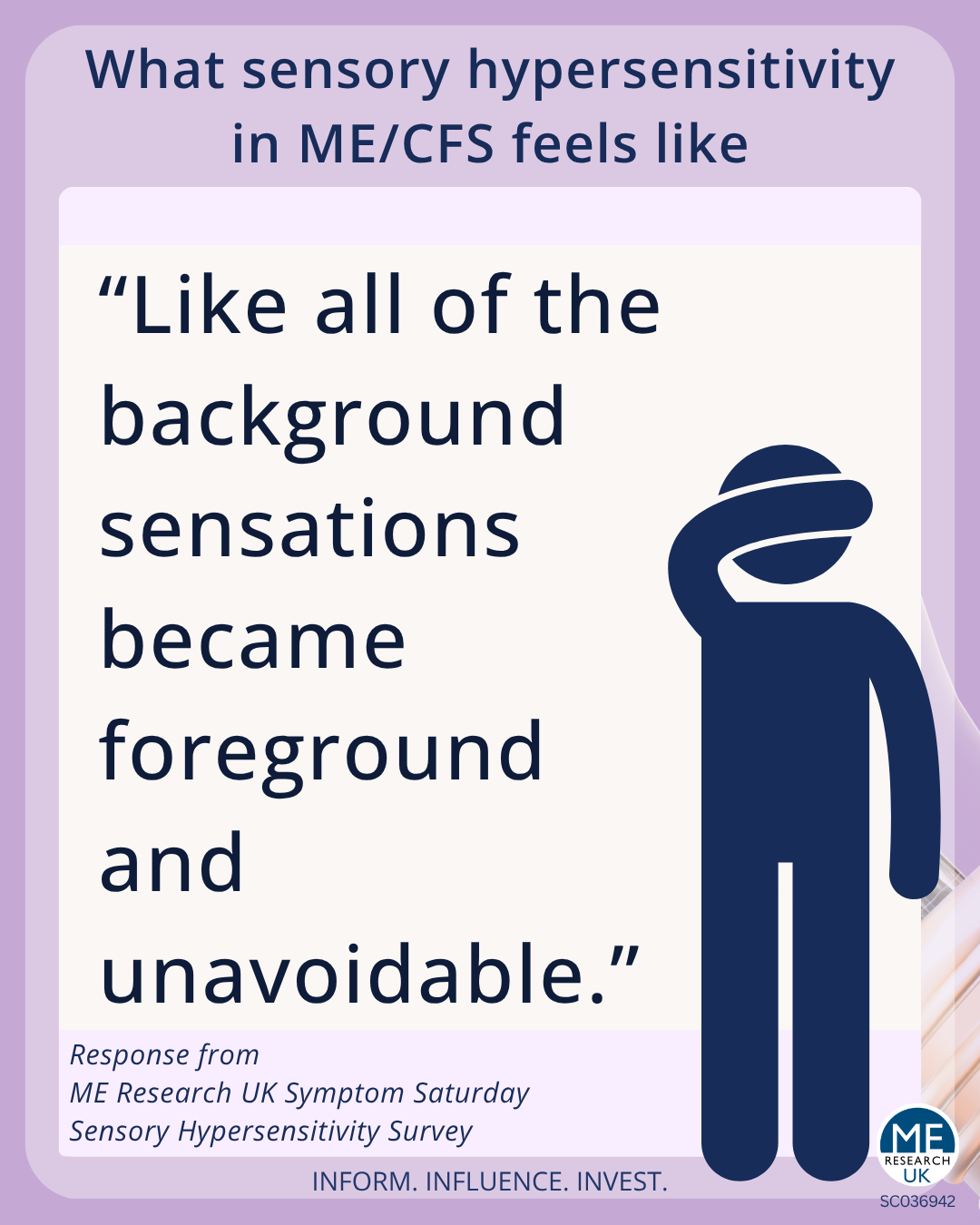
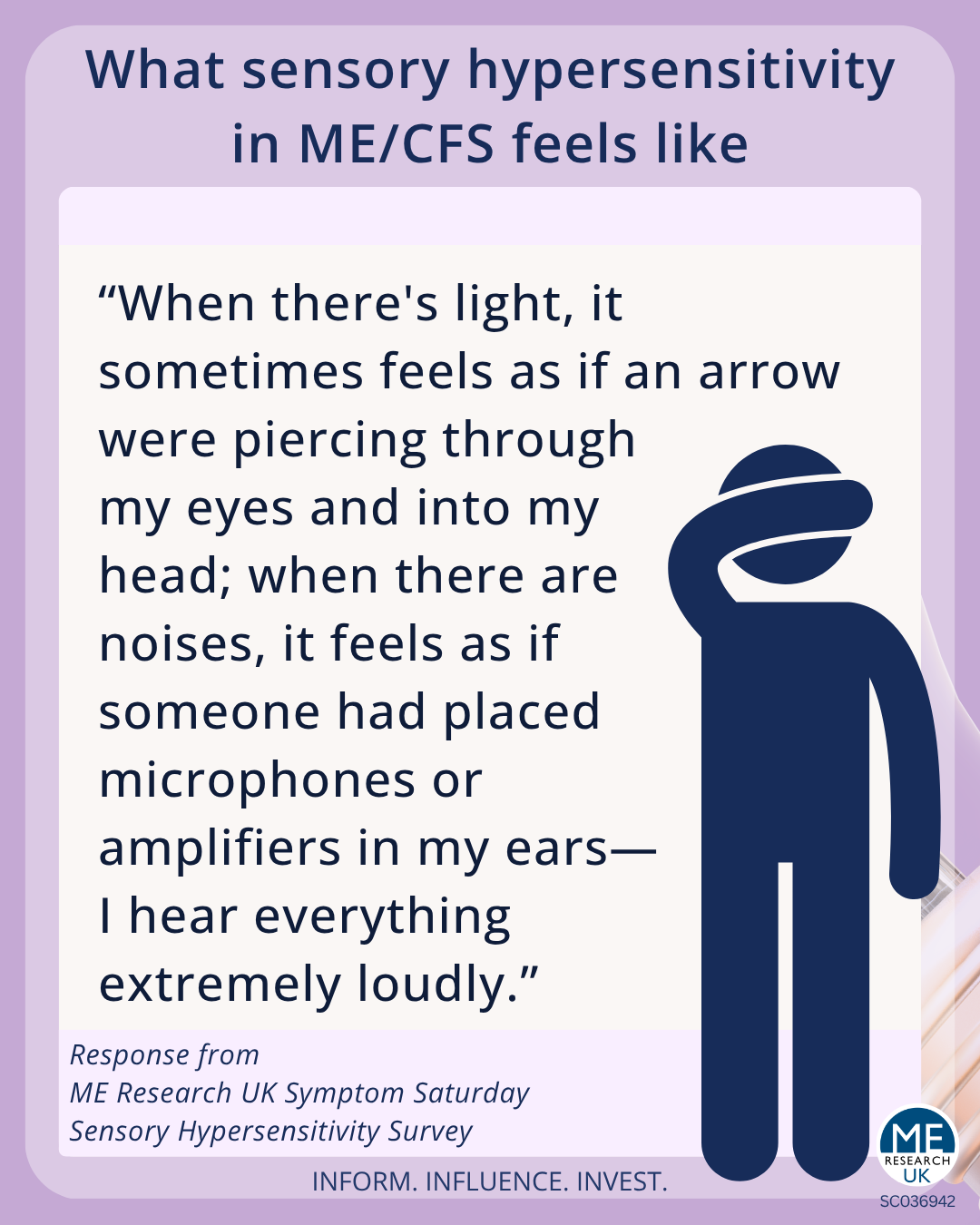
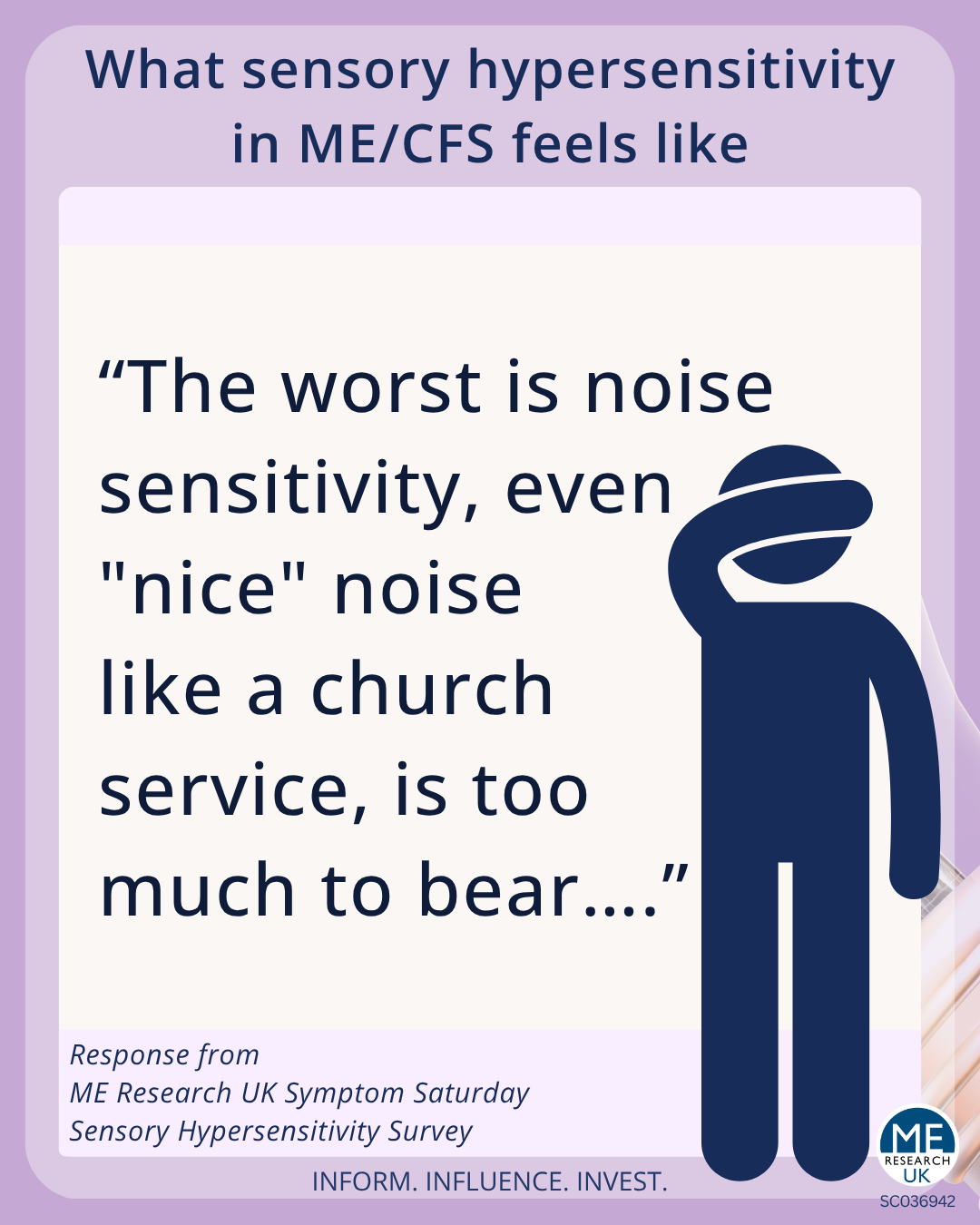
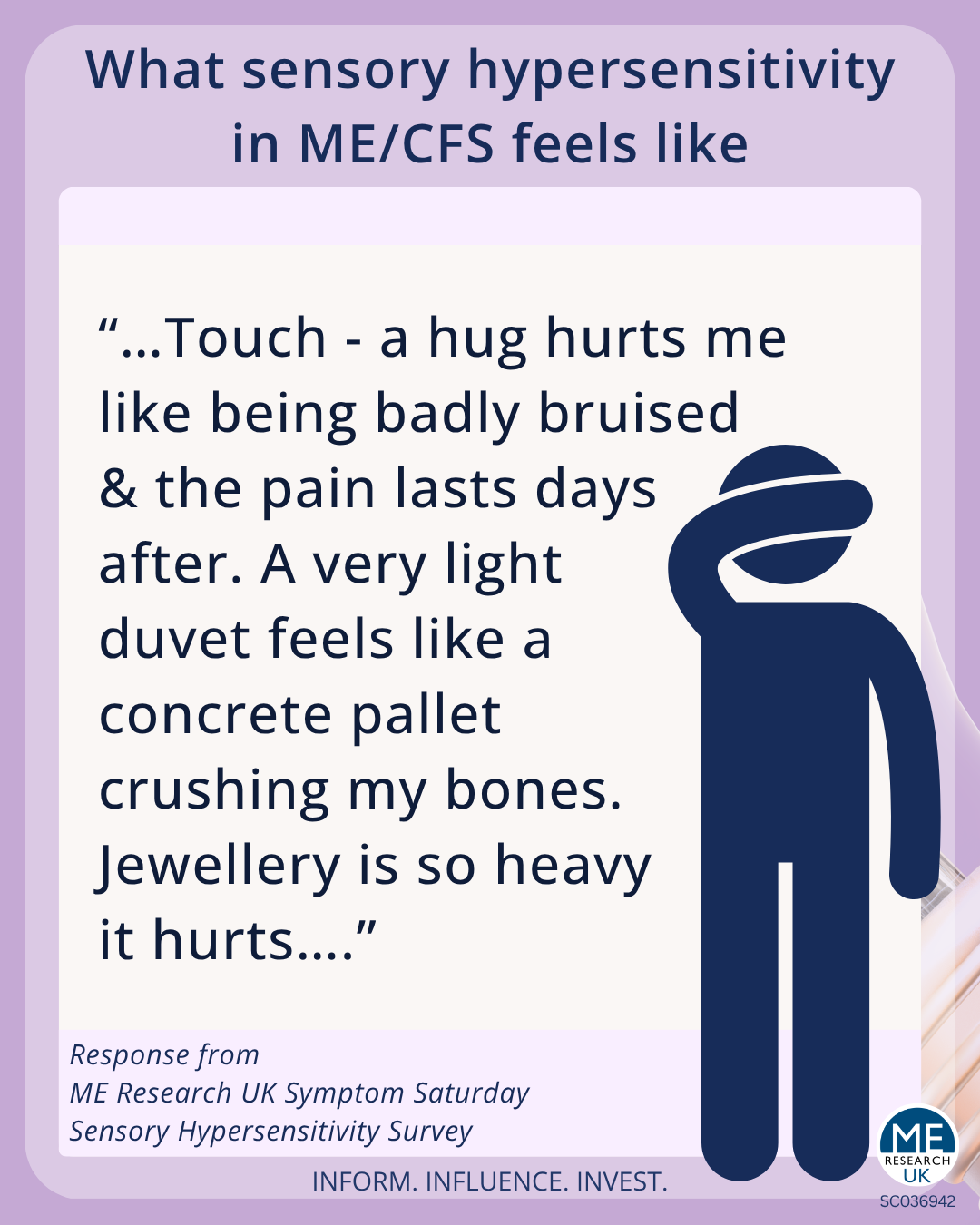
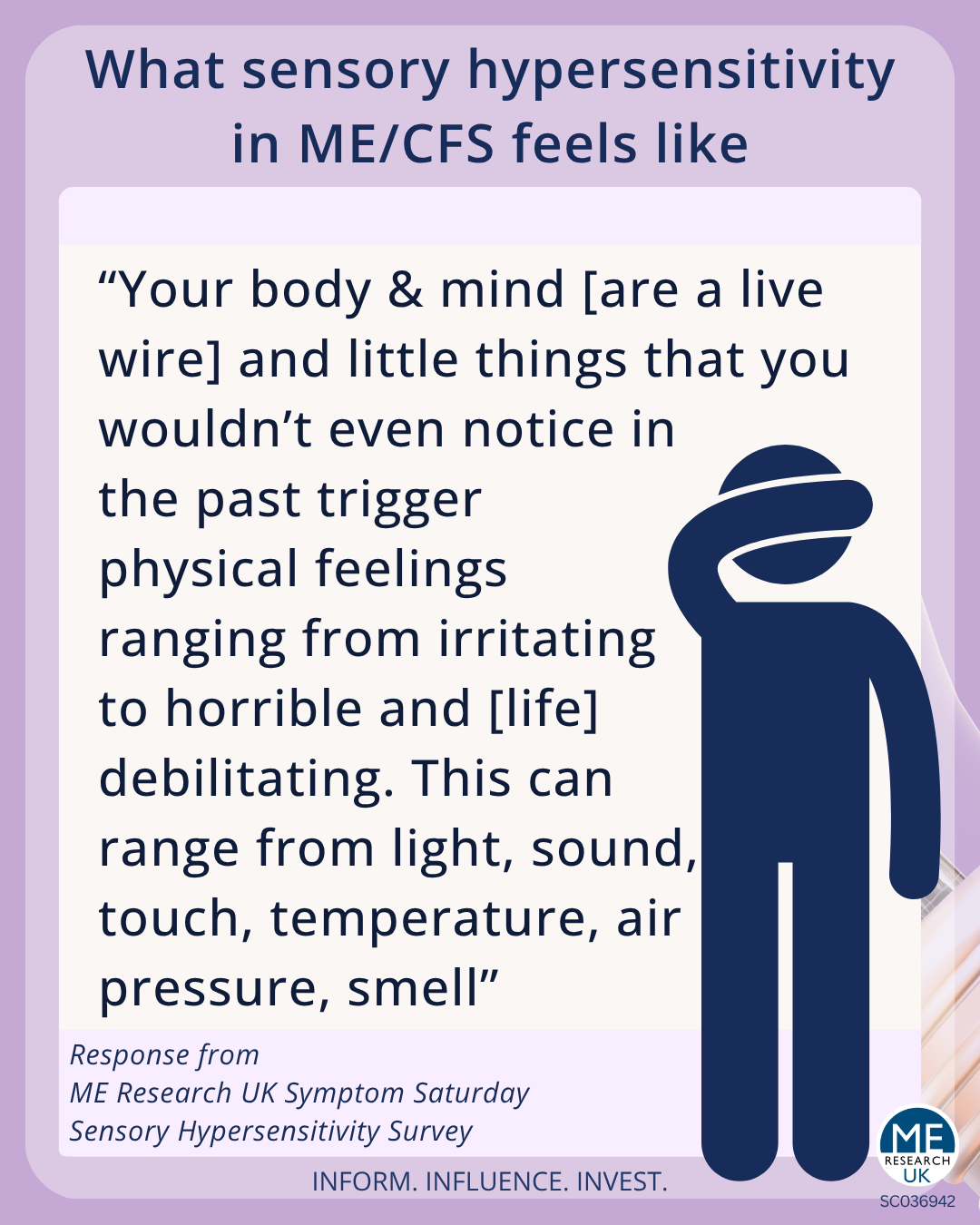
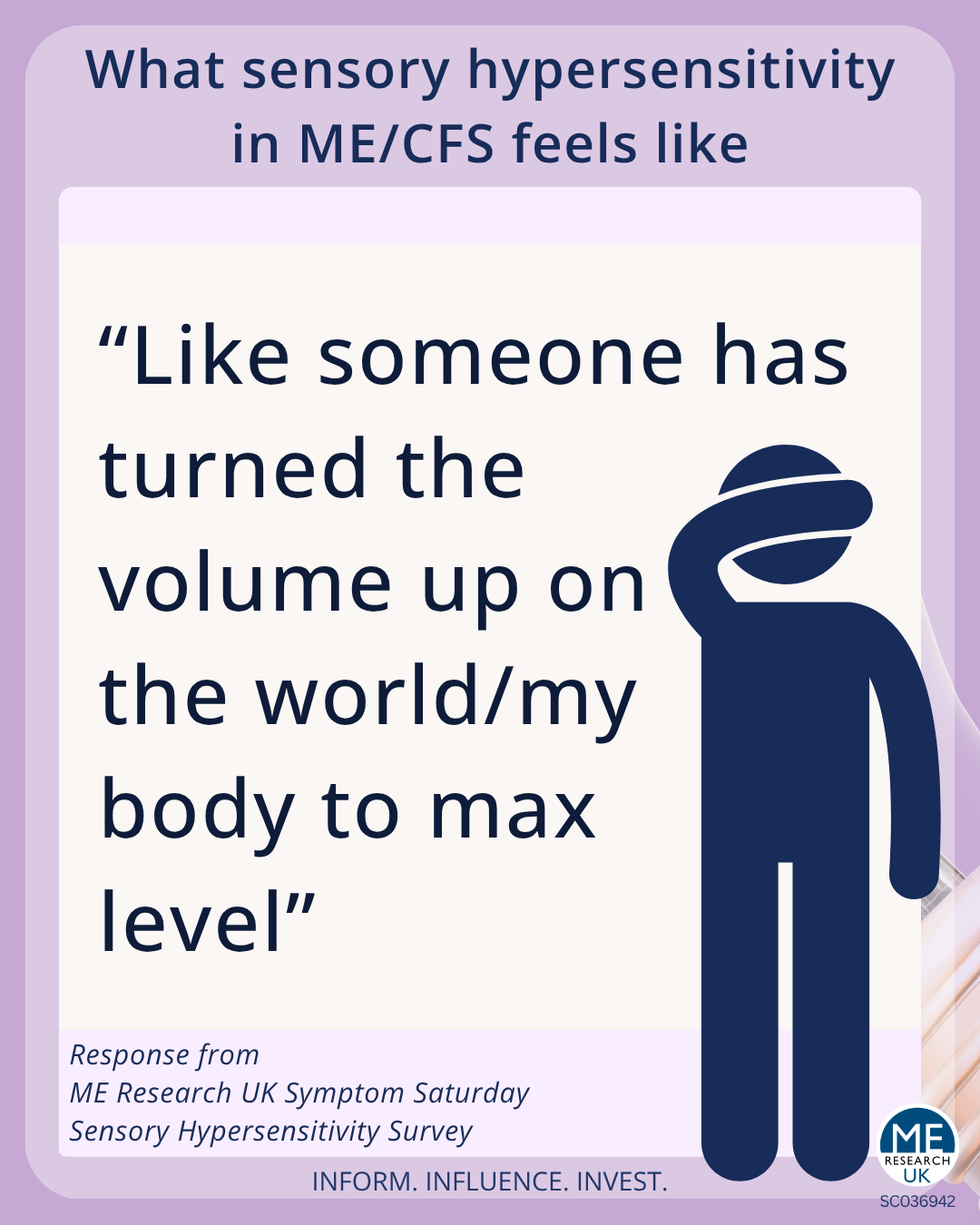
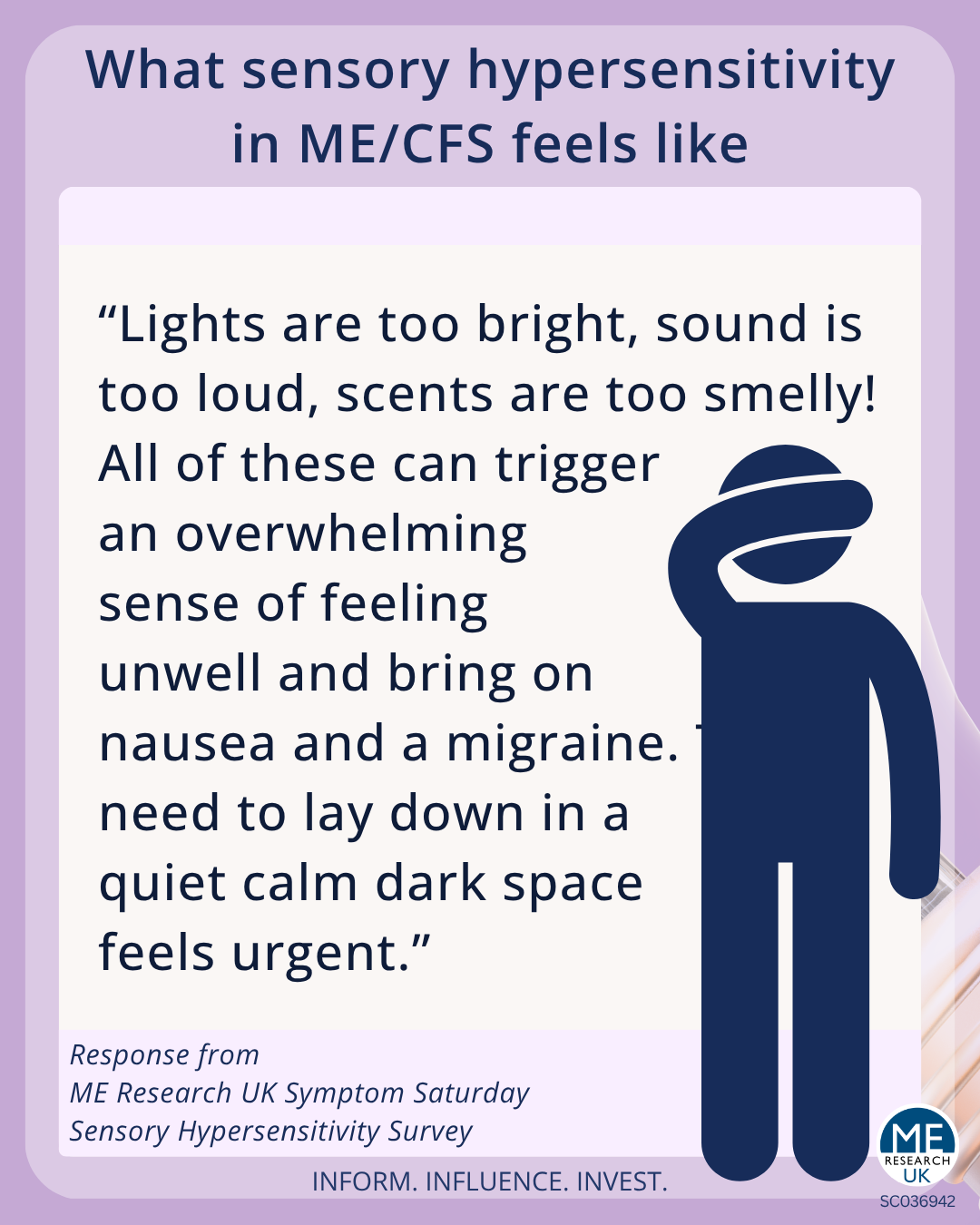
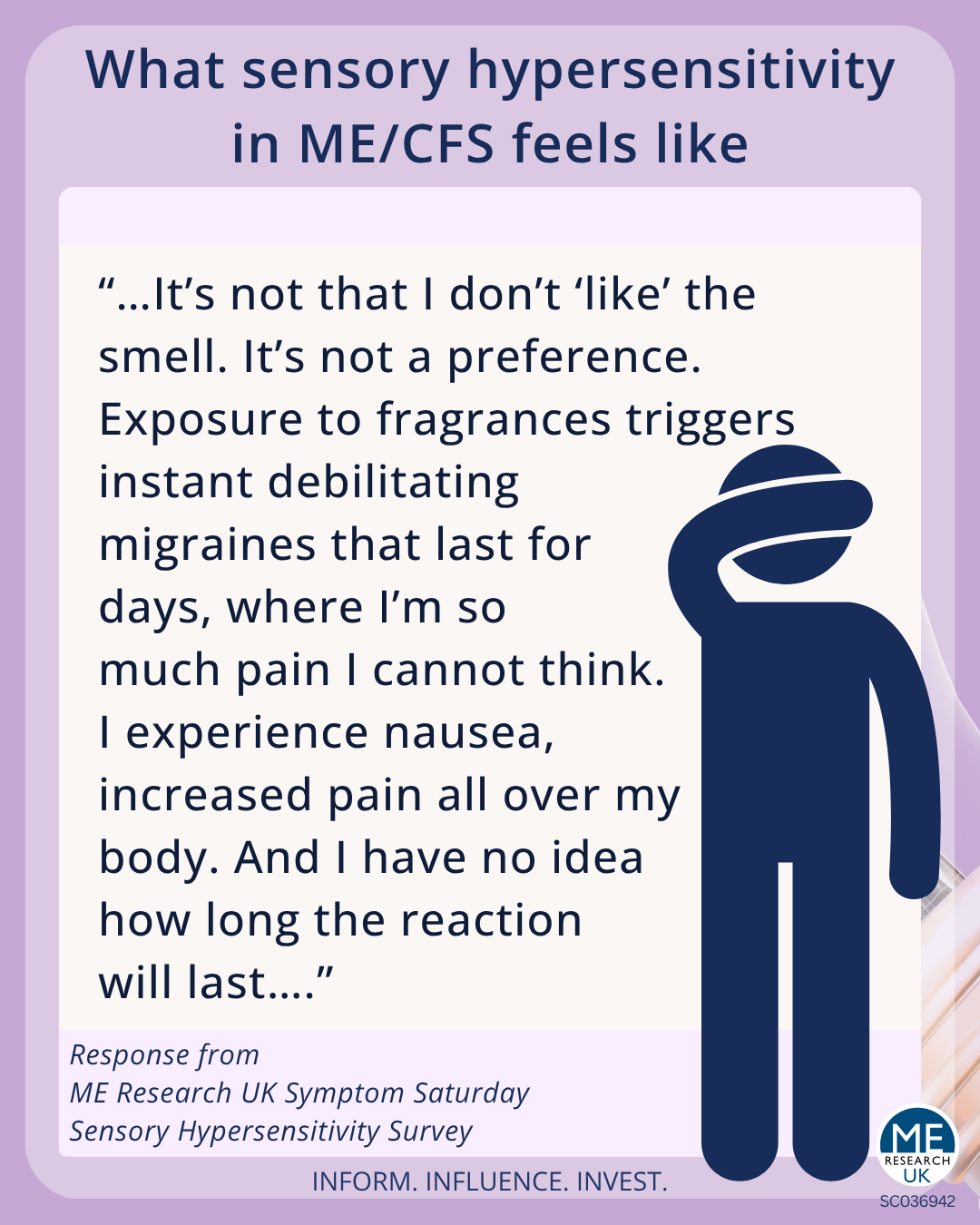
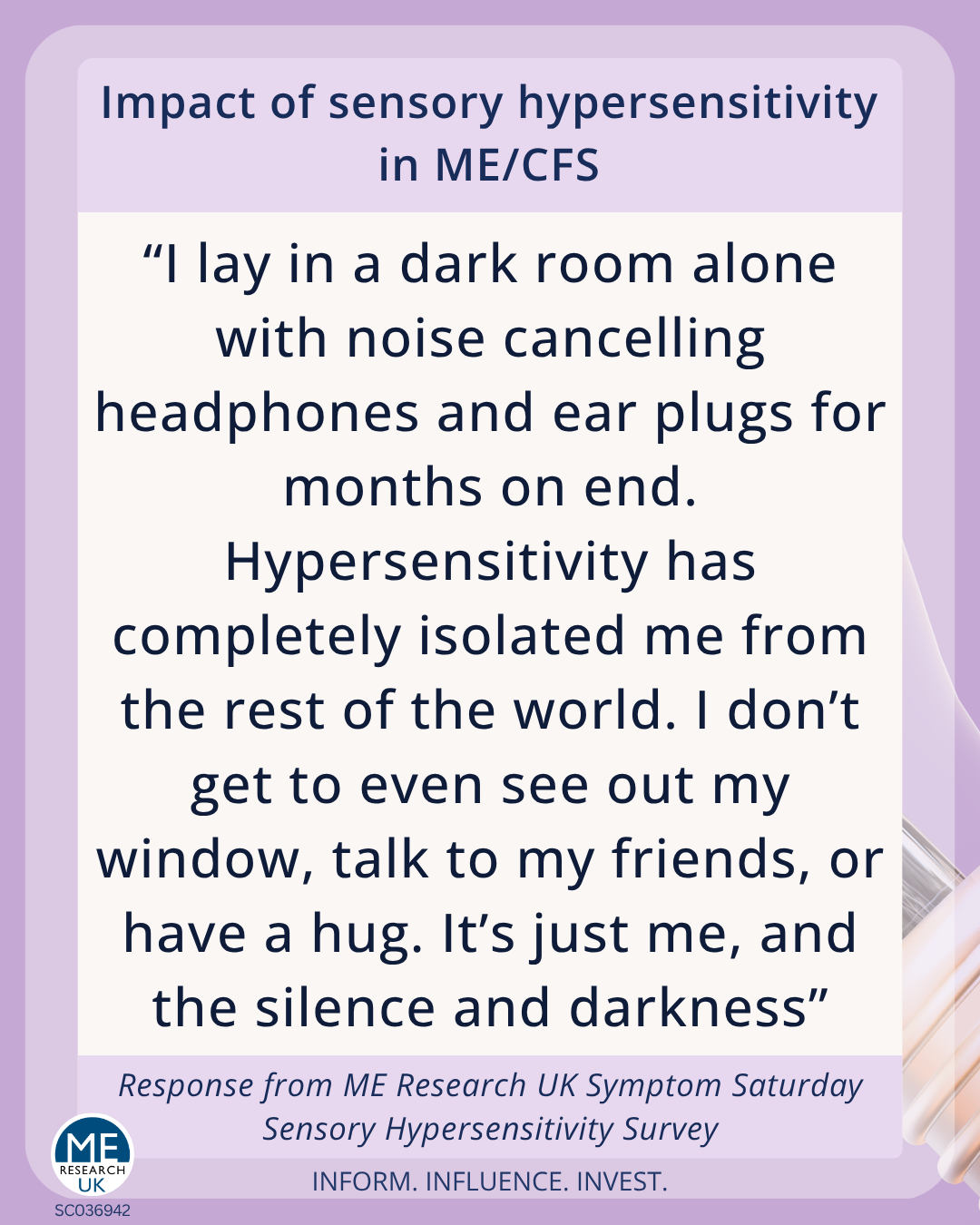
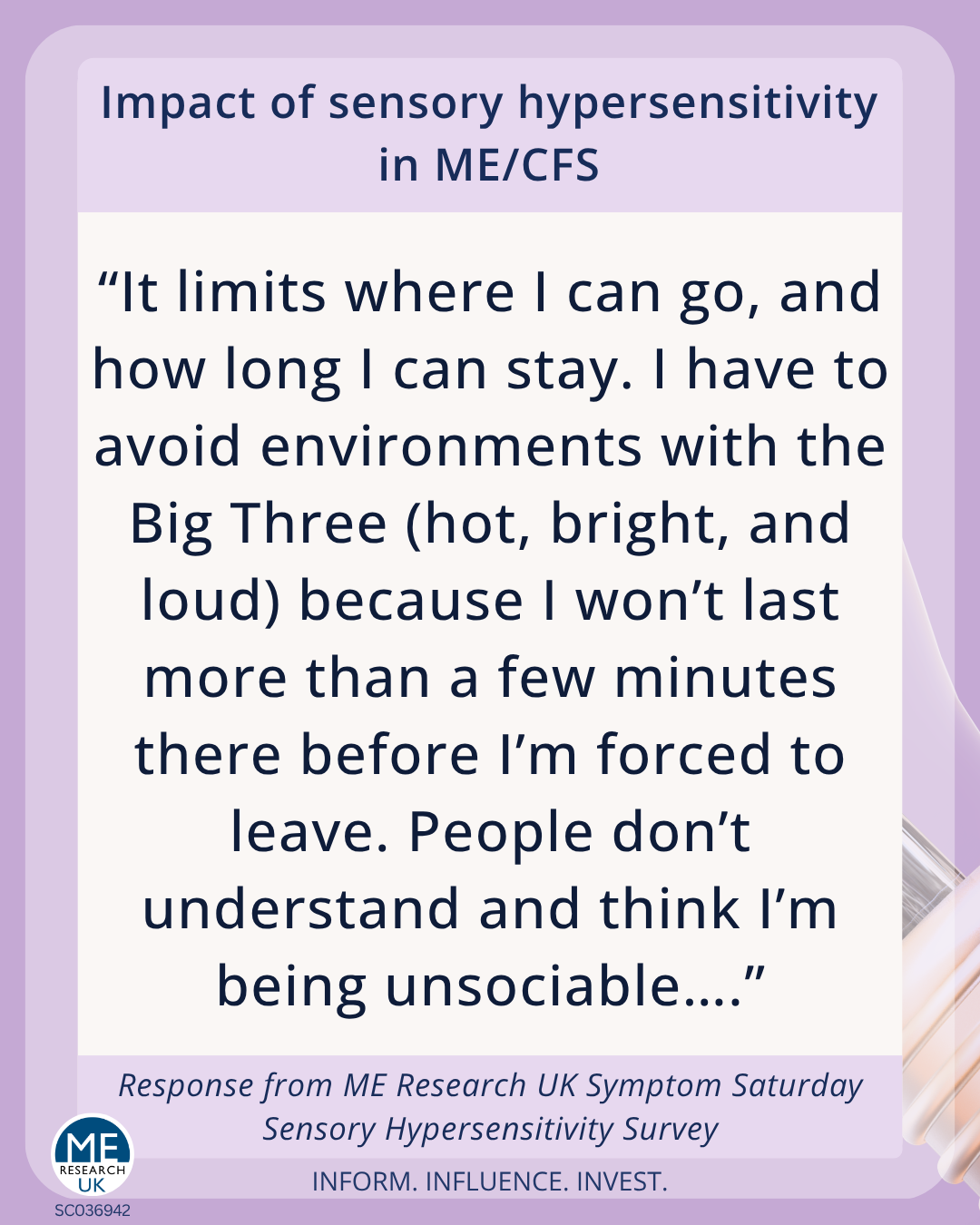
Sensory hypersensitivity is an incredibly isolating symptom of ME/CFS. Everyday life is filled with sensory inputs, such as light, sound, touch, and smell. When these ordinary sensations are amplified to the point of causing physical symptoms, such as pain and nausea, a person’s world shrinks dramatically. As with other key symptoms, sensory hypersensitivity is further amplified during post-exertional malaise (PEM). Compounding this isolation is how difficult the symptom is to fathom for those who have never experienced it.
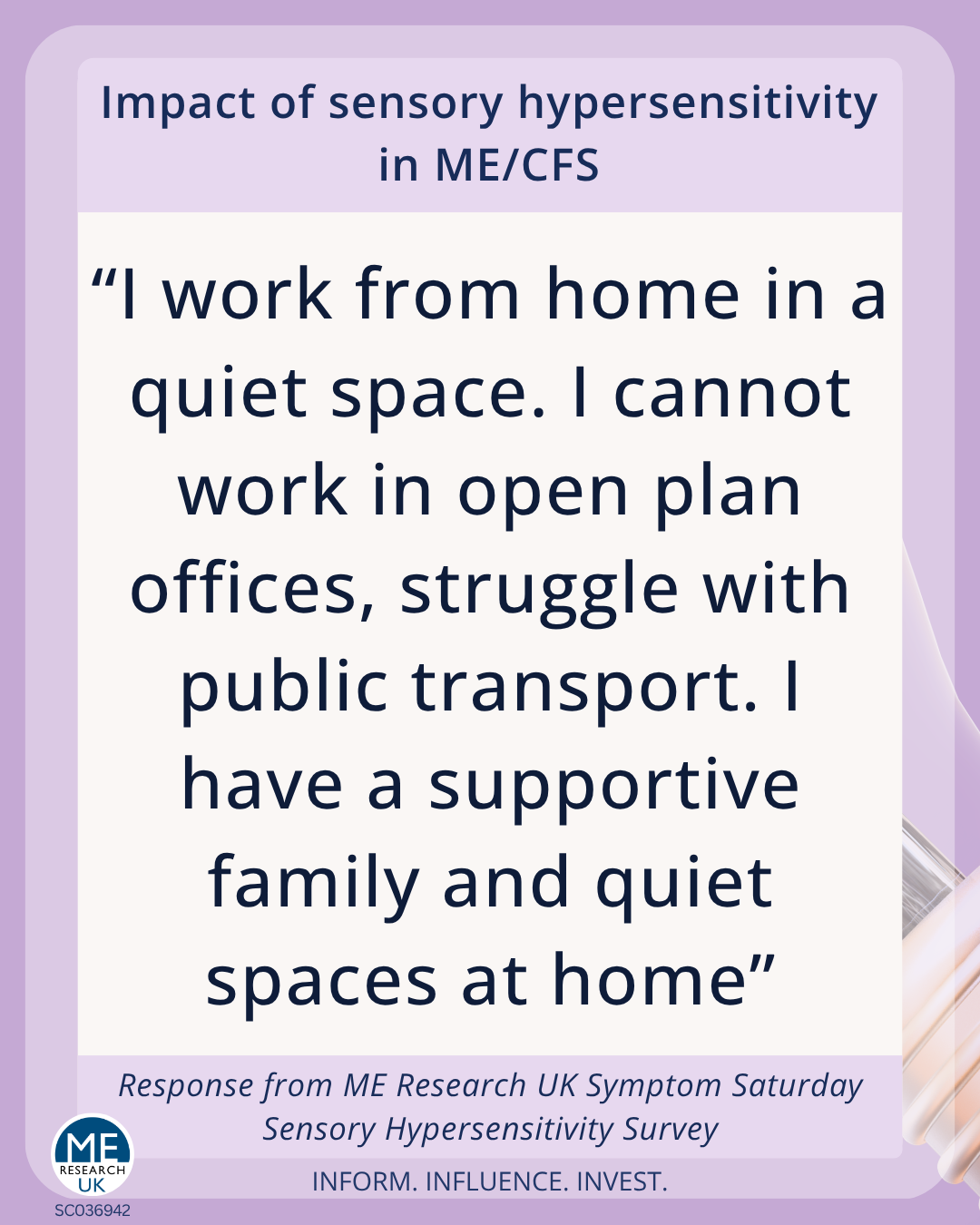
Sensory hypersensitivity can impact every corner of daily life, such as making it difficult or impossible to maintain a career, attend medical appointments, travel, socialise, or even remain in the same room as loved ones.
Crucially, individuals with severe and very severe ME/CFS are often extremely affected. Many experience extreme intolerance to even minimal sensory input, requiring low-stimulation environments to prevent devastating health deterioration.
Even though living with ME/CFS can feel profoundly lonely, you are not alone. There are people around the world who understand your reality and believe what you are going through because they (or their loved ones) live it too.
As with any other chronic condition, the symptom burden of ME/CFS and its ripple effects are clear, profound, and can be mentally overwhelming.
We urge anyone in distress to consider reaching out to appropriate organisations or helplines, such as Mind or The Samaritans, for support.
This article is part of the Symptom Saturday series.
Read our comprehensive overview of sensory hypersensitivity in ME/CFS


