Research has shown that ME/CFS commonly begins during adolescence (10–19 years) and adulthood (30–39 years), with the first peak coinciding with a crucial period of physical, emotional, cognitive and social development.
Despite the onset of ME/CFS occurring in a key developmental window during adolescence, understanding of the nature and impact of ME/CFS during adolescence remains under-researched.
Therefore, a team of researchers in Melbourne, Australia, including Prof. Sarah Knight who has previously worked on research funded by ME Research UK – set out to gain a better understanding of symptoms, cognition, and psychosocial Wellbeing in adolescents with ME/CFS. The team hoped that the results of the study would provide evidence to provide young ME/CFS patients with a “greater sense of independence, reassurance and meaningful management strategies.”
What did the researchers do?
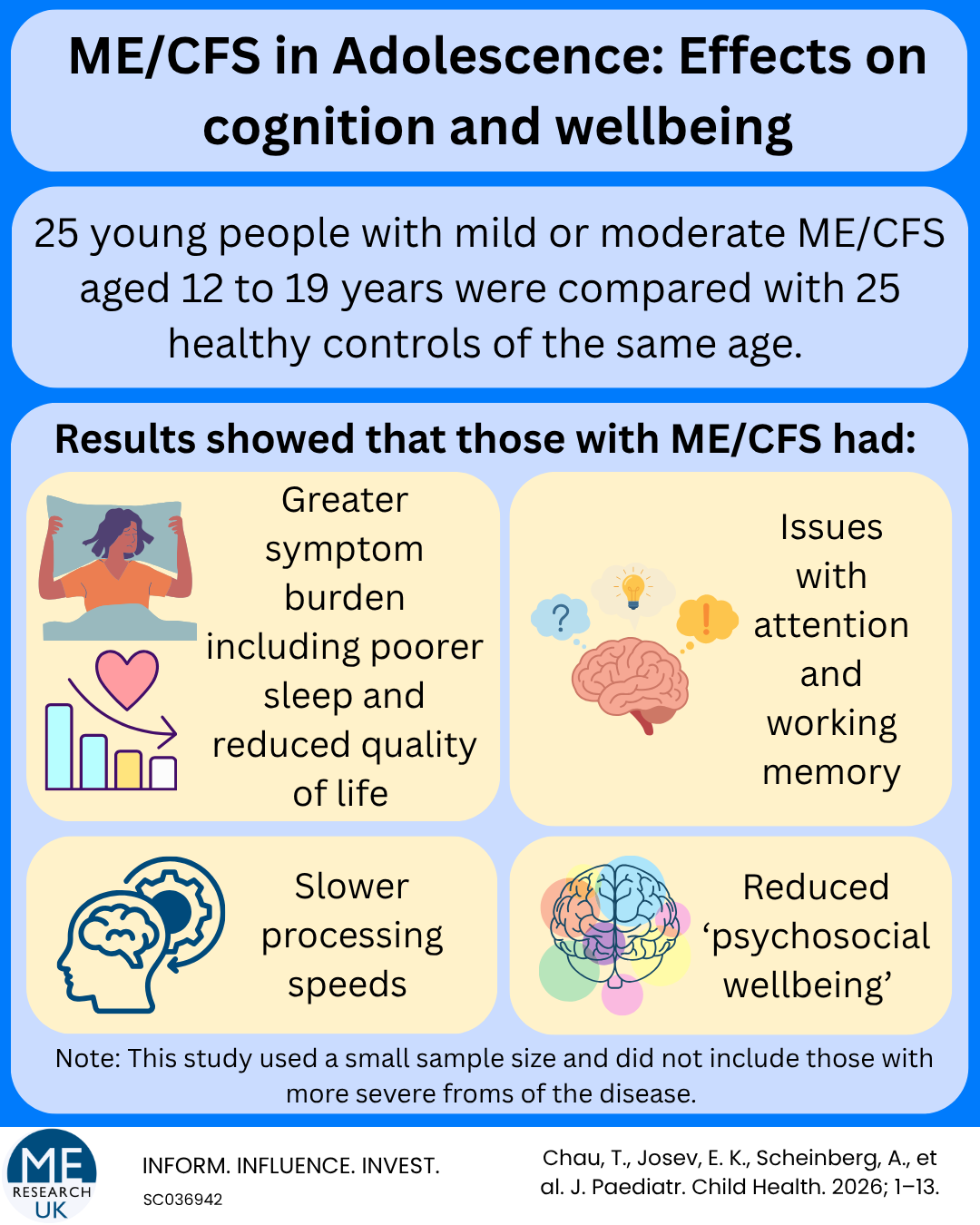
The researchers recruited 50 young people aged 12 to 19 years in Melbourne, Australia. Half had mild-to-moderate ME/CFS and half were healthy controls. The young people completed questionnaires and cognitive tests covering their symptoms, school functioning, quality of life, emotional wellbeing and thinking skills. Caregivers also answered questions about the young person’s wellbeing and everyday skills such as attention, memory and organisation.
What did the study find?
- Slower processing speed: On average, adolescents with ME/CFS took longer to process information. Most other measures of general intellectual ability did not show consistent differences between the two groups. Notably, this reduction in processing speed has also been previously reported by Prof. Knight’s research team in adolescents with ME/CFS.
- Greater symptom burden: Young people with ME/CFS reported poorer sleep and a lower quality of life.
- Reduced ‘psychosocial wellbeing’: Participants with ME/CFS also reported higher levels of anxiety and depression than healthy adolescents. However, it is worth noting that the rates of anxiety and depression in the study sample, including those with ME/CFS, were lower than the averages for adolescents of the same age in the general population (i.e., the study population had better mental wellbeing compared with the general population of the same age).
- Everyday thinking difficulties: Caregivers reported more concerns about attention and working memory in the ME/CFS group.
- Different viewpoints: Caregivers did not report a difference between groups in inwardly directed emotional difficulties, such as anxiety or low mood, even though the young people themselves did. This shows why it is important to listen to both adolescents and their caregivers.
What do the findings mean?
The findings suggest that ME/CFS can affect adolescents physically, emotionally, cognitively and educationally. Difficulties described as “brain fog” may partly reflect slower information processing and symptoms that change from day to day. The authors argue for flexible, paced support in healthcare and education—for example, allowing more time, reducing cognitive overload and adapting expectations to a young person’s changing capacity.
What are the study’s limitations?
- This was a small study involving only 50 participants; 25 adolescents with mild-to-moderate ME/CFS and 25 healthy controls from one Australian city. While the authors do state that the sample size is like other ME/CFS studies in adolescents. It is clear that larger and more diverse sample sizes are needed to generate findings that are more representative of all adolescents with ME/CFS.
- The study is ‘cross-sectional’ which means that it provides a snapshot at one point in time, so it cannot show whether ME/CFS caused the differences observed or how symptoms and thinking skills change over time.
- The findings may not represent young people with severe ME/CFS or those from different backgrounds.
Take-home message
In this study, adolescents with ME/CFS had slower processing speeds, poor sleep, reduced quality of life, and emotional distress. Together, these factors can combine to make school and daily activities much harder. The researchers conclude that support for adolescents with ME/CFS should be individualised, flexible and guided by the young person’s own account as well as caregiver observations. Additionally, this study highlights the need for larger and longer-term studies using diverse samples of participants that are more representative of all adolescents with ME/CFS.