ME Research UK attended remotely the International ME/CFS Conference 2026 – Understand, Diagnose, Treat (May 7-8th), hosted by Charité Fatigue Center, Berlin, and co-organised with the ME/CFS Research Foundation.
The similarities between long COVID and post-COVID vaccination syndrome (often termed post-vaccination or “post-vax” syndrome) was a recurring topic of discussion throughout the COVID-19 pandemic. Therefore, a highlight from Day 1 of the conference was a useful talk by Prof. Dr. Nina Babel on “Beyond the Trigger: Post-COVID and Post-Vaccination Syndromes from a Clinical and Immunological Perspective“.
Prof. Dr. Babel started by outlining the most common symptoms associated with acute COVID-19 infection, which typically lasts from several days to around two weeks, and compared these with the most common acute reactions to COVID-19 vaccination, which usually resolve within a few days. The two groups share several frequently reported symptoms, including fever, chills, joint pain, and headache. However, there were also notable differences: cough and shortness of breath during acute infection, whereas obviously injection-site pain was characteristic of the vaccination group.
The talk then moved to post-acute symptoms, defined as symptoms that emerge or persist beyond three months and continue for at least two months. Following COVID-19 infection, these symptoms are referred to as Post-Acute COVID Syndrome (PACS), more commonly known as long COVID. Comparable symptoms occurring after COVID-19 vaccination were described as Post-Acute COVID Vaccination Syndrome (PACVS).
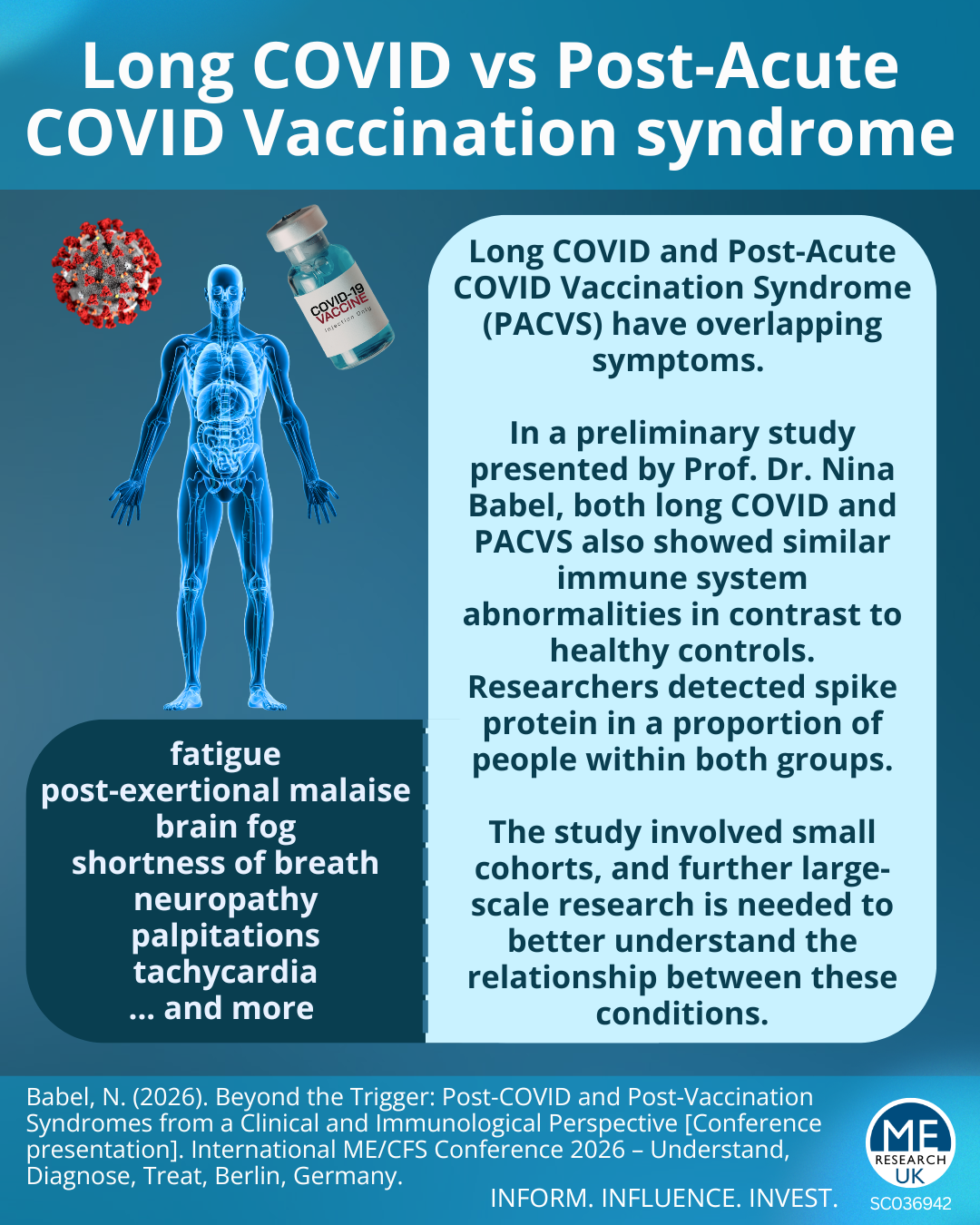
Prof. Dr. Babel highlighted that both long COVID and PACVS can converge in the presentation of symptoms, including:
- Chronic fatigue
- Post-exertional malaise (PEM)
- Brain fog
- Shortness of breath
- Neuropathy
- Palpitations
- Tachycardia (fast heartbeat)
…and more (it should be noted that long COVID is thought to have over 200 symptoms and not everyone presents the same)
What is interesting is the the inclusion of post-exertional malaise (PEM), hallmark feature of ME/CFS; and shortness of breath, which is not seemingly frequently associated with acute vaccine reactions but is associated with PACVS.
Prof. Dr. Babel discussed a study examining the clinical and immunological characteristics of 28 individuals with long COVID and 29 individuals with PACVS, compared with healthy controls. In addition to symptom questionnaires, researchers performed a range of specialised investigations, including analyses of T cells (immune cells) and spike protein detection. Importantly it is acknowledged that these findings were preliminary, derived from relatively small cohorts, and require confirmation through larger studies.
Note: What is spike protein?
Spike proteins are structures that protrude from the surface of enveloped viruses, such as the COVID-19 virus. They are essential to the function of the virus, notably for viral entry into human cells. Apparently, certain COVID-19 vaccines cause the body to produce spike proteins, allowing the immune system to recognise and respond to them.
Study findings as reported during talk – long COVID vs PACVS
- Similar clinical presentation and symptom severity
- Similar T cell phenotypes (observable characteristics of T cells) yet both significantly differed from healthy controls
- Similar magnitudes of specific T-cell responses
- Similar concentration and prevalence of a particular autonomic nervous system receptor
- Spike protein detected in 21% of individuals with long COVID, 41% of individuals with PACVS, but almost no health controls
To conclude, Prof. Dr. Babel’s presentation highlighted notable clinical and immunological similarities between long COVID and PACVS. Whilst the findings remain preliminary and should be interpreted cautiously, they contribute to ongoing discussion.