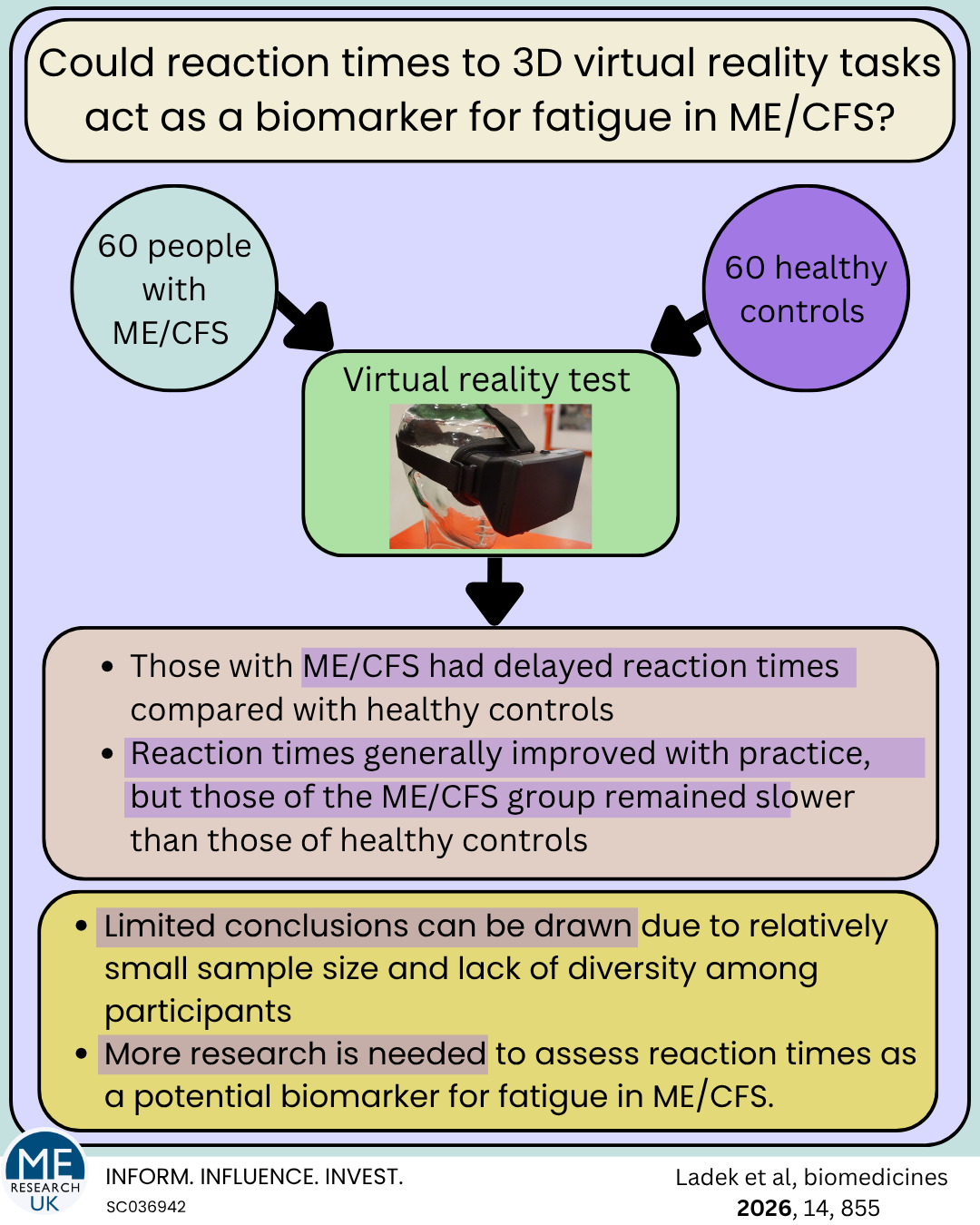
A team of researchers in Germany have assessed whether reaction times to 3D virtual reality tasks could act as a biomarker for fatigue in ME/CFS.
The study included:
- 60 people with ME/CFS who met the “Canadian Diagnostic Criteria for ME/CFS at the time of study participation and had a formal diagnosis from an independent physician with symptoms occurring prior to 2020 or with clear records of COVID-19 being ruled out during the initial infection.”
- 60 healthy controls.
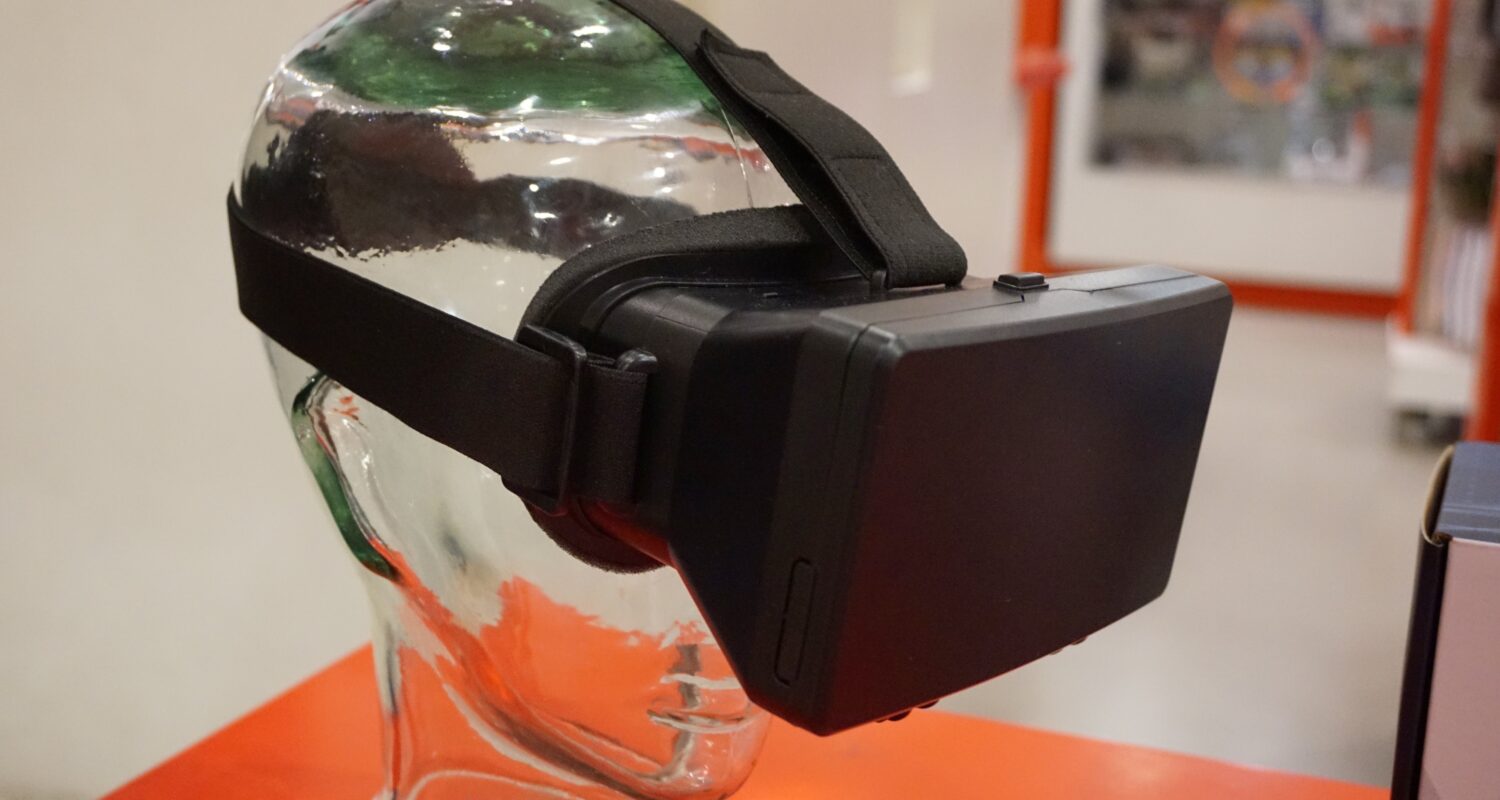
Reaction time was assessed using a medical diagnostic tool, known as a virtual reality-oculomotor test system, that uses a device worn on the head that places a small screen or image directly in front of one or both eyes, and has specialised software and cameras to track, measure, and analyse eye movements in a fully immersive 3D environment.
Although this was a relatively small study, the results showed that when compared with those of healthy controls, reaction times of those with ME/CFS were significantly slower. It was also observed that although reaction times generally improved with practice, those of the ME/CFS group remained slower than those of healthy controls.
Interestingly in this study, there was no significant association between reaction time and symptom severity. However, this finding may be explained by a lack of diversity in severity levels within the ME/CFS group, i.e., if all ME/CFS participants had mild symptoms.
While there are limited conclusions that can be drawn from this study, the team state that “A larger-scale study has recently begun with the aim to correlate biomarkers with performance. This identification and validation of objective biomarkers may help in diagnosis, disease awareness and understanding.“
It is also worth highlighting that these findings support the hypothesis of a ME Research UK–funded PhD study by Anosha Altaf, which proposes that reduced nerve responses in ME/CFS are associated with slower, less accurate responses to visual stimuli.