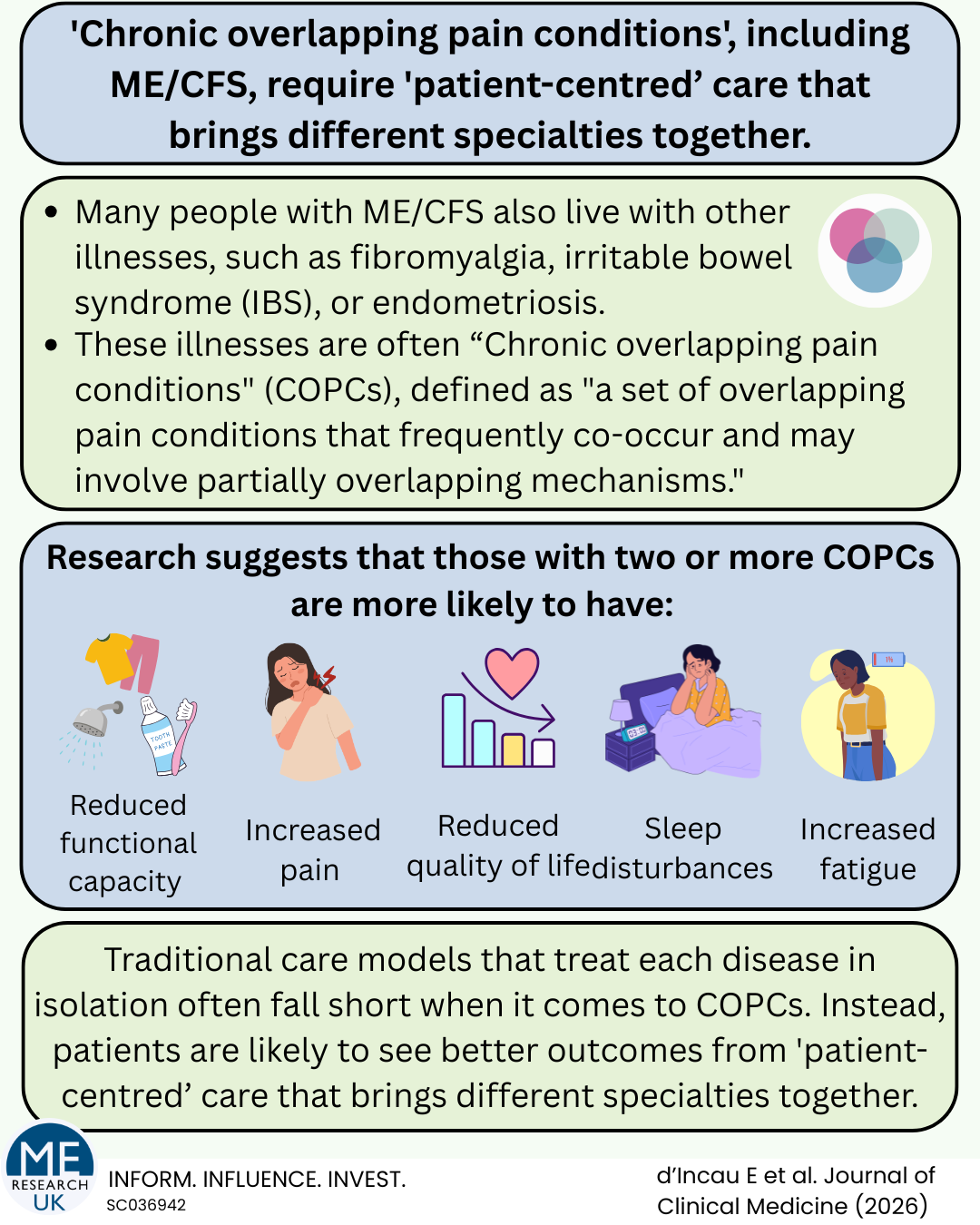
Many people with ME/CFS also live with other illnesses, such as fibromyalgia, irritable bowel syndrome (IBS), chronic migraine, endometriosis, or painful temporomandibular disorders.
Because of this, a recent review study by Prof. Emmanuel d’Incau and colleagues is highly relevant. Their research reviewed the evidence surrounding what they termed “Chronic overlapping pain conditions” (COPCs)—defined as a “set of overlapping pain conditions that frequently co-occur and may involve partially overlapping mechanisms.”
The National Institutes of Health (NIH) Pain Consortium currently recognises ten COPCs:
- ME/CFS – A complex physical disease affecting multiple body systems. It causes a variety of symptoms, including intense fatigue and post-exertional malaise (feeling worse after physical or mental effort).
- Vulvodynia – Chronic pain in the area surrounding the vaginal opening (the vulva) without an identifiable cause.
- Temporomandibular Disorders (TMD) – Pain in the jaw joint and surrounding muscles, often causing limited jaw movement. (Notably, ME Research UK is currently funding a study exploring pain and autonomic dysfunction in people with both ME/CFS and TMD.)
- Irritable Bowel Syndrome – A cluster of co-occurring gastrointestinal symptoms, including stomach cramps, bloating, and changes in bowel habits.
- Interstitial Cystitis/Painful Bladder Syndrome – A chronic condition marked by bladder pain, pressure, or discomfort in the absence of an infection or other obvious pathology.
- Fibromyalgia – A chronic condition characterised by widespread pain, extreme fatigue, cognitive difficulties (“fibro fog”), and sleep disturbances.
- Endometriosis – A long-term condition where tissue similar to the lining of the womb grows outside the uterus.
- Chronic Tension-Type Headache – Head pain that occurs on 15 or more days per month for at least three months.
- Chronic Migraine Headache – Headaches on 15 or more days per month for at least three months, where at least eight of those days feature full migraine symptoms.
- Chronic Low Back Pain – Low back pain that persists for at least half the days over a six-month period.
Unsurprisingly, the review highlighted that where two or more COPCs co-exist in one individual, they create a heavier burden for the person, often resulting in increased pain, reduced functional capacity (the ability to carry out daily activities), diminished quality of life, fatigue, and sleep disturbances.
The authors also note that COPCs complicate healthcare management. Traditional care models that treat each disease in isolation are often inadequate. Instead, patients are likely to see better outcomes from integrated, patient-centred care. This approach brings different medical specialties together, improves diagnostic accuracy, and tailors treatment to the whole person rather than addressing one pain condition at a time.
To guide future research, the authors offer four key recommendations:
- Standardise definitions: Because COPCs vary greatly between individuals and lack simple diagnostic blood tests, they are usually diagnosed via clinical criteria or by ruling out other causes. Future studies must use clear, consistent diagnostic and measurement tools to ensure research is easily comparable.
- Conduct longitudinal studies: Researchers need to track patients over time to understand how a single pain condition develops into multiple overlapping conditions, and how this progression impacts long-term health.
- Investigate overlapping mechanisms: More research is required to uncover the biological, hormonal, psychological, and environmental factors that make certain individuals more vulnerable to developing multiple COPCs.
- Evaluate integrated treatment approaches: Clinical trials should focus on how treatments perform when a patient has multiple COPCs, testing whether holistic, joined-up care yields better results than treating each condition separately.
It is worth noting that although people with ME/CFS have many different co-occurring illnesses (comorbidities), this review only considered evidence relating to the 10 COPCs currently recognised by National Institutes of Health (NIH) Pain Consortium. More research is needed to assess whether the same results would be observed for people with ME/CFS who have one or more comorbidity generally, rather than specifically those who have two or more COPCs.