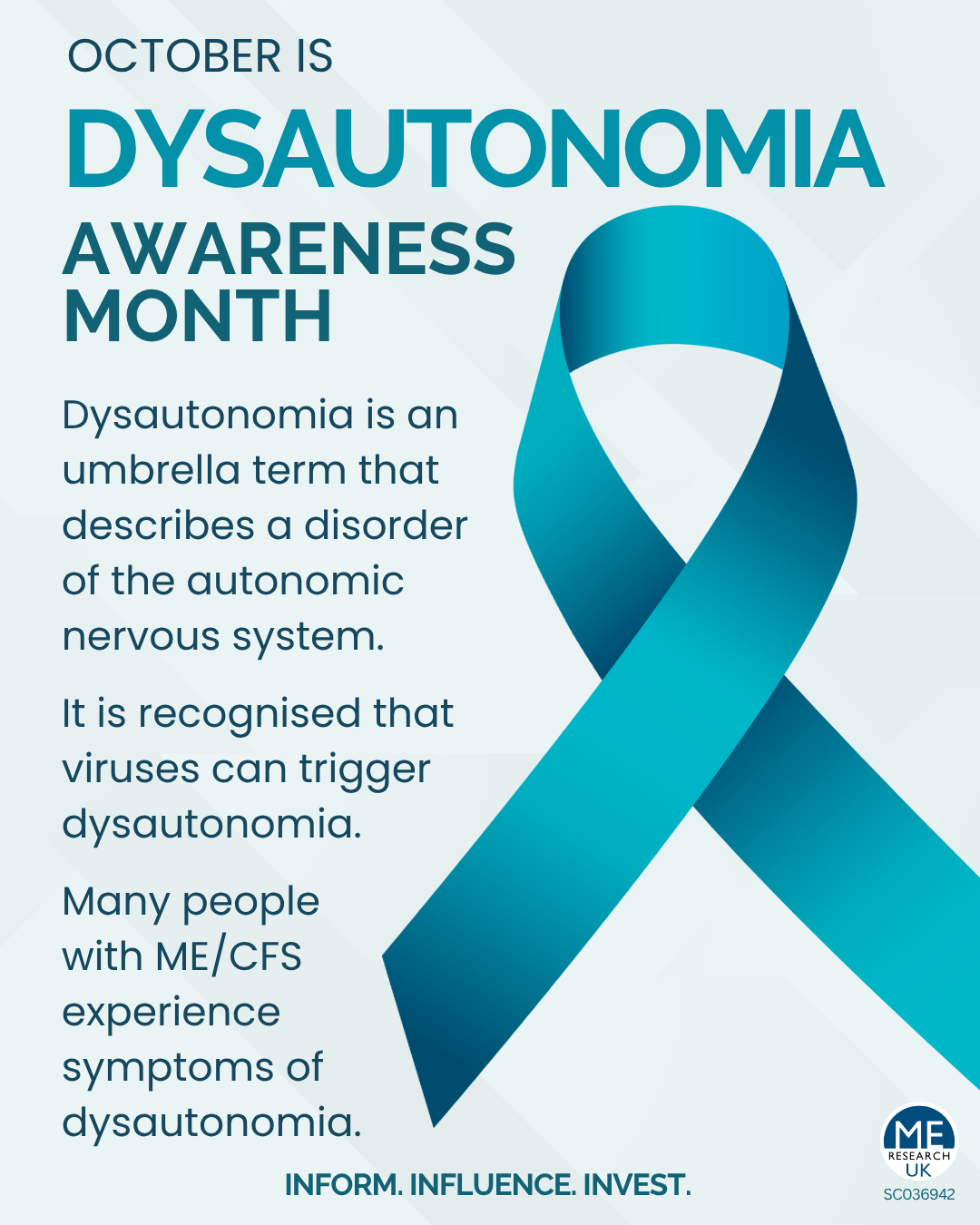
October is Dysautonomia Awareness Month, an annual campaign launched by Dysautonomia International to raise awareness about the condition, reduce diagnostic delays, improve resources and research, and advocate for patients. Without effective management, dysautonomia can be highly debilitating, significantly impacting quality of life. For individuals with ME/CFS, who often also report symptoms of dysautonomia, this adds an extra layer of challenge.
Dysautonomia is an umbrella term that encompasses a broad range of conditions that affect the autonomic nervous system – the body system that regulates automatic functions such as blood pressure, heart rate, temperature, and digestion. Postural orthostatic intolerance (PoTS), which falls under the dysautonomia category, is a common diagnosis amongst people with ME/CFS. PoTS is a form of orthostatic intolerance (symptoms occurring in an upright posture) that is accompanied by a characteristic heart rate change.
As the autonomic nervous system is so far-reaching, it is no surprise that the symptoms of dysautonomia are broad. These can include, but are not limited to, brain fog, vision problems, palpitations, nausea and temperature dysregulation. Many of these symptoms overlap with ME/CFS. Whilst the complete elimination of symptoms is not guaranteed, tailored management strategies can often help reduce symptom severity and improve quality of life.
Diagnosis remains a major hurdle. A US study of 672 adults affected by different types of dysautonomia found that the average time to diagnosis was almost 8 years. According to the paper, the diagnostic process “can be hindered by symptom overlap with other conditions and by limited access to autonomic specialists” – a statement that many within the dysautonomia community can relate to.
A resource for hidden disabilities describes that people with dysautonomia “may experience limitations in their ability to work, study, socialise, or participate in physical activities which can lead to feelings of isolation and loneliness.” Further stating, “individuals may need to make lifestyle adjustments, cancel plans due to symptoms, or limit their participation in certain activities. Finding understanding and support from family, friends, and peers is crucial.” Dysautonomia Awareness Month plays a role in increasing knowledge amongst healthcare professionals and the public, thus promoting better understanding of the condition and hopefully compassion.