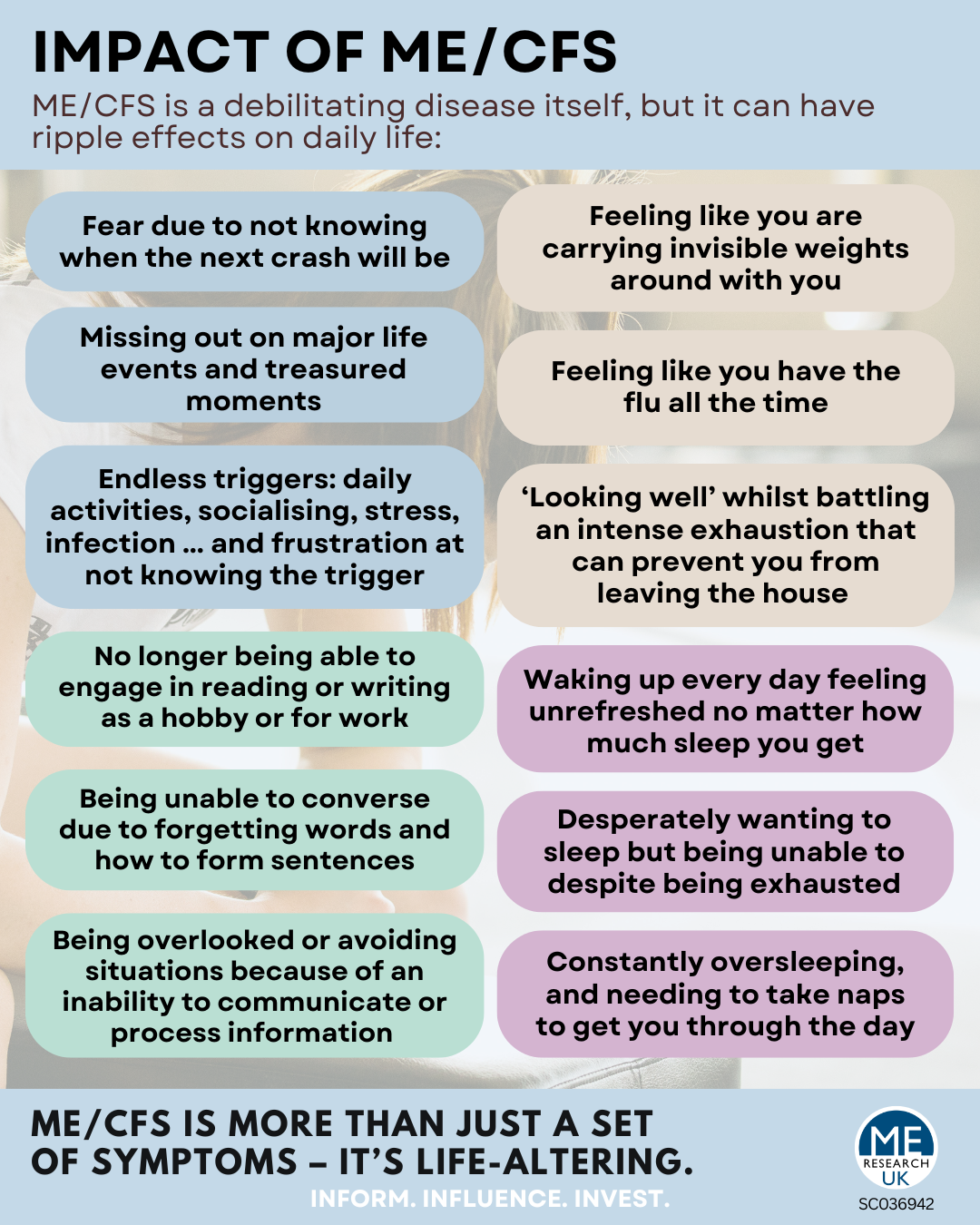
For ME Awareness Week 2025, we shared infographics raising awareness about the debilitating nature of ME/CFS, but also about the research being conducted to tackle the symptoms associated with the disease.
Post-exertional malaise
Post-exertional malaise (PEM), the hallmark feature of ME/CFS, is the worsening of symptoms (and potential appearance of new symptoms) following minimal physical or mental exertion. It typically occurs 24 – 72 hours following the triggering event but may occur sooner. PEM can significantly reduce the level of activity/functioning of an individual with ME/CFS, and can last for several days, weeks, or longer.
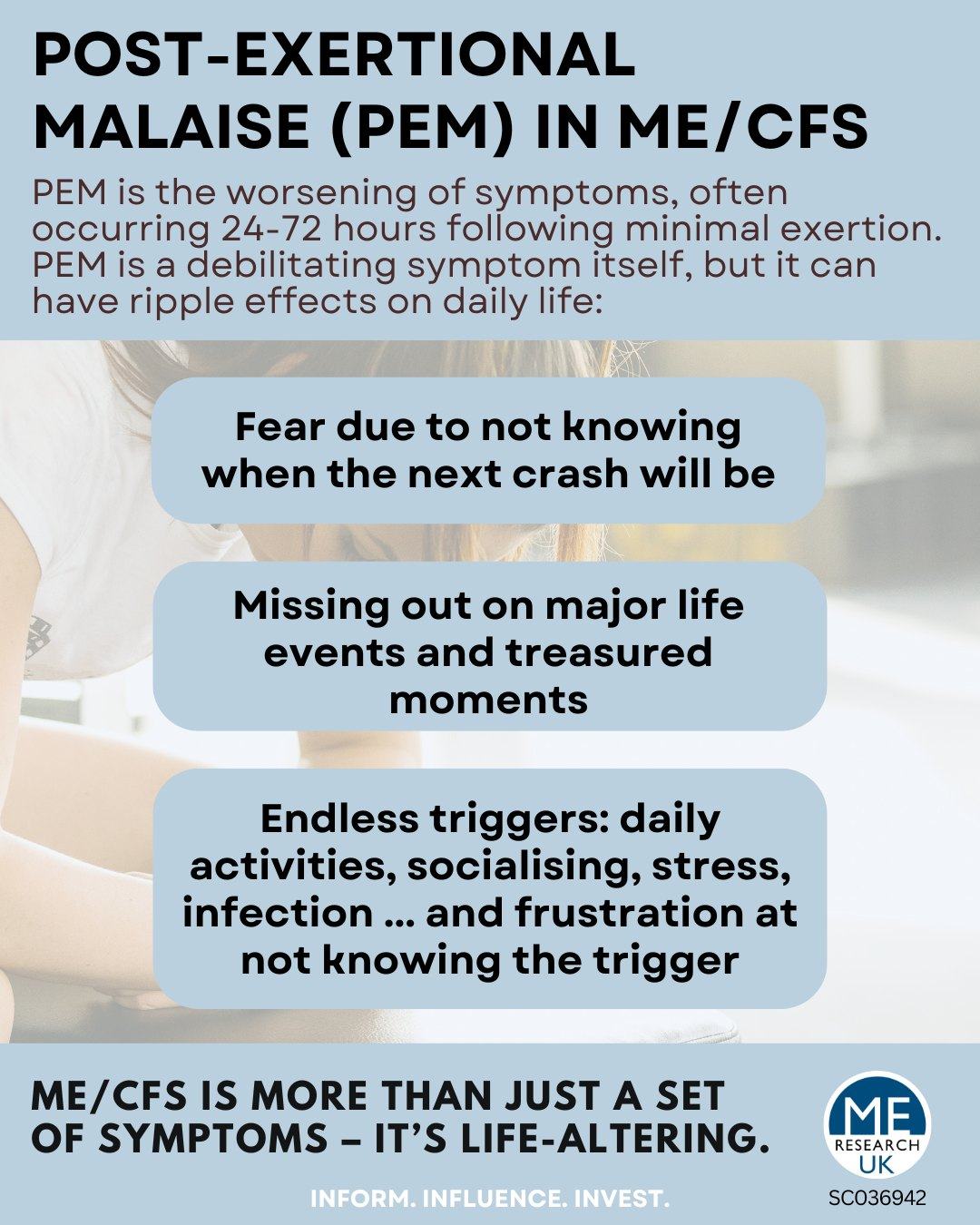

Read more about Dr Wüst’s study: bit.ly/wust068
Cognitive dysfunction
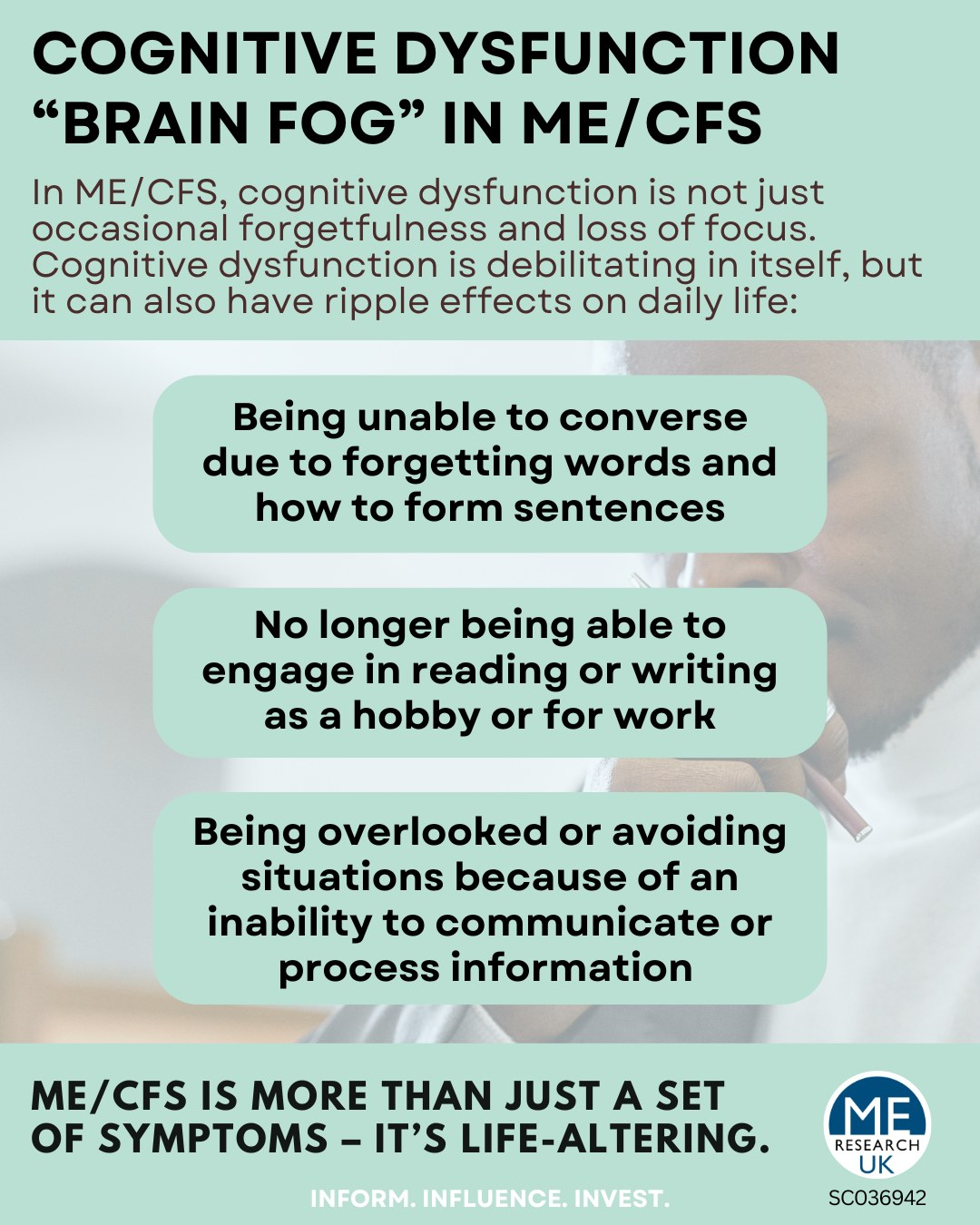
The experience of cognitive dysfunction, ‘brain fog’, cannot be equated to the occasional forgetfulness and lapses in concentration experienced by healthy individuals, as cognitive dysfunction is a complex and distressing symptom. The CDC states ‘Most people with ME/CFS have trouble thinking quickly, remembering things, and paying attention to details. Patients often say they have “brain fog” to describe this problem because they feel “stuck in a fog” and not able to think clearly.’
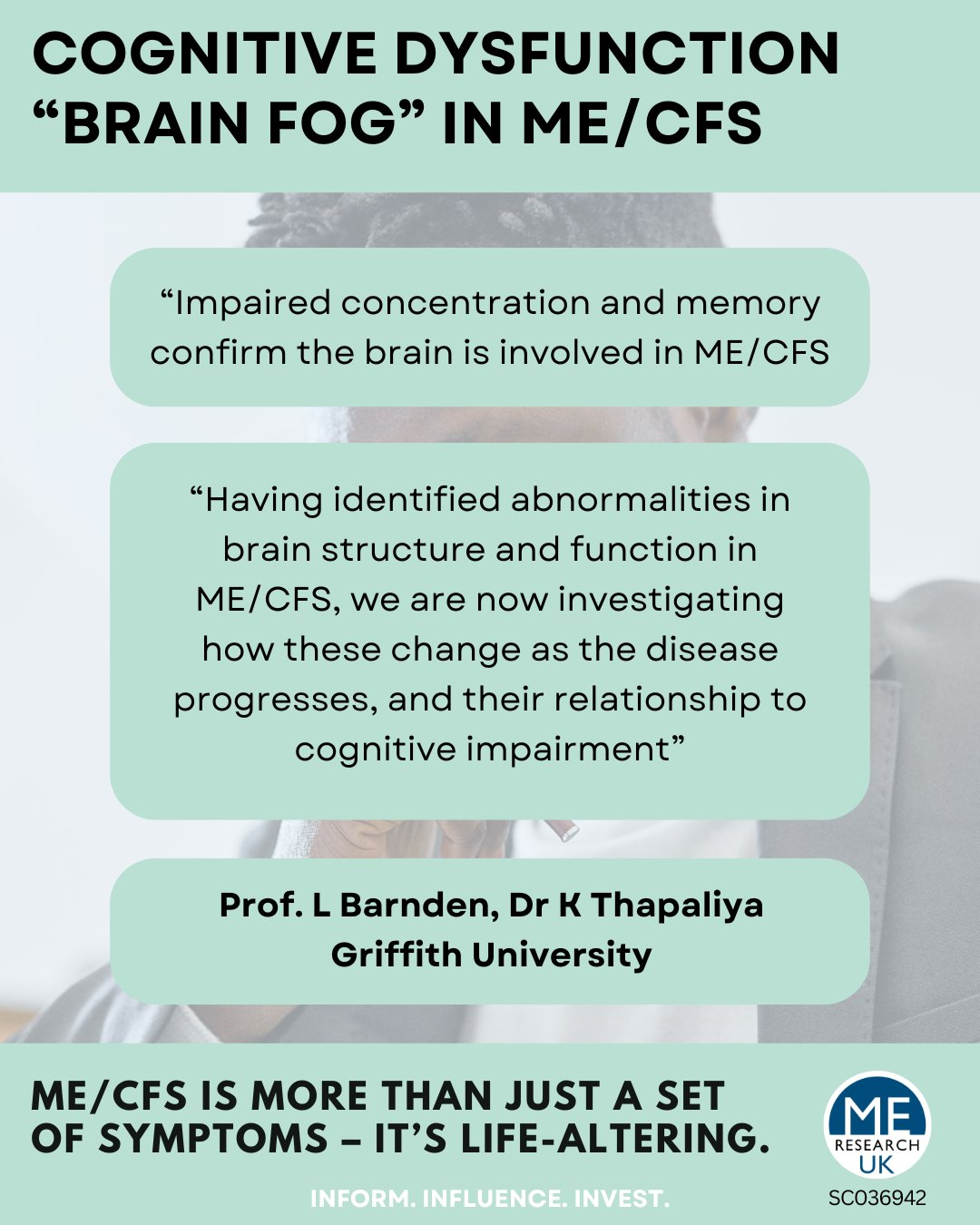
Read more about Prof. Barnden and Dr Thapaliya’s study: bit.ly/barnden067
Fatigue
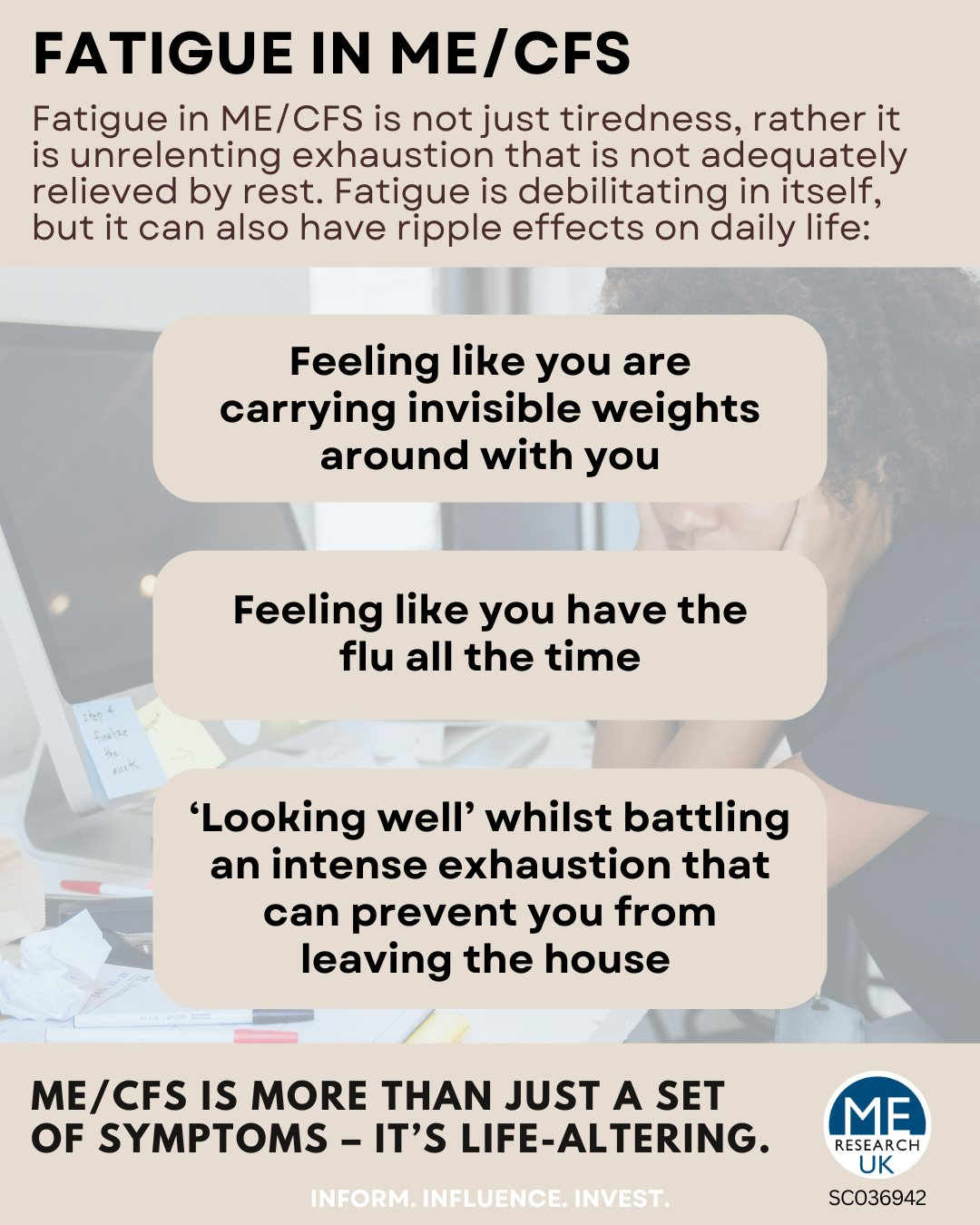
As “fatigue” is such a widely used word, healthy individuals may mistakenly equate their own experience with the reality of fatigue in ME/CFS. Fatigue in ME/CFS is not just tiredness, it is a persistent symptom that is not adequately relieved by rest and significantly impacts activities of daily living. Fatigue, in addition to other symptoms, can be significantly worsened through post-exertional malaise (PEM).
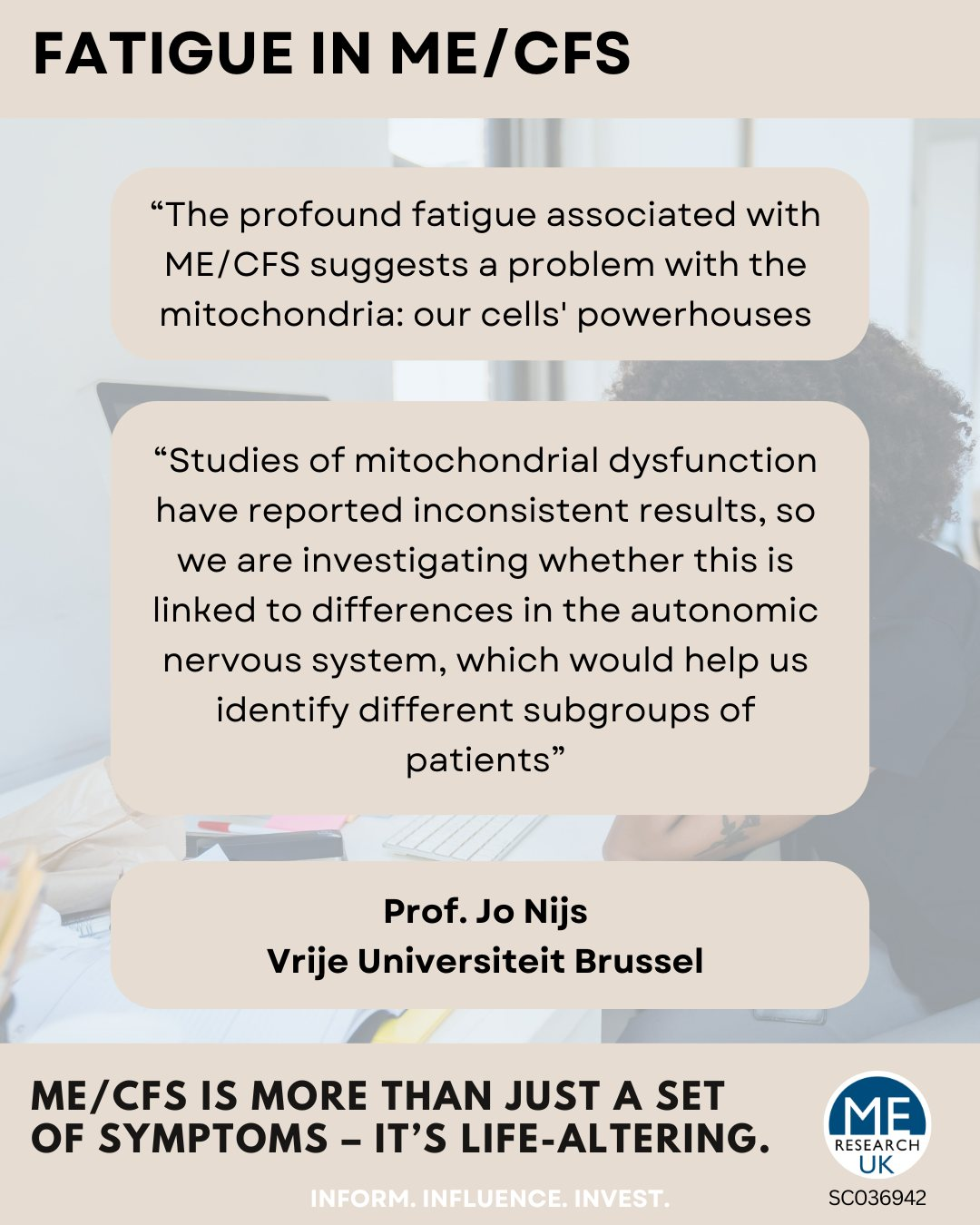
Read more about Prof. Nijs’s study: bit.ly/nijs004
Sleep dysfunction
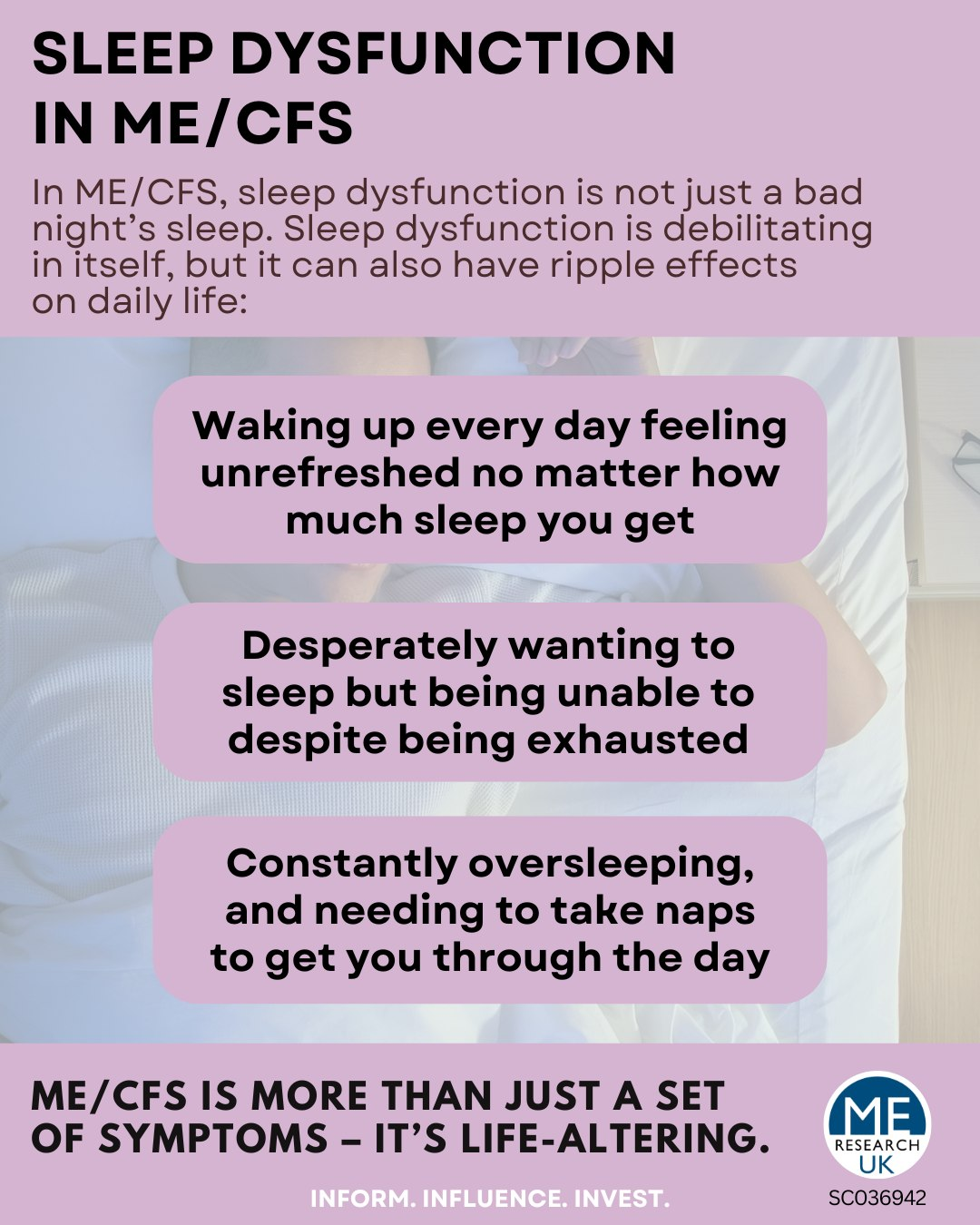
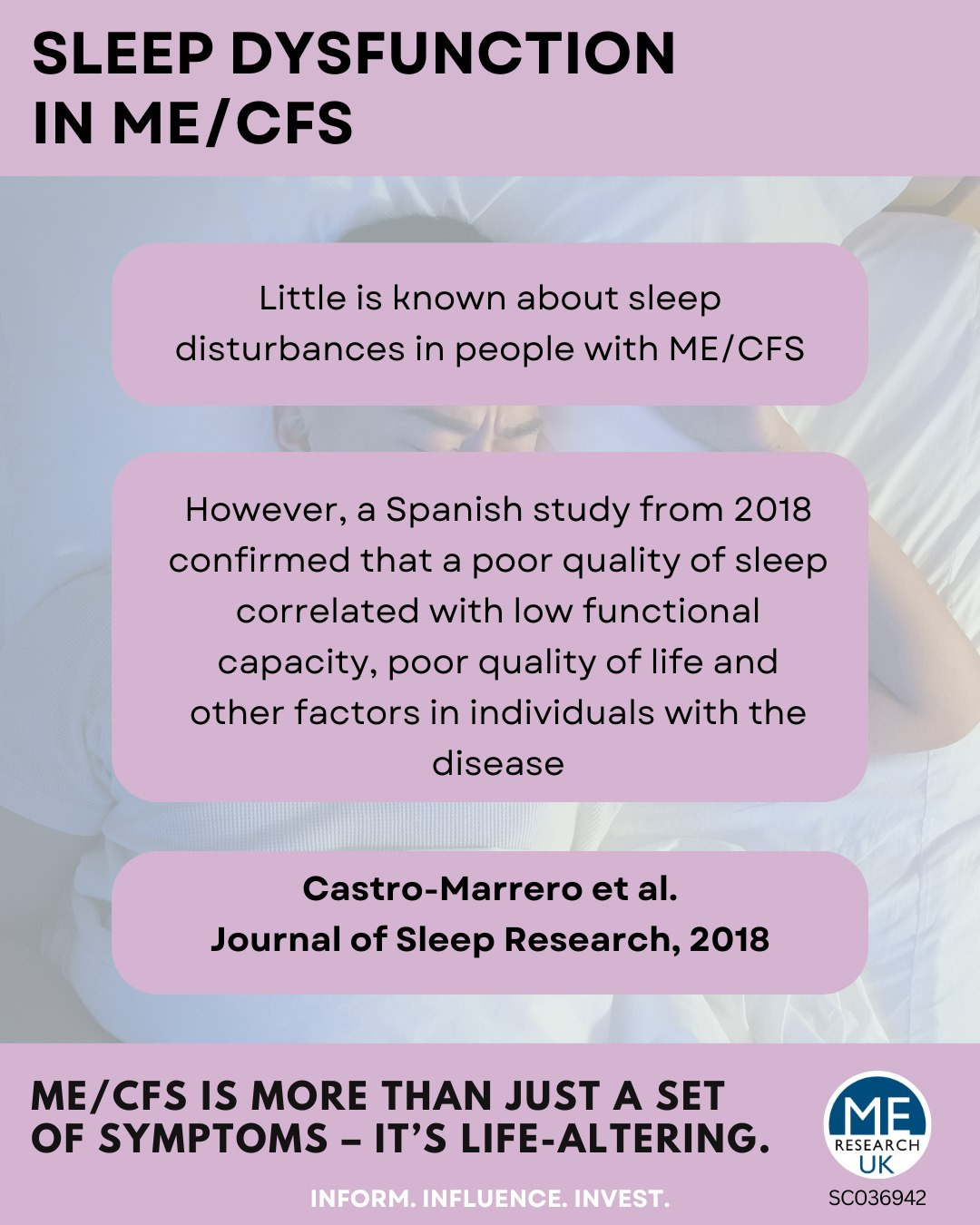
Sleep dysfunction is a frustrating symptom which includes changes in sleep quality, quantity, and patterns. One article (https://bit.ly/4b8cDBq) states, “unrefreshing sleep is used to describe a light sleep that, even after a full night, doesn’t leave you rested. People with ME/CFS often report waking up exhausted and feeling as if they haven’t slept at all—no matter how long they were actually asleep.”
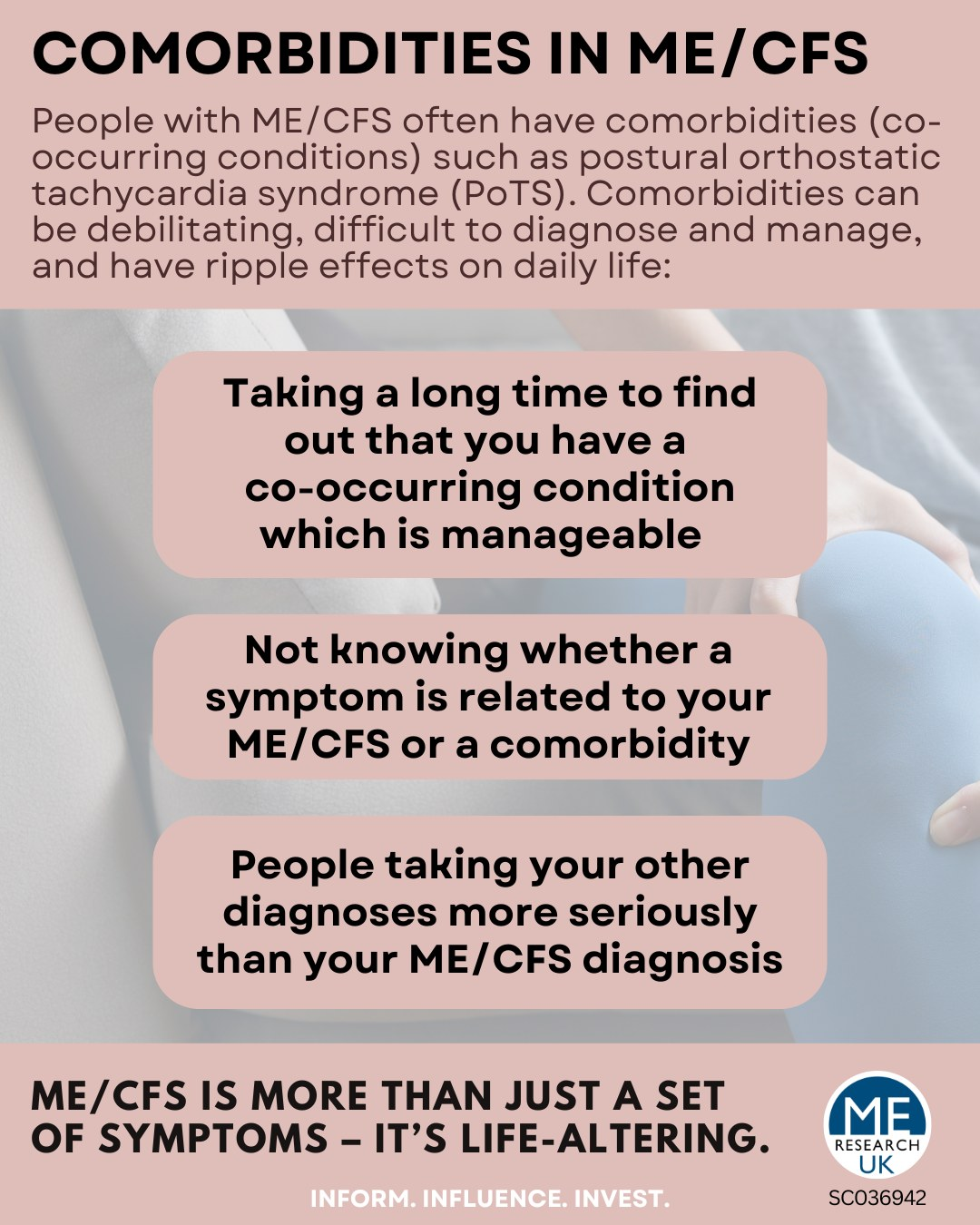
Comorbidities
People with ME/CFS also often have comorbidities (co-occurring conditions) such as postural orthostatic tachycardia syndrome (POTS) and gut issues.
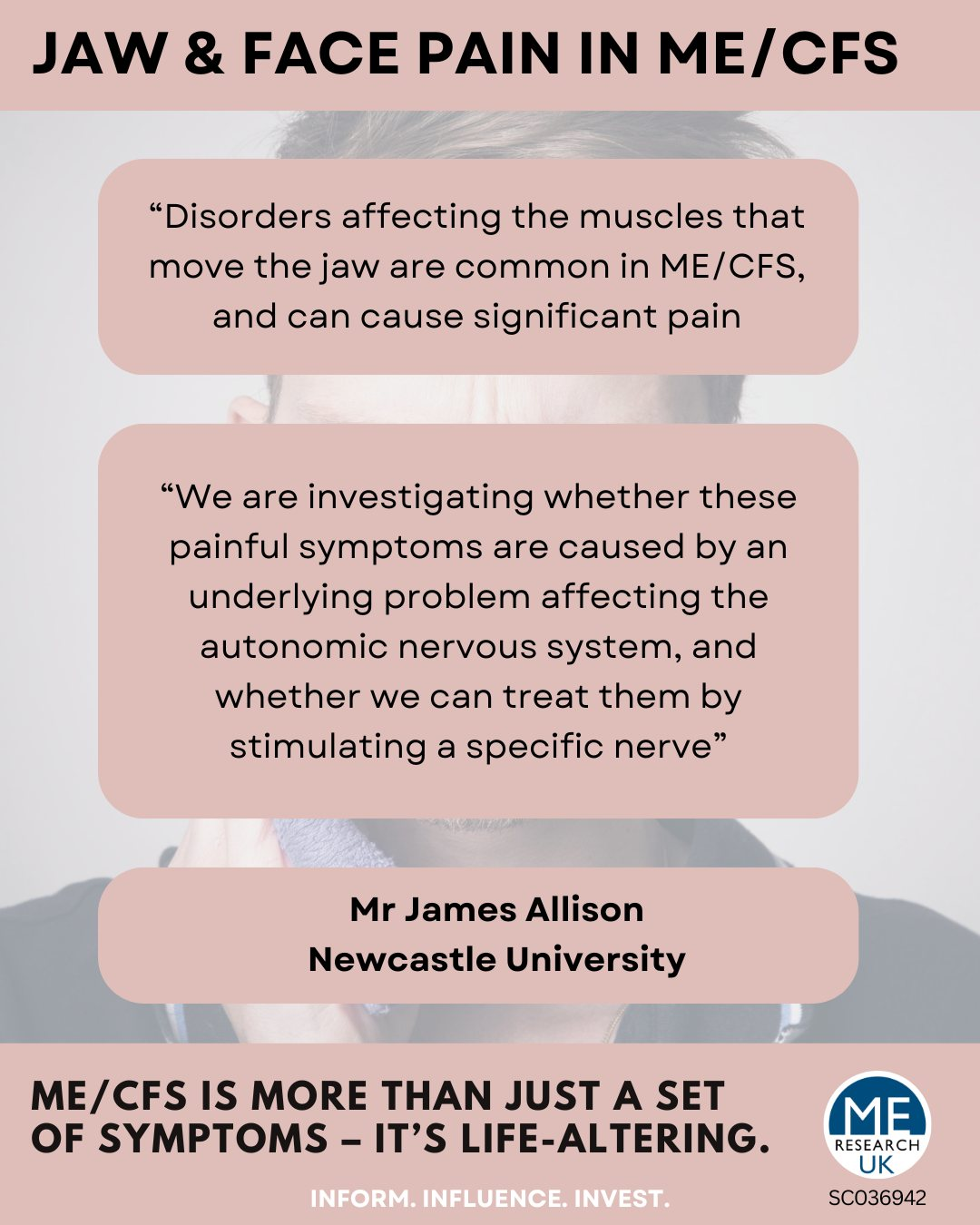
Read more about Mr Allison’s study: meres.uk/elucidate