Research has identified that the gut microbiome – the microorganisms (bacteria viruses, and fungi) living in the digestive system – may differ between people with ME/CFS and those without. For example, compared with healthy controls, those with ME/CFS have been found to have:
- Significantly different types of microbes within the gut.
- Approximately a 34% decrease in gut microbial diversity – the number of different species.
More recently, a review has been published in the International Journal of Molecular Sciences, that considers how these differences in the gut microbiome may relate to ME/CFS disease mechanisms.
Key discussion points in the paper relate to how the association between the gut microbiome and the immune system might be linked to ME/CFS, for example:
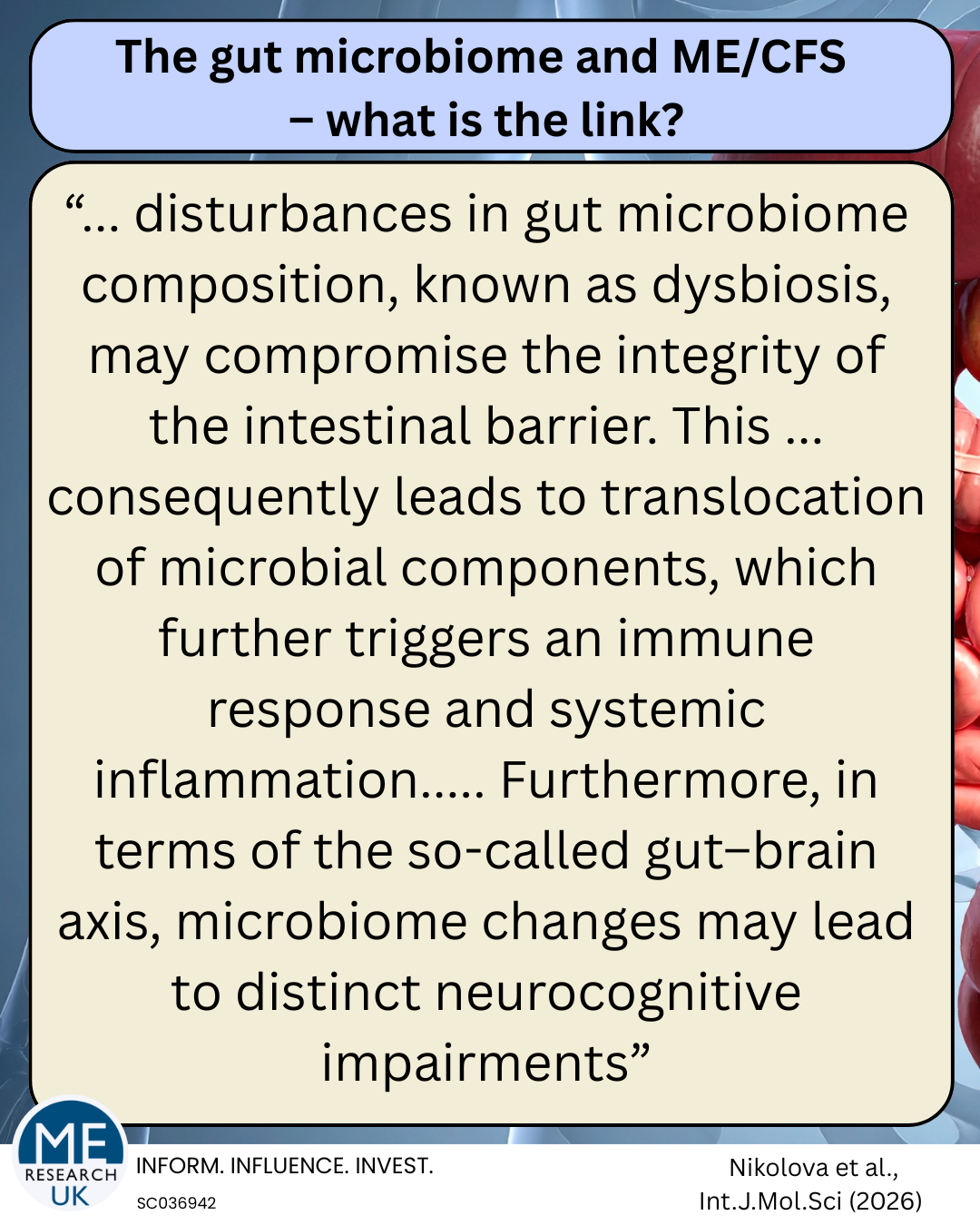
- Disturbances in the gut microbiome can compromise the integrity of a protective lining, known as the intestinal barrier. This means that some microbial components – the structural elements or components of microorganisms – are displaced, and because the components end up where they should not normally be in the body they are recognised as ‘foreign’ and trigger an immune response and inflammation throughout the body (systemic inflammation).
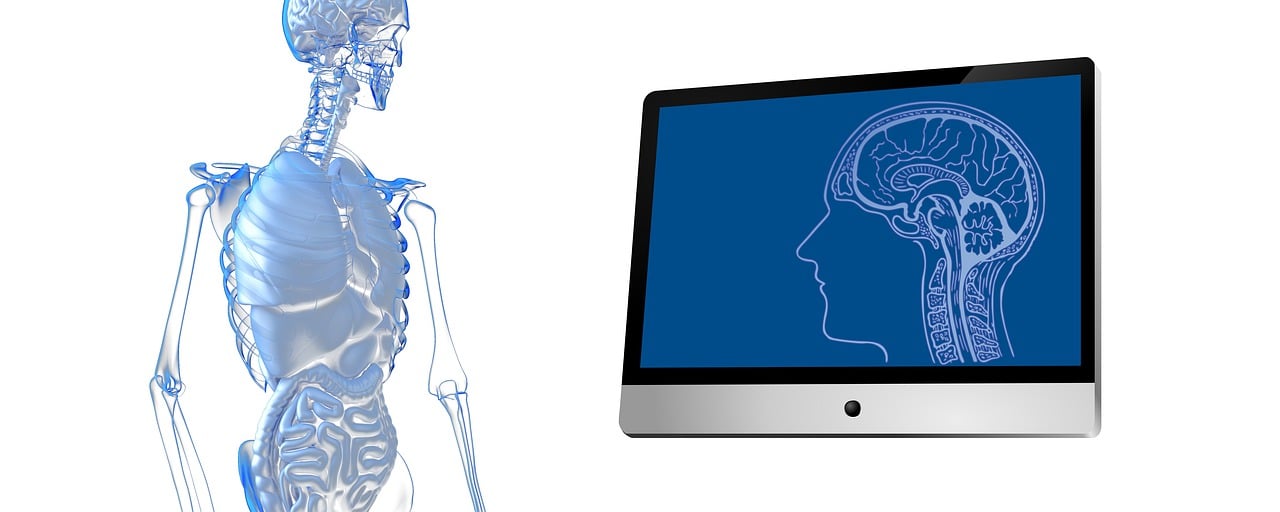
- The link between the gut and the brain – the ‘gut-brain axis’ – was also highlighted in the review. The authors state that microbiome changes in the gut could also explain the neurocognitive impairments, such as brain fog and memory issues, that people with ME/CFS have.
In their review, the researchers also present the current information on “microbiome modulation therapies” as a potential treatment for ME/CFS. In this section, the research team highlight:
- Probiotics: Taking potentially beneficial bacteria known as probiotics may have a positive impact on digestion and immunity. While there are some small studies investigating probiotics and ME/CFS, results are varied and findings limited by small sample sizes. Importantly, more large-scale research would be needed before conclusions could be drawn.
- Prebiotics: Prebiotics, such as fructo-oligosaccharides and galacto-oligiosaccharides serve as nutrients for beneficial gut bacteria like bifidobacterium. It is thought that taking prebiotics not only supports a healthy microbiome, but that from these compounds, microbes are able to produce short chain fatty acids which could even help to repair the intestinal barrier. Despite this, research on prebiotics and ME/CFS has primarily been carried out in animal models (rodents), and more research in humans is required to assess whether they may prove a beneficial supplement.
- Faecal microbiota transfer: This is a process in which faces (i.e., stool) from a healthy donor individual is transferred to the gastrointestinal tract of a recipient to share beneficial microorganisms and encourage rebalancing of the gut microbiome – in theory, alleviating the influence of a microbial imbalance on ME/CFS. Despite the potential FMT has, the researchers emphasise the “numerous limitations in FMT, including the lack of standardized protocols about administration routes, patient selection criteria, and therapy duration, have to be addressed.”
- Dietary intervention: Some diets – such as those high in processed foods, fat, and sugar – seem to promote an imbalance of the gut microbiome. In theory, consuming a more ‘gut friendly’ diet, such as the Mediterranean diet which is rich in plant-based foods, healthy fats, and lean proteins, may enhance healthy bacteria in the gut. However, the researchers highlight that more research is needed to “help unravel the potential of dietary interventions as an option For ME/CFS treatment”.
As mentioned in a previous article on the gut microbiome by ME Research UK, it is important to note that these approaches should be considered with caution, as the exact nature of the link between microbiome dysbiosis and the development of these conditions is still to be determined. It is also worth mentioning that none of these treatments have been recommended by NICE.